


Last Updated: June 18, 2026
For more than three thousand years, the blue lotus (Nymphaea caerulea) was treated as a treasure. It bloomed across the calm edges of the Nile, opened its petals to the morning sun, and closed again at dusk. Ancient Egyptians painted it on tomb walls, floated it in wine at feasts, and tied it to their ideas of rebirth and quiet, dreamy calm. It was, by every account we have, a legendary flower.
Yet the blue lotus you can buy today is often a faint echo of that legend. Mass-market flowers are frequently harvested from depleted ground, dried in a rush, and stored for so long that the delicate compounds inside them fade. The result is a pretty flower that brews into a cup of warm, gently colored water with very little to say. To recreate the potency described in ancient texts, we cannot rely on tired, commodity-grade flowers. We have to begin where the plant's character is actually built, which is in living, mineral-rich ground.
 Cultivating Nymphaea caerulea in microbially diverse living soil accelerates secondary metabolite synthesis, directly increasing the concentration of active aporphine alkaloids.
This is the heart of our approach at Sacred Plant Co, and it is captured in our Soil-to-Potency Thesis. The idea is simple to say and demanding to practice: the aromatic and active compounds in a flower are not free gifts. They are made by the plant as it interacts with a thriving community of soil microbes. Weak soil grows weak medicine. Restoring the lost intelligence of the plant starts in the dirt. You can see the lab data behind that claim on our See the Science page. With that foundation in place, let us walk through exactly how to brew a cup worthy of the flower's history.
What You'll Learn
- The simple, low-heat method for brewing blue lotus tea so its delicate compounds survive the cup.
- How much dried flower to use per cup, and how long to steep for a gentle versus a stronger infusion.
- Why water temperature matters more for this flower than for most teas.
- The two signature compounds in blue lotus and what tradition says they do.
- How to judge premium dried blue lotus by its color, texture, and aroma.
- Honest safety guidance, including who should skip it and one important legal note.
- Calming herbs that pair well with blue lotus for an evening ritual.
- Answers to the questions people ask most before their first cup.
Key Takeaways
- Blue lotus tea is made by steeping 3 to 5 grams of dried Nymphaea caerulea flower in hot water near 195 degrees Fahrenheit for 10 to 20 minutes.
- Blue lotus flower contains two documented aporphine alkaloids, apomorphine and nuciferine, which researchers have identified as its principal active compounds.
- Water that is just off the boil, rather than fully boiling, helps preserve the flower's heat-sensitive aromatic compounds.
- The blue water lily appears throughout ancient Egyptian art of the New Kingdom period, roughly 1550 to 1070 BCE, where it symbolized rebirth and altered, dreamlike states.
- Blue lotus is sold for human consumption across most of the United States, but the state of Louisiana restricts it, so buyers there should confirm local rules.
Blue Lotus Tea at a Glance
Blue lotus tea is a caffeine-free floral infusion made from the dried petals and flower heads of Nymphaea caerulea, traditionally brewed in warm water or steeped in wine for its gentle, calming character.
| Latin Name | Nymphaea caerulea |
| Family | Nymphaeaceae (water lily family) |
| Parts Used | Dried petals and whole flower heads |
| Primary Active Compounds | Apomorphine and nuciferine (aporphine alkaloids) |
| Traditional Energetics | Cooling, calming, dreamy |
| Caffeine Status | Caffeine-Free |
| Typical Brewing Amount | 3 to 5 grams dried flower per cup |
| Water Temperature | About 195 degrees Fahrenheit (just off the boil) |
| Steep Time | 10 to 20 minutes |
| Sacred Plant Co COA | Request by Lot Number (see COA section below) |
How Do You Make Blue Lotus Tea Step by Step?
To make blue lotus tea, steep 3 to 5 grams of dried blue lotus flower in roughly 8 ounces of hot water near 195 degrees Fahrenheit for 10 to 20 minutes, then strain and sip slowly.
The method is forgiving, but two small choices make a real difference: keeping the water below a hard boil, and giving the flower enough time to fully open in the cup. Here is the full process, written for a first-timer.
| Step | What to Do | Why It Matters |
|---|---|---|
| 1. Measure | Place 3 to 5 grams of dried blue lotus flower (roughly 1 to 2 heaping teaspoons of loose petals) into a cup or teapot. | A smaller amount gives a light, gentle cup. A larger amount gives a fuller, more pronounced infusion. |
| 2. Heat the water | Bring fresh water to a boil, then let it rest for about 60 seconds so it settles near 195 degrees Fahrenheit. | Water that is just off the boil protects the flower's delicate aromatic compounds, which harsh boiling water can scorch. |
| 3. Pour and cover | Pour about 8 ounces of hot water over the flowers and cover the cup with a small lid or saucer. | Covering traps the fragrant steam so the aroma stays in the cup instead of escaping. |
| 4. Steep | Let it steep for 10 minutes for a gentle cup, or up to 20 minutes for a stronger one. | Longer steeping draws out more of the flower's compounds and deepens both color and character. |
| 5. Strain and sip | Strain out the flowers, add a touch of honey if you like, and drink slowly in a calm setting. | Blue lotus is a tea for unwinding, so the ritual of sipping it slowly is part of the experience. |
Our Favorite Way to Brew It
Our favorite way to brew blue lotus tea is 4 grams of whole dried flower in 8 ounces of water rested about 90 seconds off the boil, covered and steeped for a full 15 minutes, then finished with a small spoon of honey.
After brewing more cups of this than we can count, this is the ratio we keep coming back to. We reach for it in the evening, once the day has gone quiet. We pour the water just after the kettle stops rumbling, cover the cup with a small saucer, and let it sit while we step away from the screens. At around the 15 minute mark the liquid turns a soft golden color with the faintest blue cast at the edges, and the aroma lifts into something gently sweet and floral. We sip it slowly, never in a hurry. On nights we want a deeper, dreamier cup, we nudge the flower toward 5 grams and the steep toward 20 minutes rather than reaching for hotter water. That patience, more than any single trick, is the thing we have learned matters most.
For a richer, more traditional preparation, some people steep the flowers in warm (not hot) wine for several hours, echoing the way the bloom was enjoyed at ancient Egyptian feasts. If you prefer a deeper, more aromatic cup the modern way, simply lengthen the steep time rather than raising the heat. The same low-and-slow principle guides our other floral and herbal brews, including our chamomile flower tea for calm and better rest, which shares blue lotus's preference for a gentle hand.
How to Identify Premium Blue Lotus
Premium dried blue lotus shows deep blue to violet petals with intact, papery structure, a faint sweet and earthy aroma, and flowers that were dried whole rather than crushed into dust.
Because so much of the market sells faded, low-grade flowers, learning to read the signs of quality protects both your money and your experience. Here is a simple sensory quality check before you brew.
- Color: Look for petals that still carry a blue to violet tone with hints of soft purple. Gray, brown, or bleached-out flowers usually signal age or heat-rushed drying.
- Texture: Quality flowers feel papery and delicate but mostly whole. A bag of fine powder and stem fragments points to rough handling and lost potency.
- Aroma: Bring the dried flower close and breathe in. Fresh, well-grown blue lotus offers a faint sweet, floral, slightly earthy scent. A flat, hay-like, or scentless flower has little left to give.
- Drying method: Gentle, low-temperature drying preserves both color and fragrance. The best flowers look like they were handled with care, not processed in bulk.
That aroma test is the quickest tell. If the flower barely smells of anything in the bag, it will barely taste of anything in the cup. The same standard applies across the apothecary, which is why we treat scent and color as primary quality signals in our guide to building a thoughtful ritual apothecary.
The Botanical Story and Traditional Uses
 A low-temperature steep preserves volatile aromatic oils, shifting the liquor to a soft golden hue that signals intact heat-sensitive compounds.
Blue lotus is a water-dwelling flower from the Nile region that ancient Egyptians associated with the sun, rebirth, and a gentle dreamlike calm, making it one of the most depicted plants in their art.
The genus Nymphaea includes roughly 50 species of water lilies found around the world, but Nymphaea caerulea holds a special place in human history. In ancient Egypt, the flower's daily rhythm of opening at sunrise and closing at dusk made it a natural symbol of the sun's journey and of life renewing itself.1 The blue water lily appears again and again in tomb paintings and carvings of the New Kingdom period, roughly 1550 to 1070 BCE, often shown being held to the nose or floating in cups of wine.2
Beyond Egypt, scholars have traced ceremonial use of psychoactive water lilies across other ancient cultures, including parallels drawn with the Maya world, suggesting that more than one civilization recognized this family of flowers as something out of the ordinary.3 Traditionally, blue lotus has been reached for as a relaxing, mood-lifting companion and as an aid to vivid, memorable dreams. People drawn to dream work often place it alongside other classic dream herbs, a tradition we explore in our piece on the Calea zacatechichi dream tea recipe.
What Does the Science Say About Blue Lotus?
Modern analysis confirms that blue lotus flower contains two aporphine alkaloids, apomorphine and nuciferine, which are considered the compounds behind its calming and mildly mood-shifting reputation.
When researchers have studied the chemistry of Nymphaea caerulea, the two compounds that consistently appear are apomorphine and nuciferine.4 Apomorphine is known in pharmacology as a dopamine agonist, meaning it interacts with the brain's dopamine signaling, while nuciferine has been studied for relaxing and mood-related properties.4 Together they form the chemical fingerprint that separates true Nymphaea caerulea from look-alike flowers sold under similar names.
It is worth being honest about the limits of the evidence: rigorous human clinical trials on brewed blue lotus tea are still limited, and most of what we know comes from chemical analysis and long traditional use rather than large modern studies. That is exactly why purity and accurate identification matter so much, and why we lab test our material rather than asking you to take potency on faith. The link between living soil and the strength of these compounds is the same one we documented when our regenerative beds tested at a Haney Score of 25.4, a soil health benchmark that exceeded a nearby pristine forest reference.5
Preparation and Ritual
Blue lotus tea is best treated as an evening ritual, brewed gently and sipped slowly in a quiet space rather than rushed like a morning cup of coffee.
There is a reason the word Sacred sits in our name. We believe the intention you bring to a cup is part of its value. Brew your blue lotus when you have time to slow down: dim the lights, set aside the screens, and let the 10 to 20 minute steep become a small pause in the day rather than a chore. Many people enjoy it as part of a wind-down routine, sometimes paired with a calming herb like passionflower for a deeper sense of ease, an approach we describe in our guide to the tranquil power of passionflower. Because this flower invites stillness, it pairs naturally with the seasonal practices in our look at calmatives that support the nervous system through stress and sleep.
Safety: What You Should Know Before You Sip
Blue lotus is generally treated as a gentle herb, but it should be avoided during pregnancy and breastfeeding, may cause drowsiness, and is legally restricted in at least one US state.
Medical Contraindications
- Pregnancy and breastfeeding: Avoid blue lotus, as its effects on pregnancy and infants have not been adequately studied.
- Drowsiness: Blue lotus can have a relaxing, mildly sedating effect, so do not drive or operate machinery after drinking it.
- Medication interactions: Because it interacts with dopamine signaling, anyone taking prescription medications, especially those affecting the central nervous system, should speak with a qualified healthcare provider first.
- Legal note: Blue lotus is sold for human consumption in most of the United States, but Louisiana restricts it. Always confirm the rules in your own location before purchasing or consuming.
Traditional and Energetic Considerations
In traditional energetic terms, blue lotus is viewed as cooling and quieting, a flower for the evening and for inward, reflective states rather than for daytime drive. Those who find it too dreamy or relaxing for their liking often simply use less flower or steep for a shorter time. Start small with a single gentle cup so you can learn how your own body responds before adjusting upward.
Dosage Guidelines
A typical cup of blue lotus tea uses 3 to 5 grams of dried flower, and most people begin with the lower end of that range to gauge their personal response.
For a first cup, start with about 3 grams of dried flower steeped for 10 minutes. If you would like a stronger experience, you can move toward 5 grams and a longer 15 to 20 minute steep on a later occasion. There is no need to rush; the gentle nature of this flower rewards patience. As with all herbs, more is not always better, and finding your own comfortable amount is part of the practice. If you plan to keep blue lotus on hand, store it the way you would any delicate flower, which we cover in detail in our guide on how to buy, store, and use herbs in bulk.
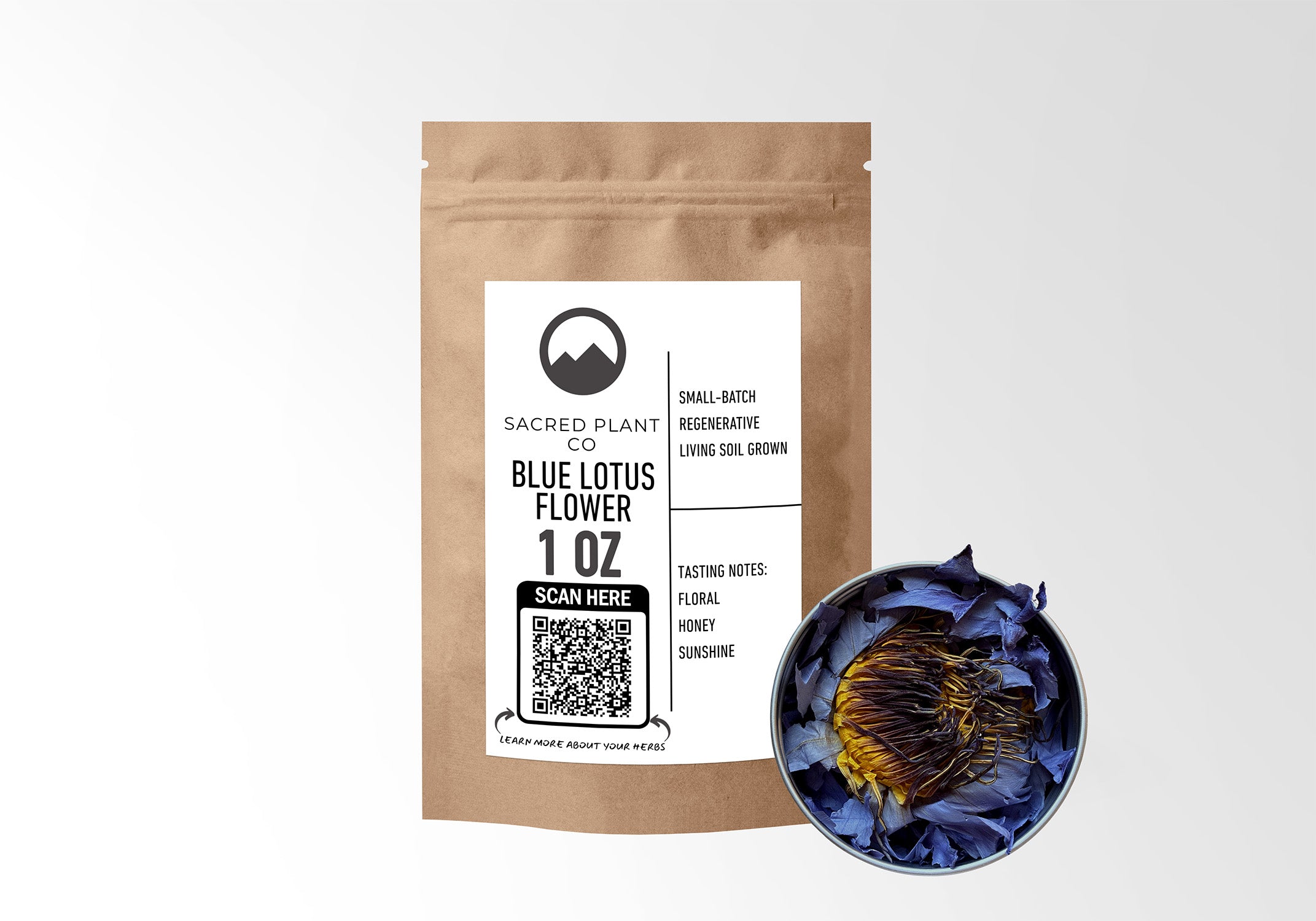
Blue Lotus Flower, Whole Dried
Tasting Notes: Floral, Honey, Sunshine
Caffeine-FreeWhole dried Nymphaea caerulea with petals, crown, and golden stamens intact. Single origin from a vetted partner farm and third-party lab verified per lot. The flower history remembered, prepared for the modern cup.
View ProductCertificate of Analysis
Every batch of our blue lotus is third-party lab tested. We do not publish a single fixed report link here because the active lot changes over time. To receive the current Certificate of Analysis for the exact lot you own or plan to buy, request it by lot number and our team will send it directly.
Request COA by Lot NumberNew to lab reports? Learn how to read one in our guide to understanding a Certificate of Analysis.
Frequently Asked Questions
What does blue lotus tea taste like?
Blue lotus tea has a mild, gently floral and slightly earthy flavor with a soft, almost wine-like undertone, making it pleasant on its own or lightly sweetened with honey. The taste is subtle rather than bold, so a longer steep brings out more character.
How much blue lotus should I use per cup?
Most people use 3 to 5 grams of dried blue lotus flower per 8-ounce cup, starting at the lower end of that range to gauge their personal response before adjusting upward. A heaping teaspoon or two of loose petals is a good visual guide.
What temperature water is best for blue lotus tea?
Water near 195 degrees Fahrenheit, just off a full boil, is ideal for blue lotus because it extracts the flower's compounds without scorching its delicate, heat-sensitive aromatics. Let boiled water rest about a minute before pouring.
How long should blue lotus tea steep?
Steep blue lotus tea for 10 minutes for a gentle cup, or up to 20 minutes for a stronger infusion, keeping the cup covered so the fragrant steam stays in. Lengthening the steep deepens both flavor and color.
Does blue lotus tea contain caffeine?
No, blue lotus tea is naturally caffeine-free, which is part of why it is favored as an evening or wind-down drink rather than a morning pick-me-up. It is a true herbal infusion, not a leaf from the tea plant.
What are the active compounds in blue lotus?
Blue lotus flower contains two aporphine alkaloids, apomorphine and nuciferine, which chemical analysis has identified as the principal compounds behind its calming, mildly mood-shifting reputation. These also help confirm authentic Nymphaea caerulea.
Is blue lotus tea safe to drink?
Blue lotus is generally treated as a gentle herb for healthy adults, but it should be avoided during pregnancy and breastfeeding, may cause drowsiness, and should not be combined with central nervous system medications without medical guidance. When in doubt, ask a healthcare provider.
Is blue lotus legal?
Blue lotus is legal to buy and consume in most of the United States, but the state of Louisiana restricts it, so buyers should always confirm the rules in your own location before purchasing. Laws can change, so check current local regulations.
Can I drink blue lotus tea every day?
Many people enjoy blue lotus tea occasionally as part of an evening ritual rather than daily, since it has a relaxing effect best suited to winding down rather than routine all-day sipping. Listen to your body and use it intentionally.
What herbs pair well with blue lotus tea?
Blue lotus pairs beautifully with calming herbs such as chamomile and passionflower, which deepen its relaxing character and make for a soothing evening blend. Dream herbs are another natural companion for nighttime use.
How Blue Lotus Connects to the Wider Apothecary
Blue lotus rarely travels alone. Because it lives in the quiet, evening corner of the herbal world, it sits comfortably beside the flowers and roots people reach for when the day winds down. If you are building a calming routine, our walkthrough on brewing traditional kava for ritual calm offers a stronger counterpart for evenings that call for deeper relaxation. For those who love the act of brewing itself, our guide to making osha root tea and our step-by-step tulsi tea method show how the same low-and-slow care applies across very different plants. And to understand why we keep returning to soil as the source of potency, the story of how we reached a 400 percent increase in soil biology in a single season ties it all together. For the full profile of this flower's history and lore, return to our cornerstone guide on the blue lotus flower, the sacred Egyptian bloom.
Conclusion
Making blue lotus tea is genuinely simple: a few grams of well-grown dried flower, water just off the boil, and 10 to 20 patient minutes. The harder part, the part that actually decides whether your cup lives up to three thousand years of legend, happens long before the kettle. It happens in the soil, in the drying room, and in the choice to test rather than guess. That is the difference between a faded flower and a real one. Brew it slowly, sip it with intention, and let the bloom that once floated on the Nile bring a little quiet to your evening.
References
- Emboden, W. A. (1989). Transcultural use of narcotic water lilies in ancient Egyptian and Maya drug ritual. Journal of Ethnopharmacology, 22(1), 61 to 71.
- Bertol, E., Fineschi, V., Karch, S. B., Mari, F., and Riezzo, I. (2004). Nymphaea cults in ancient Egypt and the New World: a lesson in empirical pharmacology. Journal of the Royal Society of Medicine, 97(2), 84 to 85.
- Diaz, J. H. (2016). Poisoning by Herbs and Plants: Rapid Toxidromic Classification and Diagnosis. Wilderness and Environmental Medicine, 27(1), 136 to 152. (Discussion of Nymphaea caerulea among traditional psychoactive plants.)
- Poklis, J. L., Mulder, H. A., Halquist, M. S., Wolf, C. E., Poklis, A., and Peace, M. R. (2017). The Blue Lotus Flower (Nymphaea caerulea) Resin Used in a New Type of Electronic Cigarette. Journal of Analytical Toxicology, 41(3), 191 to 197. (Identification of apomorphine and nuciferine.)
- Sacred Plant Co. The Science Behind Sacred Plant Co's Soil Regeneration: A Haney Score of 25.4 Surpasses Pristine Forest. Available at: sacredplantco.com.
This article is for educational purposes only. It is not intended to diagnose, prevent, or serve as a substitute for professional medical care. Please consult a qualified healthcare provider before adding any new herb to your routine.


