


Why Is Sage Sacred? Unlocking Ancient Wisdom, Modern Science & Spiritual Power
The smell of burning sage carries something beyond mere fragrance, it holds centuries of spiritual reverence, cultural tradition, and now, scientific validation. When indigenous peoples chose sage for their most sacred ceremonies, they weren't just selecting a pleasant-smelling plant. They recognized something deeper: sage's unique ability to shift energy, purify spaces, and facilitate profound spiritual connection. At Sacred Plant Co, we approach this remarkable herb through a regenerative lens that honors both traditional wisdom and modern understanding. The question isn't just why sage is sacred, it's how the relationship between soil health, cultivation practices, and spiritual potency creates medicine that works on multiple levels simultaneously. Understanding sage's sacred nature requires us to look beyond single compounds or cultural practices into the living system that produces such powerful healing.

Modern science confirms what traditional herbalists knew intuitively: The soil in which sage grows dramatically influences its medicinal compounds and energetic properties. When sage thrives in biologically rich, regeneratively managed ecosystems, like those we steward at our I·M·POSSIBLE Farm in Fruita, Colorado, the plant produces enhanced levels of 1,8-cineole, thujone, and other volatile oils that contribute to both its aromatic intensity and therapeutic effects.1 This connection between cultivation and quality forms the foundation of our sourcing philosophy. We evaluate every herb through regenerative principles, understanding that truly sacred medicine emerges from healthy soil, thriving ecosystems, and respectful harvest practices.
🌿 Related Reading: Discover how traditional practices meet modern application in our comprehensive guide to White Sage: Ancient Herb, Modern Cleansing Rituals.
What You'll Learn
- Why indigenous cultures across continents independently recognized sage as sacred, and how their traditional uses align with modern research on the plant's antimicrobial and psychoactive properties
- The specific biochemical compounds that make sage spiritually potent—including thujone, 1,8-cineole, and camphor—and how these constituents affect both air quality and human consciousness
- How regenerative farming practices influence sage's medicinal compound production, creating herbs with enhanced therapeutic potency compared to conventionally cultivated alternatives
- Step-by-step protocols for effective smudging ceremonies that honor traditional practice while incorporating proper ventilation, fire safety, and cultural respect
- The critical differences between White Sage (Salvia apiana), Blue Sage, Black Sage, and Garden Sage (Salvia officinalis)—and when to use each variety for specific spiritual purposes
- Scientific evidence supporting sage's antimicrobial properties, including studies showing up to 94% reduction in airborne bacteria after burning sage for specific durations
- Ethical sourcing considerations and sustainability concerns around wild-harvested sage, plus how to identify responsibly cultivated options that support conservation
- Alternative uses for sage beyond traditional smudging—including smoke-free preparations, culinary applications, and ceremonial combinations with complementary herbs
The Sacred Origins: Why Ancient Cultures Revered Sag
Sage's designation as sacred didn't emerge from a single culture or tradition, it appeared independently across civilizations separated by oceans and millennia. This convergent recognition suggests something fundamental about the plant's properties that transcends cultural conditioning. When Native American tribes of the Pacific Southwest, Mediterranean herbalists, ancient Chinese practitioners, and European folk healers all identified sage as spiritually significant, they were responding to real effects on consciousness, environment, and community health.
Native American Spiritual Traditions
For Indigenous peoples of North America, particularly California tribes including the Chumash, Cahuilla, and Kumeyaay, White Sage (Salvia apiana) holds profound ceremonial importance. The plant grew abundantly in their ancestral territories, and its distinctive silvery leaves and powerful aroma made it unmistakable in the landscape. Smudging ceremonies using white sage served multiple functions simultaneously: purifying individuals and spaces before sacred rituals, cleansing objects of unwanted energies, preparing hunters for the spiritual dimensions of the hunt, and marking important life transitions.2
The rising smoke from burning sage was understood as a carrier—a vehicle that transported prayers, intentions, and gratitude to the spirit world. This wasn't metaphorical thinking; it reflected a worldview where the boundaries between physical and spiritual realms remained permeable. The smoke itself became sacred through intention, ceremony, and the plant's inherent properties. Traditional protocols surrounding sage harvest emphasized this sacred relationship: gathering only what was needed, offering prayers and gratitude to the plant, never taking from the same location repeatedly, and ensuring seeds remained for future growth.3
🌎 Deeper Context: Explore the full scope of traditional indigenous medicine in our guide to Native American Sacred Herbs: Traditional Uses and Modern Applications.
Mediterranean and European Sacred Use

In ancient Rome and Greece, garden sage (Salvia officinalis) held honored status in temple ceremonies and healing practices. The Romans considered sage a sacred herb associated with immortality, wisdom, and health preservation. Its Latin name derives from "salvere," meaning "to save" or "to heal"—a direct acknowledgment of its medicinal power. Roman temples burned sage to purify sacred spaces before major ceremonies, and warriors consumed sage preparations before battle to enhance courage and mental clarity.4
Medieval European herbalists continued this reverence, incorporating sage into protective amulets, healing tinctures, and ceremonial incenses. The plant featured prominently in folk magic traditions, where it was believed to ward off evil spirits, protect against infectious disease, and enhance wisdom. During plague outbreaks, people burned sage alongside other aromatic herbs, inadvertently benefiting from its antimicrobial properties. The saying "Why should a man die whilst sage grows in his garden?" reflected sage's reputation as a near-panacea in European herbalism.5
Asian Medicinal Traditions
While different Salvia species grow natively in Asia, traditional Chinese medicine recognized sage's family members as powerful healing allies. Dan Shen (Salvia miltiorrhiza), commonly called red sage or Chinese sage, appears extensively in traditional formulas for cardiovascular health and blood circulation. Buddhist and Taoist ceremonial practices incorporated sage relatives into incense blends designed to facilitate meditation, clear stagnant energy, and create conducive environments for spiritual practice.
The energetic properties attributed to sage in Chinese medicine—including its ability to move stagnant qi, clear heat, and calm the spirit—parallel descriptions from other traditional systems. This cross-cultural consistency in sage's spiritual applications suggests the plant produces measurable effects beyond cultural placebo responses.
The Science Behind Sage's Sacred Power
Modern phytochemistry reveals why sage earned its sacred status across cultures. The plant produces a complex array of bioactive compounds that affect both physical environment and human neurology. Understanding these constituents helps bridge traditional wisdom with contemporary research, showing that sage's spiritual reputation rests on tangible biochemical foundations.
Antimicrobial and Air-Purifying Properties

One of sage's most validated traditional uses involves purifying air and living spaces. A landmark 2007 study demonstrated that burning medicinal smoke from sage reduced airborne bacterial colonies by 94% after one hour, with the air remaining relatively bacteria-free for 24 hours.6 This research validates traditional practices of burning sage to cleanse spaces, particularly before ceremonies or during illness.
The antimicrobial effects derive primarily from sage's volatile oils, especially 1,8-cineole (eucalyptol) which comprises 24.6% to 71.7% of white sage essential oil.7 This compound shows activity against numerous bacteria including Staphylococcus aureus, Escherichia coli, and various respiratory pathogens. Additional antimicrobial constituents include camphor, borneol, and various terpenes that work synergistically.
Beyond killing airborne bacteria, these compounds create an environment inhospitable to certain microorganisms. The aromatic molecules bind to bacterial cell membranes, disrupting their integrity and preventing reproduction. When traditional healers described sage as "cleansing evil spirits," they were accurately observing sage's ability to eliminate invisible threats to community health.
Psychoactive and Consciousness-Altering Effects
Sage contains thujone, a monoterpene compound that affects GABA receptors in the brain—the same receptors influenced by anxiety medications and alcohol. At appropriate doses, thujone produces mild psychoactive effects including altered perception, enhanced awareness, and changes in consciousness that people often describe as spiritual or transcendent.8 These effects occur at sub-toxic levels when sage smoke is inhaled during traditional ceremonies.
Research on sage's cognitive effects shows it can enhance memory, improve mood, and reduce anxiety symptoms. A 2003 study found that sage essential oil improved word recall and increased alertness in healthy young adults.9 Another study documented white prairie sage's effectiveness in treating anxiety and depression in certain cultural contexts, supporting its traditional use for emotional and spiritual healing.10
The combination of aromatic stimulation, mild psychoactivity, and ceremonial context creates conditions conducive to altered states of consciousness. When indigenous practitioners described sage as facilitating communication with spiritual realms, they were describing genuine neurological effects produced by sage's biochemical constituents.
Stress Reduction and Nervous System Effects
Sage's anxiolytic (anxiety-reducing) properties extend beyond thujone's GABA effects. The plant contains rosmarinic acid, which shows significant anti-inflammatory and antioxidant activity in neural tissue. These compounds help protect the nervous system from oxidative stress while promoting parasympathetic nervous system activation—the physiological state associated with relaxation, healing, and spiritual receptivity.
The aromatic compounds in sage smoke directly stimulate the olfactory system, which maintains unique connections to the limbic brain regions governing emotion and memory. This neurological pathway explains why sage's scent can rapidly shift emotional states and create powerful associations with spiritual practice.
Understanding Different Types of Sacred Sage
Not all sages are created equal—different species within the Salvia genus offer distinct properties, traditional uses, and spiritual applications. Understanding these differences helps practitioners select the most appropriate sage for their specific intentions and ceremonies.
White Sage (Salvia apiana) – The Powerhouse Purifier
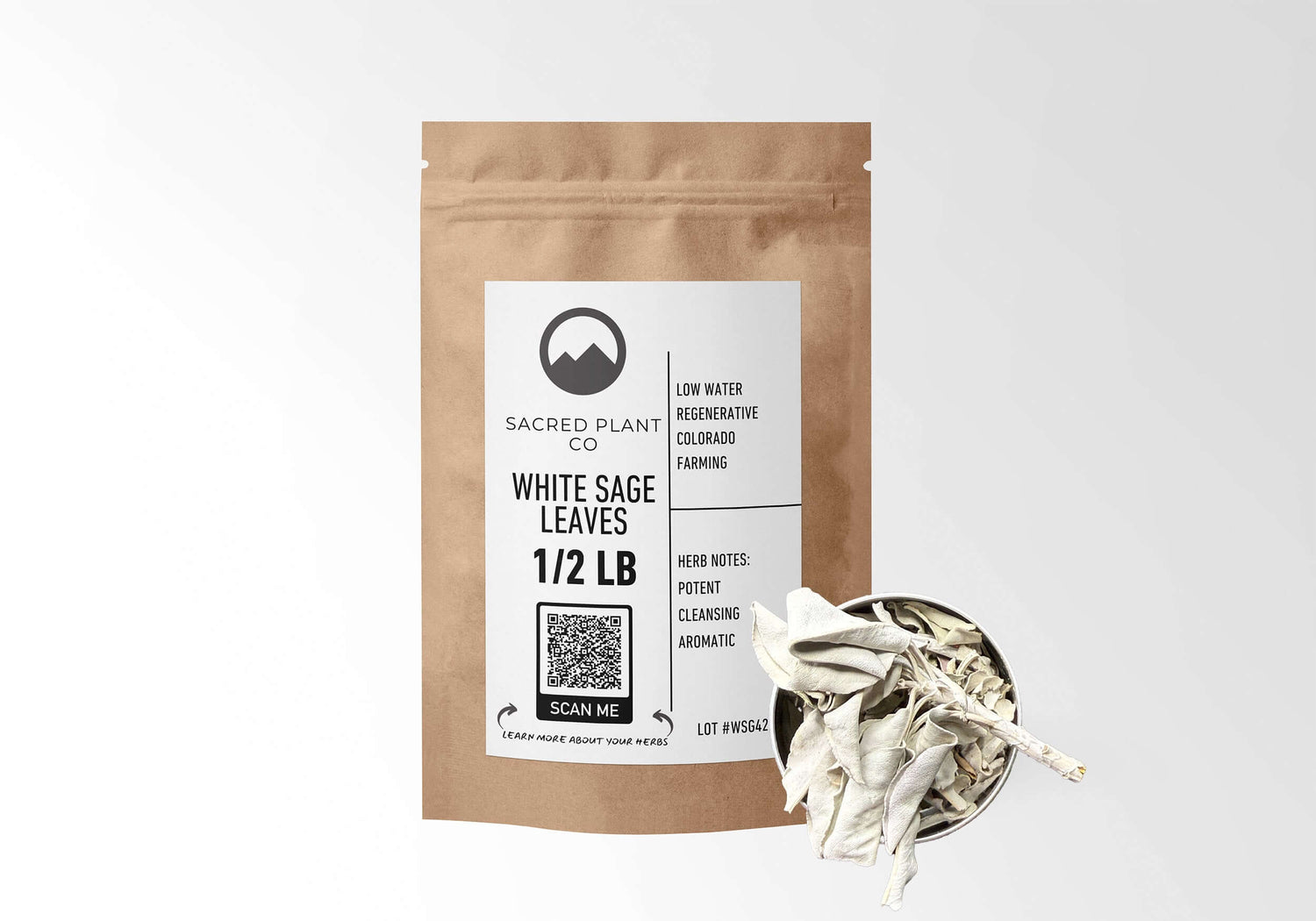
White sage grows natively in the southwestern United States and northern Mexico, thriving in hot, arid climates. Its silvery-white leaves and intense aromatic profile make it the most sought-after sage for smudging ceremonies. White sage produces the strongest smoke of any Salvia species, with robust cleansing properties ideal for clearing heavy or stagnant energies.
Traditional uses focus on purification before major ceremonies, cleansing after illness or conflict, protecting sacred spaces and objects, and facilitating communication with spiritual realms. The smoke's intensity means white sage works best for intentional clearing rather than gentle, everyday use. However, this popularity has led to significant conservation concerns, making ethical sourcing absolutely critical.11
Blue Sage (Salvia azurea) – The Gentle Healer
Blue sage produces a lighter, more floral smoke compared to white sage's intensity. Native to central and eastern North America, blue sage was used traditionally for healing ceremonies, prosperity rituals, and attracting positive energies after spaces had been cleared. The gentler energy makes blue sage ideal for regular use, meditation support, and situations where subtle rather than dramatic energy shifts are desired.
Blue sage's calming properties support emotional healing and spiritual opening without the aggressive clearing effect of white sage. Many practitioners use blue sage following white sage cleansing to invite in gentle, healing energies.
Black Sage (Salvia mellifera) – The Dreamweaver's Ally
Black sage grows along the California coast and produces a heavier, more herbaceous smoke. Traditional applications include dreamwork and lucid dreaming support, protection during spiritual journeys, introspective and shamanic work, and deep emotional release. The smoke's grounding quality helps practitioners maintain connection to body awareness during expanded consciousness states.
Black sage works particularly well for evening ceremonies, pre-sleep rituals, and any spiritual work requiring both protection and deep inner exploration.
Garden Sage (Salvia officinalis) – The Accessible Alternative
Common garden sage offers a sustainable alternative to wild-harvested white sage. This Mediterranean species thrives in cultivation, grows easily in most temperate climates, and produces abundant aromatic leaves. While garden sage's spiritual properties differ somewhat from white sage, it provides effective purification, wisdom enhancement, and memory support.
For practitioners concerned about over-harvesting of wild white sage, garden sage offers an ethically sound choice that can be grown in home gardens. The plant's adaptability to various climates and ease of cultivation make it accessible to anyone interested in developing a personal relationship with sage medicine.
✨ Comparative Analysis: Explore how sage compares to other sacred cleansing tools in our detailed guide Comparing Spiritual Powerhouses: Vibhuti vs. Palo Santo, Sage, and Sweetgrass.
How to Conduct Sacred Sage Ceremonies

Effective sage ceremonies combine proper technique, clear intention, fire safety, and cultural respect. Whether you're new to working with sage or deepening an established practice, these protocols ensure safe, meaningful experiences that honor traditional wisdom while adapting to modern contexts.
Preparation and Setting Intention
Sacred work begins before the sage is lit. Create a clear intention for your ceremony—this might be releasing what no longer serves you, inviting clarity and peace, protecting your space, or honoring a life transition. Speak this intention aloud or hold it firmly in your awareness throughout the ceremony.
Gather your materials: sage bundle or loose sage leaves, fireproof vessel (ceramic bowl, abalone shell, or cast iron pan filled with sand), lighter or matches, feather or hand for directing smoke (feathers should be naturally molted, never plucked), and a bowl of water or sand for extinguishing. Open windows and doors to allow smoke and released energies to exit—this ventilation is both practically important and symbolically significant.
The Smudging Process Step-by-Step
Lighting: Hold the sage bundle at a 45-degree angle and light the end. Allow it to flame for 20-30 seconds, then gently blow out the fire, leaving the sage smoldering and smoking. If using loose leaves, place them in your fireproof vessel and light them, allowing them to smolder rather than burn with open flame.
Self-Cleansing: Begin by smudging yourself. Use your hand or a feather to waft smoke toward your body, starting at your feet and moving upward. Pay particular attention to your head, heart, hands, and feet—energy centers in many spiritual traditions. As you work, visualize the smoke carrying away tension, negativity, and stagnant energy.
Space Cleansing: Move through your space in a deliberate pattern. Many traditions recommend moving clockwise (representing growth and movement forward) or starting at the entrance and moving systematically through each room. Direct smoke into corners, closets, and areas behind doors where energy can accumulate. For doorways and windows—energetic thresholds—make intentional gestures drawing protective boundaries.
Object Cleansing: Crystals, ritual tools, newly acquired items, or objects associated with difficult memories can all benefit from sage cleansing. Hold the object in the smoke or pass it through the smoke stream while holding your cleansing intention.
Closing: To complete your ceremony, express gratitude to the sage plant, the elements involved, and any spiritual forces you work with. Fully extinguish the sage by pressing it firmly into sand or water, ensuring no embers remain. Store your sage in a dry place for future use.
Cultural Respect and Ethical Considerations
When working with sage, particularly white sage, acknowledge its origins in indigenous spiritual practice. While smoke cleansing appears across numerous cultures, the specific protocols and language around white sage smudging belong to Native American traditions. Non-indigenous practitioners can work respectfully with sage by using neutral terminology like "smoke cleansing" rather than "smudging" (which refers specifically to indigenous ceremonies), sourcing sage from sustainable cultivators rather than wild-harvested sources, educating themselves about indigenous plant conservation efforts, and considering whether garden sage, rosemary, or other culturally appropriate alternatives might better serve their practice.
This cultural consciousness doesn't diminish the power of working with sage—it enhances it by fostering an attitude of respect, reciprocity, and awareness that deepens spiritual practice.
Beyond Smudging: Creative Sage Applications
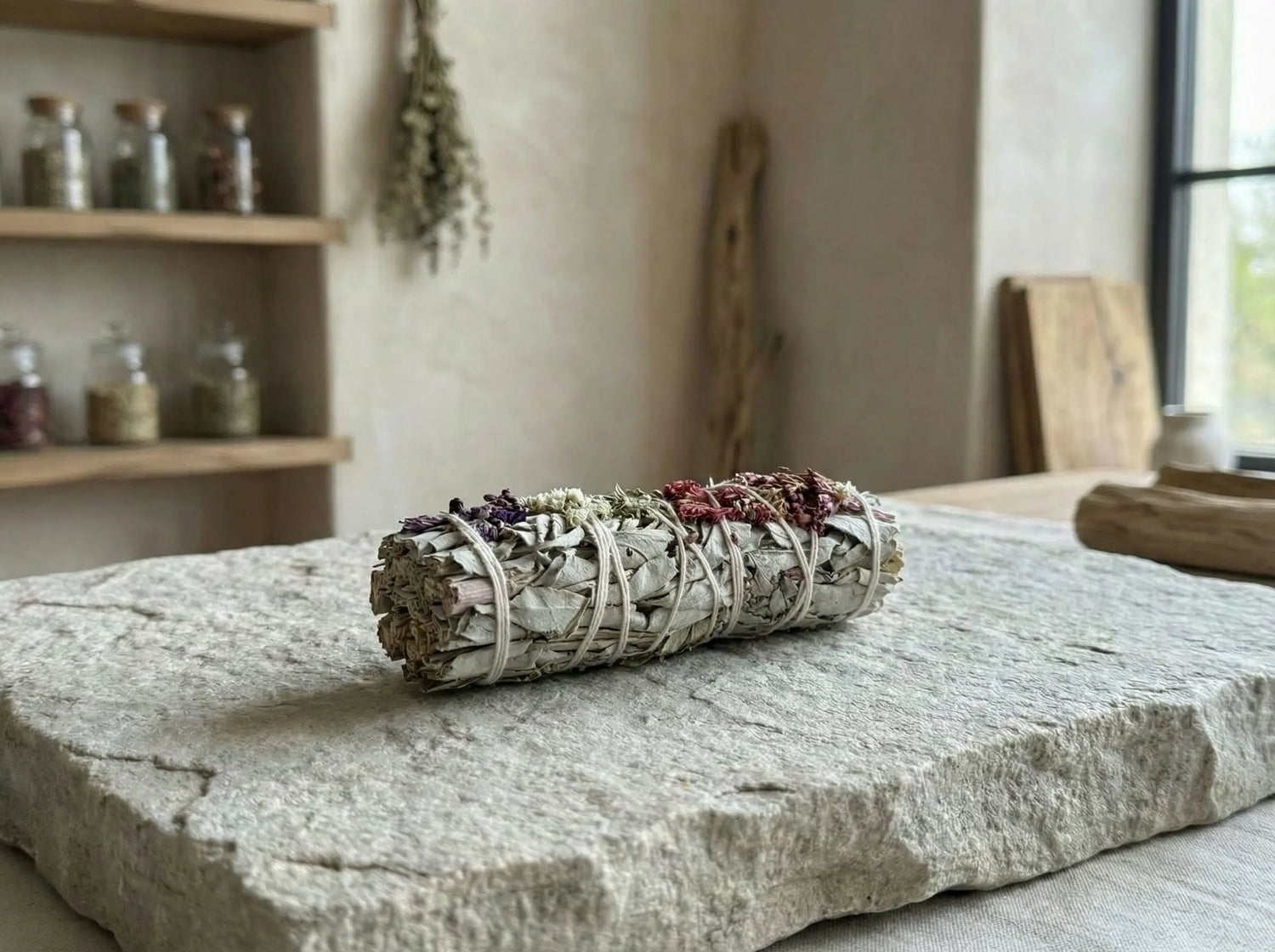
While smudging remains sage's most recognized spiritual application, the plant offers numerous other ways to work with its sacred properties. These alternatives prove especially valuable for smoke-sensitive individuals, apartment dwellers with smoke alarms, or practitioners seeking to diversify their relationship with sage medicine.

Sage Cleansing Bath Ritual
Create a purifying bath that cleanses both physical body and energetic field.
Ingredients:
- 1/4 cup dried white sage leaves (or 1/2 cup fresh)
- 1/4 cup Epsom salts
- 1/4 cup dried lavender flowers
- 5-10 drops sage essential oil (optional)
- Muslin bag or cheesecloth for herbs
Instructions:
- Place sage and lavender in a muslin bag and tie securely
- As bath fills with warm water, place the herb bag under the running water
- Add Epsom salts and essential oil directly to water
- Before entering, set your cleansing intention
- Soak for at least 20 minutes, visualizing the water drawing out stagnant energy and worry
- As you drain the bath, imagine releasing all that no longer serves you
Best used: After difficult situations, before important transitions, during new or full moons, or whenever you feel energetically heavy.

Sage Energy-Clearing Spray
A smoke-free alternative that works beautifully in shared spaces, offices, or anywhere open flame isn't appropriate.
Ingredients:
- 2 cups distilled water
- 2 tablespoons dried sage (preferably white sage)
- 10-15 drops sage essential oil
- 1 tablespoon witch hazel (preservative)
- Clear quartz crystal (optional, for charging)
Instructions:
- Bring water to boil and add dried sage
- Cover and steep for 20-30 minutes as water cools
- Strain thoroughly, pressing sage to extract all liquid
- Add witch hazel and essential oil to the sage water
- Pour into spray bottle, add crystal if desired
- Shake before each use and spray around your space while holding cleansing intention
Storage: Refrigerate and use within 2-3 weeks. The witch hazel helps preserve, but without synthetic preservatives, this spray has limited shelf life.

Sage Meditation Tea
Important Note: Use only culinary garden sage (Salvia officinalis) for internal consumption, never white sage. White sage is sacred medicine for external use only.
Ingredients:
- 1-2 teaspoons dried garden sage leaves
- 1 cup boiling water
- Honey or lemon to taste (optional)
Instructions:
- Place sage leaves in a cup or teapot
- Pour boiling water over leaves
- Cover and steep for 5-7 minutes
- Strain and add honey or lemon if desired
- Sip slowly while setting intention for clarity and wisdom
Best used: Before meditation, journaling, or any practice requiring mental clarity. Not recommended during pregnancy or for those with seizure disorders due to thujone content.

Sage Protection Sachet
Create portable protection that doesn't require burning.
Ingredients:
- Small cloth bag (natural fiber like cotton or linen)
- Dried sage leaves
- Optional additions: rosemary for protection, lavender for peace, cedar for grounding, salt for purification
Instructions:
- Choose your cloth bag and fill it about halfway with dried sage
- Add any complementary herbs
- As you tie the bag closed, speak your protective intention aloud
- Place the sachet in your car, hang above doorways, tuck into luggage, keep in your workspace, or carry in pockets or bags
- Refresh monthly by opening the bag, adding fresh herbs, and renewing your intention
These sachets work through both aromatic effects (as essential oils slowly volatilize from the dried herbs) and intentional focus. They're particularly useful for creating protective barriers in spaces you can't smudge.
Sage Safety Considerations and Best Practices
Critical Safety Guidelines
Fire Safety: Never leave burning sage unattended. Keep away from flammable materials, curtains, papers, and fabrics. Always use a fireproof container and ensure sage is completely extinguished after use by pressing into sand or water.
Ventilation: Always work in well-ventilated spaces with windows or doors open. Smoke inhalation can irritate respiratory systems, and some compounds in sage smoke, while beneficial in small amounts, become problematic with prolonged exposure in enclosed spaces.
Respiratory Conditions: People with asthma, COPD, or other respiratory conditions should exercise caution with smoke of any kind. Consider smoke-free alternatives like sprays, baths, or sachets.
Pregnancy and Children: Pregnant individuals should avoid intensive sage smoke exposure, particularly from white sage which contains thujone. While occasional ceremonial use is likely safe, frequent exposure could potentially affect pregnancy. Keep children and pets away from direct smoke.
Internal Use: White sage is for external ceremonial use only. Never consume white sage internally. Garden sage (Salvia officinalis) is safe for culinary and tea use but should be consumed in moderation due to thujone content.
Storage and Preservation
Proper storage maintains sage's potency and extends its usable life. Store dried sage in airtight containers away from direct sunlight and moisture. Glass jars with tight-fitting lids work best. Keep sage in a cool, dark location like a pantry or closet. Properly stored sage maintains good aromatics for 1-2 years, though its potency gradually diminishes over time. If sage develops musty smell or visible mold, discard it immediately.
For those growing their own sage, harvest during dry weather after morning dew has evaporated. Bundle stems with cotton string and hang upside down in a dark, well-ventilated area for 2-3 weeks until completely dry. Once dried, remove leaves from stems and store as described above, or leave bundles intact for smudging use.
Sustainability and Ethical Sage Sourcing

Sage's popularity has created serious conservation challenges, particularly for wild white sage populations. Understanding these issues and making informed sourcing decisions helps protect sacred plant medicines for future generations while supporting sustainable growing practices.
The Wild-Harvesting Crisis
White sage grows naturally in limited geographic areas—primarily coastal sage scrub ecosystems in southern California and northern Baja California. These ecosystems face multiple threats including urban development, climate change, altered fire regimes, and over-harvesting. Commercial demand for white sage has led to unsustainable wild collection, with some areas showing dramatic population declines.12
The problem intensifies because white sage reproduces slowly and requires specific conditions to thrive. Immature harvesting (taking plants before they've produced seeds), complete plant removal (rather than selective leaf harvest), and repeated harvesting from the same locations all damage wild populations. Additionally, much commercial wild-harvesting occurs without proper permits on public and indigenous lands—essentially theft of sacred medicine from its traditional stewards.
Cultivated Sage as a Solution
The solution lies in supporting cultivated sage from regenerative farms. White sage can be grown successfully outside its native range when given proper conditions: excellent drainage, infrequent watering, full sun exposure, and alkaline to neutral soil pH. Regeneratively grown sage offers several advantages: it relieves pressure on wild populations, allows quality control and consistent supply, permits harvest timing for optimal compound production, and creates economic incentives for sustainable cultivation.
At Sacred Plant Co, our sourcing prioritizes regeneratively cultivated sage grown using Korean Natural Farming principles at our I·M·POSSIBLE Farm or through partnerships with like-minded growers. We evaluate quality through regenerative standards—understanding that how herbs are grown directly impacts their medicinal potency and spiritual efficacy. When we source beyond our own farm operations, we verify growing practices, harvest sustainability, and supply chain transparency.
How to Identify Ethical Sage
When purchasing sage, ask suppliers these questions: Where was this sage grown? (Cultivated or wild-harvested? If wild, with what permits and protocols?), Who grew or harvested it? (Support indigenous growers when possible), What growing methods were used? (Regenerative, conventional, wildcrafted with regeneration?), How fresh is it? (Aromatic potency indicates quality and freshness).
Red flags include: extremely cheap prices (suggesting mass wild-harvesting), lack of information about origin, labels claiming "wild-crafted" without explanation of sustainability, sage with minimal aroma (old, improperly stored, or low-quality), and packaging that doesn't protect the herb from light and air.
🌱 Learn More: Discover additional sacred herbs and sustainable sourcing practices in our comprehensive guide to The Spiritual Use of Mugwort for Intuition and Visionary Journeys.
Certificate of Analysis: Our Commitment to Transparency
At Sacred Plant Co, we believe transparency builds trust. Every batch of sage we offer comes with a Certificate of Analysis documenting purity, testing for contaminants, and confirming botanical identity. This independent third-party testing ensures you receive exactly what you expect—pure, potent sage grown with integrity.
Our COAs test for: heavy metals (lead, arsenic, cadmium, mercury), microbial contaminants (E. coli, Salmonella, mold), pesticide residues (even though we use regenerative methods, we verify absence), and botanical identity confirmation (ensuring you receive authentic Salvia apiana).
Frequently Asked Questions About Sacred Sage
Conclusion: Honoring Sage's Sacred Legacy
Sage's sacred status across cultures and centuries reflects genuine properties that affect physical environment, human consciousness, and community wellbeing. Modern science validates what traditional practitioners knew intuitively—this remarkable plant produces measurable effects on air quality, microbial presence, and neurological function that support its spiritual applications.
Yet understanding why sage is sacred requires moving beyond chemical constituents into relationship—between people and plants, tradition and innovation, taking and giving back. When we approach sage with reverence, source it sustainably, use it thoughtfully, and honor the cultures who've protected this knowledge, we participate in something larger than individual wellness. We become part of an ancient lineage of healers, practitioners, and everyday people who've recognized plants as allies in the ongoing work of purification, protection, and spiritual connection.
At Sacred Plant Co, we view sage through this comprehensive lens—honoring traditional wisdom while applying regenerative principles that ensure sacred plants thrive for generations to come. Every batch of sage we offer represents our commitment to quality, sustainability, and the understanding that truly potent medicine emerges from healthy soil, mindful cultivation, and respectful harvest.
Whether you're beginning your relationship with sage or deepening an established practice, we invite you to experience the difference that regenerative growing makes. When sage plants thrive in rich, biologically active soil tended with intention and gratitude, they produce medicine that works on every level—physical, emotional, and spiritual.
References
- Tildesley NT, Kennedy DO, Perry EK, et al. "Salvia lavandulaefolia (Spanish sage) enhances memory in healthy young volunteers." Pharmacol Biochem Behav. 2003;75(3):669-674. DOI: 10.1016/s0091-3057(03)00122-9
- Moerman DE. "Native American Ethnobotany." Timber Press, 1998. Database of indigenous plant uses documenting sage's ceremonial significance among Pacific Coast tribes.
- United Plant Savers. "White Sage (Salvia apiana) Conservation Status." Available at: https://unitedplantsavers.org/species-at-risk/white-sage/. Accessed December 2024.
- Pliny the Elder. "Natural History, Book 24." circa 77 CE. Early documentation of sage's sacred status in Roman temple ceremonies and medicinal applications.
- Grieve M. "A Modern Herbal: Sage." Botanical.com. Originally published 1931. Historical overview of sage in European folk medicine and spiritual traditions.
- Nautiyal CS, Chauhan PS, Nene YL. "Medicinal smoke reduces airborne bacteria." J Ethnopharmacol. 2007;114(3):446-451. DOI: 10.1016/j.jep.2007.08.038. Key study demonstrating 94% reduction in airborne bacteria after burning medicinal herbs including sage.
- Adams RP, Garcia C, Altarejos J. "Comparisons among the leaf essential oils of Salvia apiana, S. brandegei, and S. leucophylla (Lamiaceae) from California and Mexico." J Essent Oil Res. 2005;17(5):554-557. Chemical analysis of white sage essential oil composition.
- Hold KM, Sirisoma NS, Ikeda T, Narahashi T, Casida JE. "Alpha-thujone (the active component of absinthe): gamma-aminobutyric acid type A receptor modulation and metabolic detoxification." Proc Natl Acad Sci USA. 2000;97(8):3826-3831. DOI: 10.1073/pnas.070042397
- Kennedy DO, Pace S, Haskell C, Okello EJ, Milne A, Scholey AB. "Effects of cholinesterase inhibiting sage (Salvia officinalis) on mood, anxiety and performance on a psychological stressor battery." Neuropsychopharmacology. 2006;31(4):845-852. DOI: 10.1038/sj.npp.1300907
- Cruz-Juarez A, Vidal-Limon A, Sandoval C, et al. "Anxiolytic effects of Salvia mexicana var. minor essential oil." J Tradit Complement Med. 2017;7(4):487-492. DOI: 10.1016/j.jtcme.2016.12.004. Documentation of sage's effectiveness for anxiety in traditional contexts.
- United Plant Savers. "At-Risk Medicinal Plant List." Updated 2024. Lists white sage among plants facing sustainability concerns due to over-harvesting and habitat loss.
- California Native Plant Society. "White Sage (Salvia apiana) Conservation Status Assessment." 2019. Analysis of wild white sage population trends and conservation recommendations for this increasingly threatened species.


