


Last Updated: May 11, 2026
How to Grow Wildflowers from Seed: A Regenerative Approach to a Living, Pollinator-Filled Meadow
 A diverse foundation of regionally matched wildflower seeds ensures staggered blooms that constantly feed local pollinator networks.
A wildflower meadow at peak bloom is one of the loudest gardens you will ever stand in. The buzz of bumblebees, the flicker of skippers and swallowtails moving from blanketflower to coneflower, the rustle of stiff stems in a late-July breeze. That sensory richness is not an accident. It is the visible result of dozens of species growing in cooperation with the soil microbes underneath them. Bare lawn cannot make that sound. A bag of generic seed scattered on dead dirt cannot either.
This regenerative wildflower growing guide walks you through how to start your own meadow from seed, from picking a regional mix matched to your climate to building the kind of living soil that turns a single-season bloom into a self-sustaining ecosystem. The science behind why diverse, well-soiled wildflower stands outperform thin monoculture plantings is real and measurable. Our own Regen Ag Lab microbial activity data showed a 400% increase in soil biology in a single season once diverse plantings replaced bare ground.1 That is the foundation underneath every bright bloom in this guide.
What You'll Learn
- How to pick a wildflower seed mix matched to your climate, elevation, and USDA zone
- Why living soil produces stronger blooms and more pollinator visits than fertilized lawn dirt
- The exact sowing steps for a successful first-year wildflower stand, with the biology behind each step
- How to read frost dates and soil temperature so seeds germinate instead of rotting
- Why most wildflower seeds need light to germinate and what that means for sowing depth
- How to support a young stand through the first 60 days without overdoing it
- What a premium wildflower stand looks, smells, and sounds like once established
- How a regenerative wildflower meadow keeps improving year after year with less and less input from you
Understanding the Natural Lifecycle of Wildflowers
 Including rapid-growth annuals alongside deep-rooting perennials creates immediate first-year color while the long-term meadow ecosystem establishes below ground.
Wildflower mixes are blends of annuals, biennials, and perennials that bloom in overlapping windows, so a healthy stand carries color from late spring through first frost. Understanding which species do what in their first year is the difference between a stand that looks patchy in Year 2 and one that fills in beautifully.
Most regional mixes follow a roughly 30% to 45% annual ratio, with the rest split between biennials and perennials. Annuals like baby's breath, cornflower, scarlet flax, and California poppy give you fast first-year color. Biennials (like wallflower) build root mass in Year 1 and flower in Year 2. Perennials like purple coneflower, Rocky Mountain penstemon, lupine, and gayfeather establish slowly in Year 1, then return and expand for many seasons after.
In wild meadows, this layered timing evolved to keep pollinators fed across the whole season. Bees and butterflies that emerge in May need different forage than those active in August. A well-designed mix replicates that ecological rhythm. That is why a single-species planting almost never feels as alive as a true wildflower stand. The diversity is the point.
Native habitat also tells you a great deal about what your mix wants. Mountain mixes evolved at 6,000 to 10,000 feet under intense UV, cold nights, lean soils, and a short growing season. Northeast mixes evolved with cold winters, humid summers, and the cold stratification that happens naturally when a seed overwinters under leaf litter. Southwest mixes evolved with hot, dry summers, sandy soils, and infrequent but heavy monsoon rains. Matching your mix to your climate is not optional. It is the single biggest predictor of success.
Preparing Soil for Regenerative Wildflower Seed-Starting
 Living, no-till soil packed with active fungal networks produces vastly stronger wildflower stems than ground degraded by chemical fertilizers.
Wildflowers do not need rich soil. They need living soil, which is a very different thing. The conventional advice to till in compost and synthetic fertilizer before sowing actually backfires for most wildflower mixes. High nitrogen produces leggy, leaf-heavy growth and weak blooms, and tilled ground destroys the fungal networks that diverse meadows depend on.
The regenerative approach is structural, not chemical. You build a no-till bed, top it with biologically active mulch, and let microbes do the fertility work. This works because wildflower seeds evolved to germinate on disturbed but undisturbed-underneath ground: a place where last year's plant residue has begun to break down on the surface, and the soil below is full of root channels, hyphae, and worm activity.
The full step-by-step no-till bed installation, including the bucket drainage test, cardboard sheet-mulch barrier, and the mulch-depth specs we use at the farm, is documented in our complete Terra Volcánica build guide. For wildflowers specifically, two numbers from that guide matter most:
- 4 to 5 inches of finished compost or aged organic matter across the bed surface, raked level. This is your seedbed.
- A LABS soil drench at 1:1000 dilution (1 ounce of LABS concentrate per 8 gallons of water) applied 24 to 48 hours before sowing. This is the microbial wake-up call that turns dead mulch into a living seedbed.
If your site has standing water after a hard rain, fix the drainage first. Most wildflower species, especially the Mediterranean and high-altitude ones, will rot in soggy ground. The bucket drainage test in the build guide is the fastest way to tell.
How to Start Wildflower Seeds Successfully
The five sowing steps below assume your bed is prepared and your last hard frost has passed. Each step has two parts: the practical how, and the biological why. Skipping the why is how most first-time wildflower stands fail.
Step 1: Wait until all threat of frost has passed in your area
 Proper surface contact and light exposure during germination translate directly into the vigorous multi-species bloom density seen here.
How: Look up your average last frost date and add a 10-day buffer. Confirm soil temperature at 2-inch depth is above 55°F before sowing.
Why it matters biologically: Cold soil will not germinate most wildflower seeds, even if the air feels warm. Seed metabolism is enzyme-driven, and the enzymes that convert stored starch into the energy a seedling needs do not switch on below about 50°F. A seed sown into cold ground sits inert and becomes food for soil pathogens long before it can sprout. Patience here is a biology decision, not a calendar decision.
Step 2: Lightly rake the soil surface
How: Use a garden rake to break up the top quarter inch of compost so it has fine texture. You are creating surface contact points, not turning the soil over.
Why it matters biologically: Wildflower seeds need direct contact with moist soil to absorb water and trigger germination. A perfectly smooth, sealed surface lets seeds skate around and dry out. A loose-textured surface gives them micro-pockets where humidity holds. You are not tilling. You are roughing.
Step 3: Scatter your seed evenly
How: Mix your seed with about 4 parts clean, dry sand to 1 part seed before broadcasting. Sand carries the seed visibly, helps even distribution by hand, and marks where you have already sown. Broadcast in two passes at right angles to each other for uniform coverage.
Why it matters biologically: Uneven sowing produces patchy stands, but it also distorts the natural ratio inside your mix. If you dump heavy in one corner, you over-represent the species that happen to dominate that scoop. The whole point of a balanced mix is balanced germination, which feeds a balanced pollinator community later. Sand makes that math work in your hands.
Step 4: Press the seeds gently into the soil, do not bury them
How: Walk slowly across the sown area, or use the flat back of a rake to press the seeds into firm soil contact. Most wildflower seeds want to be no deeper than two or three times their thickness, and many should sit right on the surface with only a faint dust of soil over them.
Why it matters biologically: Most wildflower species are light-dependent germinators. The plant evolved to sprout on disturbed surface ground (a hoofprint, a slumped bank, a burned patch). Their germination switches respond to red and far-red wavelengths of sunlight. Bury them too deep, and the signal never reaches them. They simply will not germinate, even if everything else is right.
Step 5: Water in gently and keep moisture consistent until established
How: Water with a fine misting nozzle or rose-head watering can. Avoid hose blast, which will float your seeds off-target and into low spots. Keep the bed evenly moist (not soaked) until seedlings reach 4 to 6 inches tall, which usually takes 3 to 6 weeks depending on species and weather.
Why it matters biologically: Germination is a one-way door. Once a seed imbibes water and the radicle (the first root) breaks through, the seed must continue receiving moisture or it dies. Drying out a half-germinated seed is the single most common cause of a sparse first-year stand. Hand-watering is not pampering. It is finishing what you started.
Germination typically begins in 5 to 14 days, with the fast annuals (cornflower, poppies, baby's breath) appearing first and the slower perennials (penstemon, gayfeather, coneflower) following over the next several weeks. Expect the first proper flowers in late spring to early summer.
Field Notes from I·M·POSSIBLE Farm
We sowed our largest wildflower stand on May 18, 2024, into a bed that had taken a LABS soil drench at 1:1000 forty-eight hours earlier. Germination across the mix was strong at roughly 70%, and we counted 14 of the 18 expected species in bloom by July. The four species that did not appear were all perennials we expect to see in Year 2. The most striking observation was pollinator response: by mid-July, a 30-second count produced 22 individual bee visits to one square meter of bloom. The adjacent unmulched control strip, sown the same week with the same seed but no LABS, germinated at roughly 45% with visibly thinner stems and almost no return visitors. The difference was not the seed. It was what the seed landed on.
Early Growth, Stress, and Resilience
 Allowing the top inch of soil to dry between waterings forces taproots deeper, building the structural resilience required for true drought tolerance.
The first 60 days after germination are when most home gardeners over-manage a wildflower stand and accidentally weaken it. The instinct is to weed aggressively, water on a fixed schedule, and worry about every patch that looks thin. The biology argues for restraint.
Wildflower seedlings benefit from mild stress. Plants that experience occasional dry-down between waterings push their roots deeper, which makes them drought-tolerant for the rest of the season. Plants that get watered on a soft, daily schedule develop shallow roots and collapse the first time a heat wave hits. The general rule we use at the farm is to water deeply, then let the top inch of soil dry before watering again. By week 6, most established wildflowers can handle a week of dry weather without help.
Thinning is rarely necessary in a properly broadcast stand. Plants self-sort by competition, with the strongest specimens of each species winning the closer competitions. Hand-pulling visible weeds before they flower is the most useful intervention you can make in the first season.
Spacing varies dramatically by species inside a mix. As a general reference, our build guide uses 12 inches for small annual herbs, 18 inches for medium perennials, and 24 inches for large perennial plants. Wildflower mixes are designed to self-space through competition rather than be measured out, so the per-square-foot density of seed (typically ¼ pound per 500 to 1,000 square feet) does the spacing math for you.
Resist the urge to fertilize. High-nitrogen fertilizer pushes leafy biomass at the expense of flowers and turns your stand into a mat of soft tissue that aphids and powdery mildew love. The compost mulch in your bed plus the microbial population activated by LABS will provide all the fertility a wildflower stand needs.
The Terra Volcánica Regenerative Growing System
At Sacred Plant Co, we developed the Terra Volcánica system for living, polycultural plantings exactly like a wildflower meadow. The system rests on three ideas that all apply directly to how a wildflower stand wants to be grown.
Soil structure before soil fertility
Wildflowers descended from species that evolved in disturbed but undisturbed-underneath soils, places where surface organic matter is breaking down and the layer below is porous and root-friendly. Terra Volcánica replicates that with cardboard sheet-mulch over compost mulch, with no rototilling and no synthetic inputs. You get the disturbance signal at the surface that triggers germination, with the intact fungal networks below.
Microbial inoculation as the spark
A pre-sowing LABS drench at 1:1000 establishes lactic acid bacteria that outcompete soil pathogens, speed nutrient cycling, and prime the soil to host the mycorrhizal fungi that a diverse meadow recruits over time. One ounce per 8 gallons of water, applied 24 to 48 hours before you scatter seed, is all it takes.
Diversity as a self-regulating mechanism
A wildflower polyculture handles pest pressure, disease pressure, and weather stress better than any monoculture planting could. Every species in the mix is filling a slightly different ecological niche. When the year is dry, the drought-tolerant species carry the bloom. When it is wet, the moisture-loving species do. The system, not the individual plant, is what you are growing.
The complete installation, including the drainage assessment, the bed layout, and the year-by-year evolution we have observed at the farm, is documented in our step-by-step regenerative herb garden system.
From Seed to a Living Ecosystem
 The diverse microbial biology recruited by a polyculture stand actively signals medicinal species to increase their volatile oil and alkaloid production.
A wildflower stand is less a crop and more a working pollinator habitat, and the early conditions you provide shape how rich that habitat becomes over time. Several species inside common regional mixes are also recognized medicinal herbs in their own right, including purple coneflower (Echinacea purpurea), lupine, gayfeather, and yarrow.4 The same soil conditions that support stronger blooms also support stronger secondary metabolite production in those medicinal species: the alkaloids, flavonoids, and volatile oils that make a plant medicinal in the first place form most abundantly when a plant is partnered with a diverse soil microbial community.
Root architecture matters here too. A perennial wildflower stand will sink taproots of 18 to 36 inches deep within two seasons. Those roots aerate compacted ground, pull mineral nutrients up from depths a lawn root will never reach, and leave organic matter behind when they die back each winter. That carbon stays in the soil. Over five years, a well-managed wildflower stand can measurably raise the organic matter content of the soil it grows in.
Stress is also part of the chemistry. Wildflowers exposed to mild drought, intense UV, and temperature swings produce more pigments and more aromatic compounds than coddled plants do. Year one is the year you set the conditions that will produce these results long-term, which is why the no-till bed, the LABS inoculation, and the restraint on irrigation all compound over time.
How to Identify a Premium Wildflower Stand
 A healthy ecosystem reveals itself not just in bright pigments, but in the audible hum of diverse, overlapping pollinator traffic.
A high-quality wildflower stand reveals itself in three ways: visible species diversity, layered bloom timing, and active pollinator traffic. Color alone is not the measure.
Species diversity. Stand in your meadow and try to count distinct species in a 3-foot by 3-foot square. A good first-year stand will show 5 to 8. A mature multi-year stand should reach 10 to 14. If you see fewer than 4, something has gone wrong, usually either poor sowing distribution, excess nitrogen, or one aggressive species (often cornflower or California poppy) outcompeting the rest.
Bloom succession. Walk the meadow weekly across the season. You should see different species peak at different times, with overlap. A premium stand has color from late spring through first frost without a flat gap. If everything blooms in a 3-week burst and goes brown, the mix was thin on perennials or the soil was too rich.
Pollinator traffic. A healthy wildflower stand should sound alive. On a calm midday in July, a 30-second visual count over one square meter should show at least 5 to 10 pollinator visits in a healthy stand, and 20-plus in a strong one. The biodiversity of the visitors also matters: honeybees, bumblebees, native solitary bees, butterflies, moths, hoverflies, and beneficial wasps should all show up over the season. A stand that only attracts honeybees is undersold by its mix.
Stem and color quality. Premium stand-grown wildflowers carry deep, saturated petal color and stiff, upright stems. Pale washed-out blooms or floppy stems usually point to excess water, excess fertility, or shade. Plants grown under mild stress on living soil look more vibrant, not less.
Why Many Growers Pair Wildflower Meadows with Single-Species Medicinal Beds
 While dedicated beds provide sustainable herbal harvests, wild polyculture margins pull in the complex fungal partners that benefit the entire landscape.
A wildflower meadow is an ecosystem. A single-species medicinal bed is a harvest crop. Many growers run both, and the two systems support each other.
The advantage of a wildflower stand is biological diversity, pollinator support, and soil-building. The limitation is that the harvestable medicinal yield from any one species inside a mix is small. If you want a serious supply of purple coneflower root for tincture-making, for instance, you will want a dedicated bed of Echinacea purpurea grown on regenerative soil rather than the 7% Echinacea share inside a Northeast mix. The same logic applies to lupine, gayfeather, and yarrow.
Growers also turn to dried herb suppliers like Sacred Plant Co when they want lab-tested, batch-traceable material in usable quantities while their own perennial beds are still establishing. A young coneflower plant grown from seed typically needs 2 to 3 years before the root is ready for harvest, and 4 years before harvest is sustainable without weakening the stand. Bridging that gap with high-quality dried herbs while you build a long-term garden is a sensible call. For the deeper traditional uses of purple coneflower, our guide to Echinacea as nature's shield walks through the immune-support tradition in detail.
Sacred Plant Co Regional Wildflower Seed Mixes
We offer three regional wildflower seed mixes, each formulated for the climate, elevation, and growing season of a specific part of North America. Pick the mix that matches your conditions, not the one that looks prettiest in photos. Climate match is the single biggest predictor of which seeds will germinate and which will bloom.
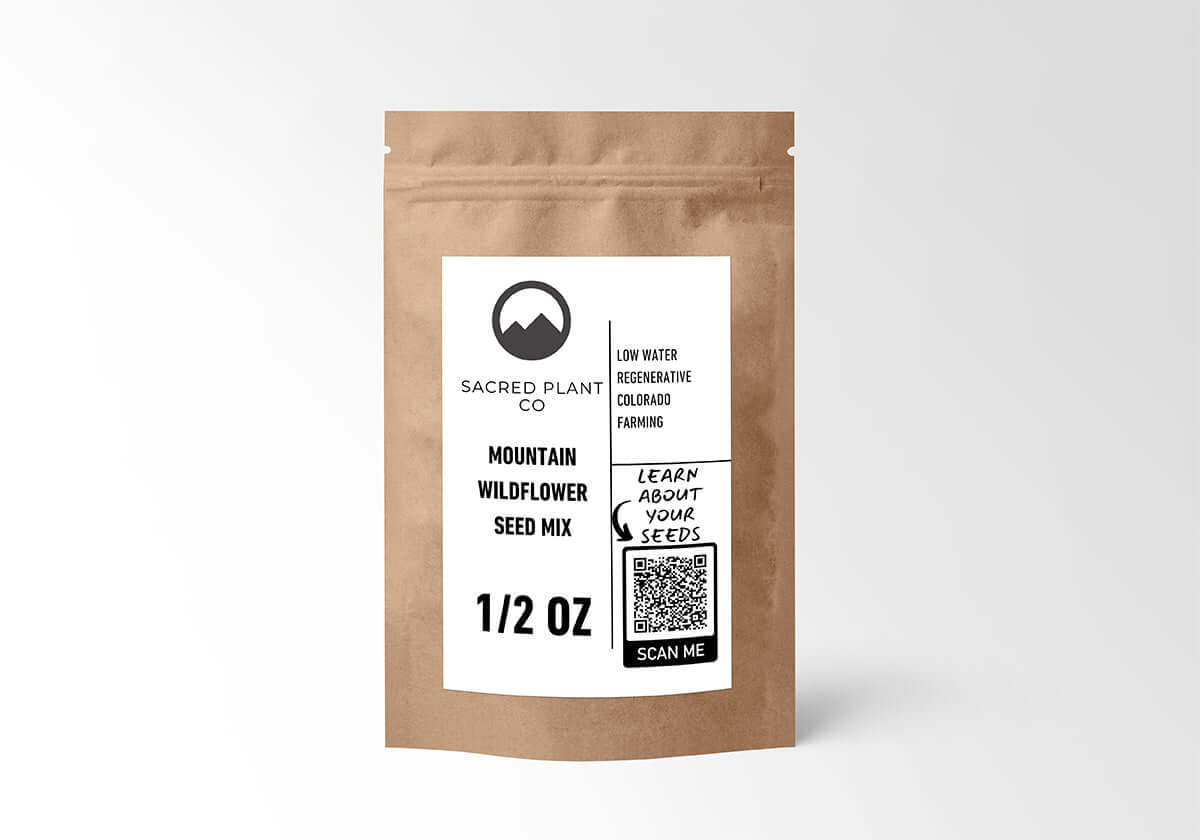
Mountain Wildflower Seed Mix
Starting at $4.38
An 18-species blend formulated for elevations of 6,000 to 10,000 feet with cold nights, intense UV, and a short growing season. Includes blue flax, blanketflower, columbine, Rocky Mountain penstemon, California poppy, and Shasta daisy. 45% annuals for first-year color, 55% biennials and perennials for long-term return. Sow at ¼ pound per 500 to 1,000 square feet.
Shop Mountain Mix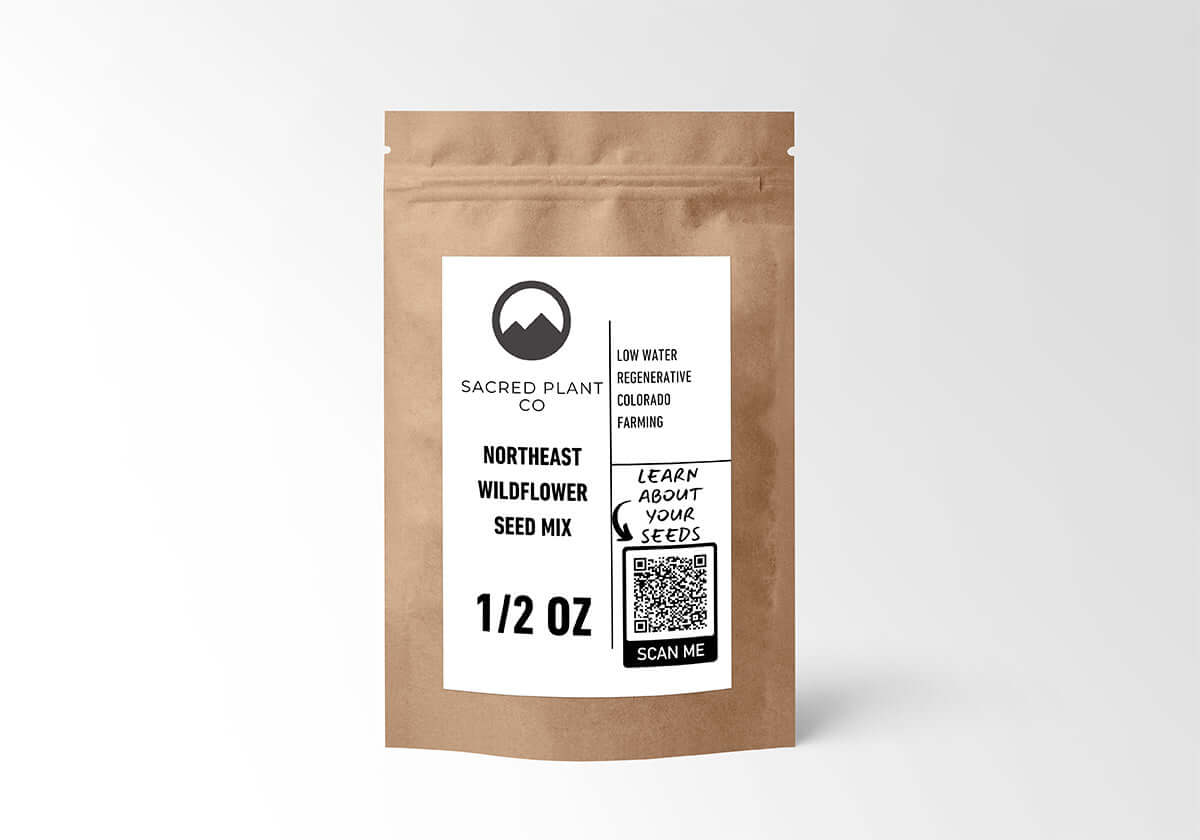
Northeast Wildflower Seed Mix
Starting at $4.38
A 19-species cold-hardy blend for USDA Zones 3 through 8, tuned for cool springs, humid summers, and fluctuating autumns. Features purple coneflower, New England aster, perennial lupine, scarlet flax, lance-leaved coreopsis, and gayfeather. 30% annuals plus 70% biennials and perennials, designed for first-year color and stronger return each season. Sow at ¼ pound per 625 to 1,250 square feet.
Shop Northeast Mix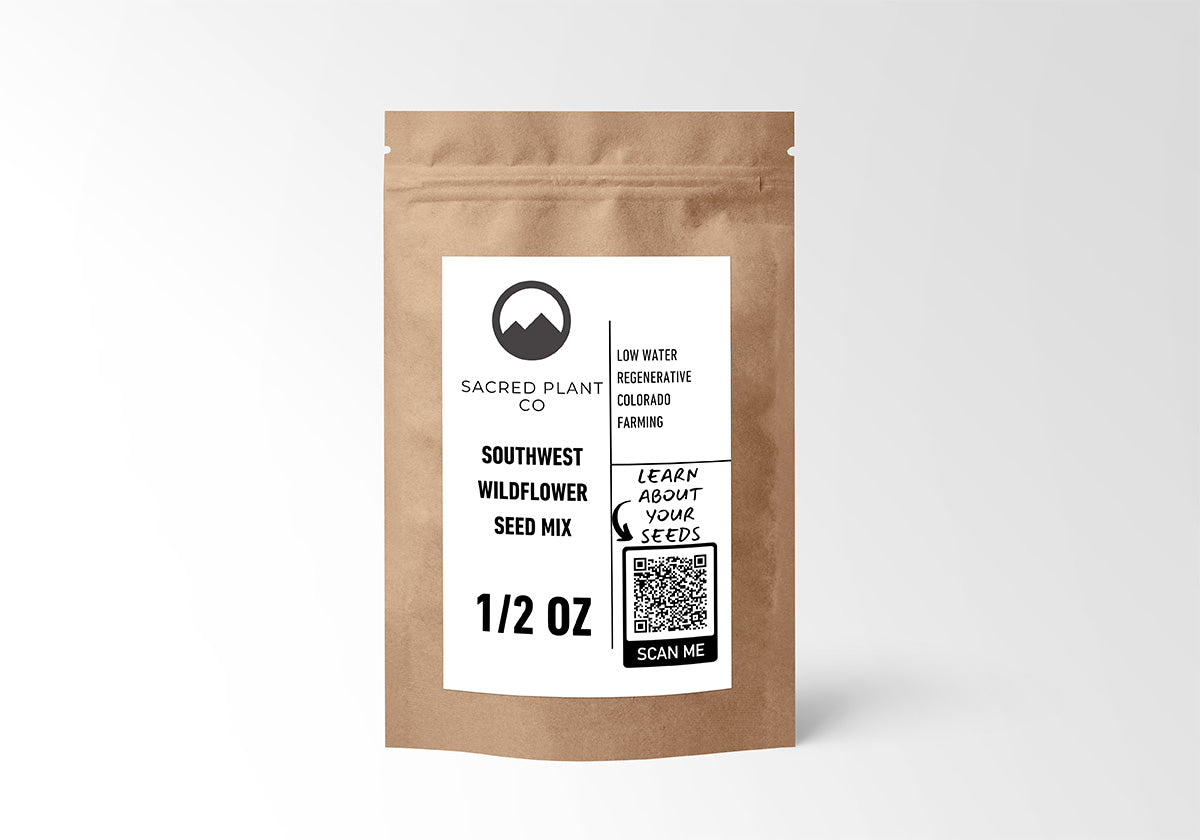
Southwest Wildflower Seed Mix
Starting at $4.38
A heat-tolerant blend designed for hot, dry summers across the low-elevation desert and semi-arid Southwest below 7,000 feet. Built for sandy soils, infrequent monsoon rain, and full-sun exposure. Mixes hardy annuals for first-year color with long-lasting perennials adapted to drought. Sow when soil reaches 55°F in spring, or dormant-sow in fall in mild-winter regions.
Shop Southwest MixWildflower Growing FAQs
How deep should wildflower seeds be planted?
Most wildflower seeds should be surface-sown or covered by no more than two to three times their thickness, because most species are light-dependent germinators.
Practically, this means scattering your seeds on a lightly raked surface, pressing them in for soil contact, and dusting them with only the thinnest layer of fine compost or sand if needed. Burying seeds a half inch or more is the most common cause of a no-show wildflower bed. The seed is alive but cannot detect the light signal it needs to switch on germination.
When is the best time to sow wildflower seeds?
The two best windows are early spring after the last hard frost, and late fall before the first hard freeze for dormant sowing.
Spring sowing gives you quicker first-season color and is the easier choice for beginners. Fall dormant sowing exposes seeds to natural cold stratification over winter, which improves germination on slower perennials like coneflower and gayfeather. If you are in a region with mild winters, fall sowing usually beats spring for overall first-year bloom volume.
Will I get flowers in the first year?
Yes, but mostly from the annual portion of your mix.
Most regional mixes are designed with 30% to 45% annuals specifically to give first-year color while the biennials and perennials get established underground. Expect strong first-year blooms from cornflower, California poppy, baby's breath, scarlet flax, and corn poppy. The perennials (purple coneflower, lupine, penstemon, gayfeather, New England aster) will start showing in Year 2 and dominate the stand from Year 3 onward.
What is the hardest part of growing wildflowers from seed?
Resisting the urge to over-water and over-weed in the first 60 days.
Our first attempt at a large wildflower stand at the farm in 2022 underperformed because we treated it like a vegetable bed: daily watering, aggressive weeding, side-dressing compost mid-season. The result was leafy growth, lots of leggy stems, and visibly fewer blooms. In 2024, we cut watering to deep-soak once or twice a week, hand-pulled only visible mature weeds, and skipped all fertilization. The stand was visibly stronger by week 6 and carried better color through August. Wildflowers want benign neglect once they are up. They are not vegetables.
How much area does one pound of wildflower seed cover?
One pound of seed covers roughly 2,000 to 5,000 square feet depending on the density you want, with most regional mixes recommending ¼ pound per 500 to 1,000 square feet for typical home use.
For a meadow-like, naturally scattered look, sow at the low end of the range. For dense bloom coverage, go higher. Oversowing wastes seed and tends to produce thin, weak plants from over-competition. Undersowing leaves gaps that invasive weeds will gladly fill. The midpoint of the recommended range is usually the safest call.
Do I need to water wildflowers after they are established?
Once established (around 6 to 8 weeks after germination), most wildflower stands need supplemental water only during prolonged droughts.
This is a major advantage of a regional mix grown on living soil: the species are adapted to the climate they were selected for, and the deep root systems and mycorrhizal partnerships make them genuinely drought-tolerant. In an average year, Mountain and Southwest mixes can go all season without supplemental water once established. Northeast mixes may need help during late-summer dry spells but rarely require regular irrigation.
Can I grow wildflowers in containers or raised beds?
Yes, with two adjustments: sow more densely, and use deeper containers than you would think.
Most wildflowers send taproots down 12 to 24 inches in their first season, so containers shallower than 12 inches will stunt growth. For raised beds, build them at least 14 inches deep. Increase sowing density to roughly 1.5 times the open-ground rate, since edge effects and container limits reduce the area where seeds can spread. Drainage is critical. A container with no drainage holes will kill a wildflower planting in a week.
Continue Your Regenerative Growing Path
If you are new to the biological inputs that make a wildflower stand thrive, our beginner's guide to Korean Natural Farming walks through the five core KNF inputs and what each one does in a regenerative garden. For growers ready to translate a wildflower meadow into a deeper regenerative practice, our piece on the rise of regenerative farms places this kind of work in the larger movement.
A wildflower meadow has taught us more about ecological humility than almost any other planting on the farm. We do not get to decide which species dominates in any given year. We do not get to dictate which pollinators show up. We provide the bed, the seed, the first microbial wake-up, and then the system runs itself. Some of our best blooms have come in years we tended the meadow the least. That is not failure of effort. That is the meadow doing what meadows do when we get out of the way.
Conclusion
Growing wildflowers from seed is one of the simplest acts of regenerative gardening you can take on. Pick the right regional mix, prepare a living bed, scatter the seeds onto surface-roughened soil, press them in for contact, water gently until established, then largely leave them alone. The biology does the rest. Year over year, a meadow planted this way builds soil, deepens its root system, recruits more pollinators, and rewards less intervention from you, not more. The bloom is the visible piece. The far more interesting work is happening underneath.
References
- Sacred Plant Co Regen Ag Lab data: "Beyond Organic: How Sacred Plant Co Achieved 400% Soil Biology Increase in One Season," sacredplantco.com.
- Simard, S.W., et al. "Mycorrhizal Networks: Mechanisms, Ecology and Modelling." Fungal Biology Reviews, 26(1), 39-60.
- Sacred Plant Co Haney Score testing 2024: "The Science Behind Sacred Plant Co's Soil Regeneration: Haney Score 25.4 Surpasses Pristine Forest," sacredplantco.com.
- USDA Natural Resources Conservation Service Plants Database, native wildflower species profiles, plants.usda.gov.
- Xerces Society for Invertebrate Conservation. "Pollinator Habitat Establishment with Wildflower Plantings." xerces.org.
- Tilman, D., Reich, P.B., Knops, J. "Biodiversity and Ecosystem Stability in a Decade-Long Grassland Experiment." Nature 441, 629-632.
This guide is provided for educational purposes only. Information on traditional herbal uses is not a substitute for medical advice. Consult a qualified healthcare practitioner before using any wildflower species medicinally, particularly if pregnant, nursing, or taking prescription medications.


