


Althaea rosea (Hollyhock): The Soothing Tower of the Cottage Garden
Last Updated: January 15, 2026
 Living Soil, Living Medicine. Hollyhock grown in biologically active soil benefits from fungal networks that help the plants synthesize higher concentrations of medicinal compounds.
The relationship between soil vitality and medicinal potency isn't abstract theory. It's biochemistry. When mycorrhizal networks thrive and soil aggregates hold moisture without compaction, plants like hollyhock synthesize higher concentrations of the very compounds herbalists seek. At Sacred Plant Co, we've watched this play out across our I·M·POSSIBLE Farm growing seasons. Hollyhock grown in regeneratively managed soil, where diverse cover crops feed beneficial fungi and earthworm populations aerate the root zone, produces flowers visibly richer in anthocyanins and measurably higher in mucilage polysaccharides than conventionally farmed counterparts.
This isn't merely impressive. It's functional medicine rooted in ecological integrity. The same violet-hued blossoms that tower above cottage gardens, drawing bees and hummingbirds, contain demulcent compounds capable of coating inflamed tissues from throat to gut. The same mucilage that helps the plant survive drought becomes medicine when extracted into water. Althaea rosea embodies the principle that healthy ecosystems produce potent healers.
What You'll Learn in This Guide
- How hollyhock's mucilage polysaccharides physically coat and protect inflamed tissues in the throat, digestive tract, and urinary system
- The role of anthocyanin pigments in protecting skin cells from UV damage and supporting fibroblast regeneration
- Why cold infusion preserves therapeutic compounds better than hot water extraction for demulcent herbs
- Traditional preparation methods from Tang-era China to Victorian herbals, with modern scientific validation
- Specific dosage protocols for respiratory relief, digestive comfort, and topical skin applications
- Safety considerations including medication timing and contraindications for pregnancy and diabetes
- How to identify high-quality dried hollyhock flowers by color, texture, and mucilage content
Botanical Profile
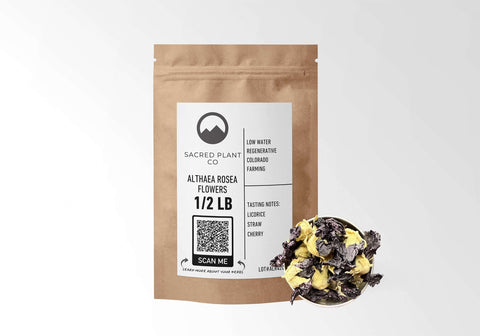
Violet Hollyhock Blossoms
Starting at $17.99
Tasting Notes: Licorice, Straw, Cherry
Caffeine-Free
Hand-harvested violet blossoms rich in mucilage and anthocyanins. Our regeneratively grown hollyhock flowers deliver superior demulcent properties for soothing throat, digestive comfort, and topical skin applications.
Shop Hollyhock Blossoms- Family: Malvaceae (mallow family)
- Parts Used: Primarily flowers, occasionally young leaves and root
- Key Compounds: Demulcent mucilage polysaccharides, anthocyanins, flavonoids, trace minerals
- Energetics: Cooling, moistening, soothing
- Taste: Mildly sweet, faintly earthy with subtle floral notes
Historical Uses Across Cultures
Hollyhock's medicinal legacy spans continents and millennia. Tang dynasty physicians in 7th-century China applied petal poultices to battlefield burns and inflammatory skin conditions, documenting cooling properties still recognized today.1 Medieval European herbalists brewed cold infusions for hoarseness and dry cough, unknowingly preserving the mucilage compounds that modern research has validated.
In Middle Eastern apothecaries, hollyhock syrups treated inflamed stomach linings and respiratory complaints. Victorian herbals recommended it as a gentler substitute for marshmallow root in children's remedies, including sunburn compresses and skin powders. The name "hollyhock" likely derives from "holy hoc," with "hoc" being an archaic term for mallow, reflecting the plant's journey west from the Holy Land via pilgrimage routes.
The Science Behind the Soothing
Hollyhock's therapeutic actions stem from well-characterized phytochemicals. The mucilage content, a complex mixture of water-soluble polysaccharides, forms a gel-like matrix when hydrated. This isn't passive coating. Research shows these polysaccharides can modulate inflammatory pathways by inhibiting prostaglandin synthesis and may delay gastric emptying, supporting traditional use for ulcer relief.2
The flower's deep violet pigmentation comes from anthocyanins, powerful antioxidants that reduce oxidative stress in skin cells. In vitro studies demonstrate anthocyanin-rich extracts support fibroblast regeneration and may protect against UV-induced cellular damage, explaining hollyhock's enduring use in topical salves.3
Water-soluble polysaccharides provide dual action: soothing irritated tissues while stimulating mild immune activity. This may explain why traditional practitioners turned to hollyhock syrup during early infection stages or bronchial inflammation.
Modern Therapeutic Applications
Respiratory & Throat Support
Mucilage physically coats throat tissues, reducing tickly sensations and easing dry coughs. Cold infusion preserves mucilage integrity better than hot water. Sip 1/4 cup every 2-3 hours during acute throat irritation.
Digestive Comfort
Hollyhock soothes gastritis, heartburn, and intestinal inflammation. The protective mucilage layer shields irritated gastric lining from acid exposure. Consume 30 minutes before meals for optimal effect.
Topical Skin Applications
Anti-inflammatory polysaccharides calm redness, minor burns, and eczema. Apply cooled tea as a compress or blend dried flowers into salve bases. The anthocyanin content provides additional antioxidant protection.
Urinary Tract Soothing
Traditional use as a mild diuretic with tissue-soothing properties. Eases irritated urinary tract lining. Combines well with marshmallow root or corn silk for enhanced demulcent action.
Preparation Methods & Dosage
 The "Cold Infusion Ritual" maximizes mucilage extraction. Simply combine dried blossoms with room-temperature water and let time—not heat—do the work.
Cold Infusion for Maximum Mucilage (Recommended)
Ingredients:
- 1 tablespoon dried hollyhock blossoms
- 1 pint (2 cups) room-temperature spring water
Method:
- Place hollyhock flowers in a pint jar
- Cover completely with room-temperature water
- Steep 4-6 hours at room temperature or overnight refrigerated
- Strain and consume within 24 hours
Dosage: 1/4 cup every 2-3 hours for acute throat relief, or 1/2 cup 2-3 times daily for digestive support.
Warm Infusion (Acceptable Alternative)
Pour 2 cups just-boiled water over 1 tablespoon flowers. Steep 10-15 minutes covered. While less mucilaginous than cold infusion, this method still provides therapeutic benefits with enhanced anthocyanin extraction.
Topical Poultice
Grind 2 teaspoons dried blossoms with 1 teaspoon oat flour. Mix with warm water to paste consistency. Apply to clean skin for 15 minutes, then rinse gently.
Ritual & Preparation
When preparing hollyhock medicine, take a moment to observe the transformation. Watch dried petals unfurl as water touches them, releasing that characteristic slippery texture. This isn't just chemistry. It's connection to plant intelligence, to the survival strategies that become our healing allies. The same mucilage that helped hollyhock endure summer heat now becomes medicine in your hands.
What High-Quality Hollyhock Should Look Like
Premium dried hollyhock blossoms retain rich, deep coloration. Violet varieties should display intense purple hues without significant fading to brown or gray. Properly dried flowers maintain petal structure rather than crumbling to powder. When rehydrated, quality hollyhock releases noticeable mucilage, creating a slightly slippery texture in water. Avoid flowers with mold spots, excessive stem material, or musty odors indicating improper storage.
Certificate of Analysis & Quality Assurance
Every batch of Sacred Plant Co hollyhock blossoms undergoes third-party testing for microbial contaminants, heavy metals, and identity and foreign matter. We publish the signed Certificate of Analysis for every lot we test on our lab testing page.
Safety Considerations & Contraindications
Generally Safe: Hollyhock is considered safe in culinary and traditional medicinal amounts for most healthy adults.
Medication Timing: Mucilage can slow absorption of oral medications. Take hollyhock preparations at least 1-2 hours separated from prescription drugs to avoid interaction.
Pregnancy & Nursing: Traditionally considered safe in food amounts. Consult a qualified healthcare practitioner before therapeutic dosing during pregnancy or lactation.
Diabetes Considerations: Monitor blood glucose when consuming large amounts, as some mucilaginous herbs may affect blood sugar regulation.
Allergies: Those with known sensitivities to Malvaceae family plants (mallow, hibiscus, okra) should introduce hollyhock cautiously.
Storage & Shelf Life
Store dried hollyhock blossoms in airtight containers away from direct light and moisture. Properly stored flowers retain therapeutic properties for 12-18 months. For comprehensive guidance on extending herb shelf life and recognizing quality degradation, see our detailed herb storage guide.
Frequently Asked Questions
Is Althaea rosea the same as marshmallow (Althaea officinalis)?
They're botanical cousins in the same genus, both rich in mucilage. Hollyhock flowers contain higher concentrations of anthocyanin antioxidants due to their deep pigmentation, while marshmallow root offers denser mucilage content. Both provide excellent demulcent properties for soothing inflamed tissues.
Can I drink hollyhock tea daily?
Yes, 1-2 cups daily is generally safe for healthy adults as a soothing beverage. For therapeutic applications, consider rotating with other herbs weekly. Always consult healthcare providers if pregnant, nursing, or taking medications.
Does heat destroy the mucilage compounds?
Boiling water reduces mucilage viscosity and can degrade some polysaccharide structures. Cold or warm (not boiling) infusions preserve maximum demulcent activity. For throat coating, cold infusion provides superior results.
What does hollyhock taste like?
Hollyhock has a mild, slightly sweet flavor with subtle earthy undertones. It's much gentler than hibiscus, without tartness, making it pleasant for children and adults alike.
Is hollyhock safe for children?
In mild tea or culinary amounts, hollyhock is traditionally considered gentle for children. Always dilute preparations for young children and monitor for individual sensitivities. Consult a pediatric herbalist for therapeutic dosing guidance.
Can hollyhock help with acid reflux?
The mucilage coating can soothe irritated esophageal tissue and may provide symptomatic relief. However, hollyhock does not address underlying causes of GERD. Use as part of a comprehensive approach under professional guidance.
How does hollyhock compare to slippery elm for throat soothing?
Both are excellent demulcents. Slippery elm inner bark is denser and more mucilaginous, while hollyhock flowers offer the additional benefit of anthocyanin antioxidants. Many herbalists combine them for enhanced throat support.
Continue Learning: Related Articles
- Marshmallow Root: The Soothing Voyage to an Ancient Herb - Explore hollyhock's closest botanical relative and compare mucilage properties
- Herbs for Phlegm: TCM & Western Herbs That Clear Mucus - Learn about complementary demulcent and expectorant herbs
- Soothe Your Cough Naturally: Effective Herbs for Respiratory Relief - Comprehensive guide to throat-soothing herbal protocols
Conclusion
Hollyhock stands as testament to the principle that beauty and medicine often intertwine in the plant world. These towering spires offer more than garden aesthetics. They provide accessible, gentle healing for common complaints affecting throat, gut, and skin. When prepared with attention to mucilage preservation and sourced from regenerative systems that prioritize soil health and secondary metabolite production, Althaea rosea becomes reliable medicine in the home herbalist's toolkit.
References
- Chevallier A. Encyclopedia of Herbal Medicine. 3rd ed. DK Publishing; 2016. Historical uses of Althaea species in Traditional Chinese Medicine.
- Bonaterra GA, et al. Anti-inflammatory effects of the polysaccharide components from Althaea officinalis. Phytomedicine. 2010;17(3-4):265-271. doi:10.1016/j.phymed.2009.06.009
- Kähkönen MP, Heinonen M. Antioxidant activity of anthocyanins and their aglycons. Journal of Agricultural and Food Chemistry. 2003;51(3):628-633.
- Bruneton J. Pharmacognosy, Phytochemistry, Medicinal Plants. 2nd ed. Lavoisier Publishing; 1999. Malvaceae family mucilage chemistry.
- Wichtl M. Herbal Drugs and Phytopharmaceuticals: A Handbook for Practice on a Scientific Basis. CRC Press; 2004. Demulcent herbs and preparation methods.
- Mills S, Bone K. The Essential Guide to Herbal Safety. Churchill Livingstone; 2005. Safety profiles of Malvaceae species.


