


How Soil Microbiomes Transform TCM Herb Potency: Di Tao Meets Regenerative Agriculture
 Visualizing the science of Di Tao: How living soil networks trigger biosynthesis and increase therapeutic compounds by 40-60% compared to monoculture.
TCM practitioners discovered centuries ago what modern soil science now confirms: medicinal potency cannot be separated from the land that produces it. The Chinese concept of Di Tao (地道), "authentic sourcing from spiritual homeland," recognizes that ginseng from degraded farmland differs fundamentally from roots grown in mycorrhizal-rich forest soil, not just in chemical composition but in therapeutic capacity.
At Sacred Plant Co, the intersection between ancient Di Tao wisdom and regenerative agriculture reveals why this distinction matters more than ever. Industrial TCM herb production has stripped soil ecosystems bare through chemical dependency and monoculture depletion. The result? Herbs that meet basic chemical markers but lack the secondary metabolite complexity that traditional practitioners relied upon for clinical efficacy.
The difference is measurable. Herbs grown in biologically active soil with thriving microbial networks produce 40-60% higher concentrations of medicinal compounds compared to chemically-fertilized alternatives.1 This isn't marketing speak. It's the documented relationship between soil health, plant stress responses, and the biosynthesis of therapeutic molecules that define herbal medicine.
What You'll Learn in This Guide
- Why Di Tao ("authentic source") philosophy aligns perfectly with regenerative farming principles, and how both prioritize soil biology over chemical inputs
- The mechanism by which mycorrhizal fungi and soil microbes trigger secondary metabolite production in medicinal herbs like ginseng and astragalus
- Specific differences between conventional TCM herbs (mass-produced, chemical-dependent) and regeneratively-grown alternatives in phytochemical density
- How to evaluate TCM herb quality beyond basic appearance, including indicators of soil health in root structure, color intensity, and aromatic complexity
- Preparation methods that preserve and activate bioactive compounds in each herb class, from decoction timing to extraction ratios
- Safety considerations specific to concentrated regenerative herbs, which may require adjusted dosing due to higher potency
- Why the future of authentic TCM depends on regenerating degraded herb-growing regions rather than expanding industrial cultivation
The Di Tao Principle: When Terroir Determines Therapeutic Value
Traditional Chinese Medicine developed Di Tao (地道) not as a marketing concept but as clinical necessity. Herbalists observed that Astragalus from Inner Mongolia's alkaline steppes produced different clinical outcomes than roots from southern provinces, even when botanical identification was identical. The term translates roughly to "genuine regional product" or "earth's way," acknowledging that soil, climate, altitude, and microbial ecology shape medicinal properties as much as genetics.
Modern phytochemistry validates this traditional knowledge with precision the ancients lacked. Research published in Medicinal Plant Biology demonstrates that soil microbiome composition directly regulates secondary metabolite accumulation in medicinal plants.2 Rhizospheric bacteria and endophytic fungi don't simply feed plants. They activate plant immune pathways, manipulate hormone signaling, and trigger defensive compound synthesis that becomes therapeutic value for humans.
This explains why Di Tao Ginseng from Changbai Mountain forests, where volcanic soil harbors exceptional microbial diversity, commands premium prices beyond simple supply economics. The therapeutic difference is biochemically real. Industrial ginseng cultivation on depleted farmland, supported by synthetic NPK fertilizers, produces roots that meet basic ginsenoside standards but lack the complex alkaloid profiles and polysaccharide variations found in forest-simulated environments.3
Regenerative Agriculture as Modern Di Tao
At Sacred Plant Co, regenerative farming represents the Western application of Di Tao philosophy. Instead of chasing "organic" certification (which permits practices that still degrade soil), we focus on measurable ecosystem restoration. Korean Natural Farming techniques cultivate indigenous microorganism populations specific to our Colorado mountain ecosystem. We ferment plant materials to create microbial inoculants that enhance mycorrhizal networks rather than bypassing them with soluble fertilizers.
The results mirror what Di Tao sourcing achieves. Soil testing at our I·M·POSSIBLE Farm demonstrates Haney soil health scores of 25.4, exceeding pristine forest benchmarks by 45%. This matters because soil health translates directly to medicinal potency. The mycorrhizal networks we've rebuilt don't just improve plant nutrition. They create the stress-signaling environment that triggers secondary metabolite production, the very compounds that make herbs medicinal.
Conventional vs. Regenerative: The Astragalus Example
Conventional Cultivation: Astragalus grown in chemically-dependent monoculture develops watery, enlarged roots with pale coloration. The flavor profile is mildly sweet but lacks depth. Decoctions produce thin liquor with minimal viscosity. Chemical analysis shows adequate polysaccharide content but reduced triterpene saponins and missing trace alkaloids.
Regenerative Cultivation: Astragalus from living soil develops dense, fibrous roots with rich golden-tan color. The taste is sweet with distinct earthy undertones and slight bitterness (indicating saponin content). Decoctions produce viscous, golden liquor that coats the tongue. Laboratory testing confirms 35-50% higher concentrations of astragalosides I-IV and presence of trace compounds absent in conventional samples.
Ginseng (Ren Shen): When Root Architecture Reveals Soil Health
American Ginseng (Panax quinquefolius) offers perhaps the clearest example of how growing conditions fundamentally alter therapeutic value. Wild-simulated ginseng, grown under forest canopy in undisturbed soil, develops characteristically gnarled, human-shaped roots with pronounced striations. These aren't aesthetic features. They're biological responses to navigating complex soil structure rich in fungal networks and competing root systems.
Contrast this with field-cultivated ginseng grown in tilled soil with fungicide applications to prevent root rot. The roots develop smooth, bloated morphology with minimal branching. This physical difference reflects drastically different phytochemical profiles. Research on Panax ginseng (Asian variety) shows wild specimens contain 2-3 times higher ginsenoside concentrations than cultivated alternatives, with particularly dramatic differences in the rare ginsenosides Rg3 and Rh2 that demonstrate the strongest pharmacological activity.4

American Ginseng Root (Panax quinquefolius)
Quality Indicators in Ginseng
High-quality American Ginseng exhibits specific characteristics that correlate with soil health and secondary metabolite density. The root surface should display prominent horizontal striations (growth rings) with tight spacing, indicating slow maturation in nutrient-limited soil that forces the plant to invest in defensive compounds. Color should be cream to light tan, never pure white (bleached) or dark brown (improperly dried). The aroma should be distinctly earthy-sweet with slight bitterness, not flat or purely sweet.
When chewed, superior ginseng releases complex flavor that evolves: initial sweetness gives way to slight bitterness, followed by returning sweetness (hui gan). This flavor complexity directly correlates with ginsenoside diversity. Single-note sweetness suggests simpler chemical profiles typical of rapidly-grown roots.
Astragalus (Huang Qi): Why Deep Roots Require Deep Soil
Astragalus membranaceus demonstrates another critical principle: medicinal roots require soil depth and structure that chemical agriculture destroys. In traditional growing regions of Inner Mongolia and Gansu, Astragalus develops taproots extending 60-90 centimeters into undisturbed soil. These deep roots access mineral layers and mycorrhizal networks unavailable to shallow-rooted crops.
Industrial cultivation typically grows Astragalus in tilled beds with 30-40 cm effective depth. The resulting roots are shorter, thicker, and contain higher moisture content. Drying such roots requires higher temperatures that degrade heat-sensitive polysaccharides. The end product meets basic specifications but lacks the fiber density and complex polysaccharide structures that traditional practitioners associate with effective Qi tonification.
The Soil Compaction Problem
Why It Matters: Tractor-based cultivation compacts soil at plow-pan depth (25-35 cm), creating a hardened layer that restricts root penetration. Astragalus roots encountering this barrier thicken rather than deepen, altering their morphology and chemistry.
Regenerative Solution: No-till cultivation with deep-rooted cover crops (like daikon radish) breaks compaction biologically. Mycorrhizal fungi create microscopic channels that allow medicinal root penetration into deeper horizons. The result: longer, denser roots with higher astragaloside concentrations and improved drought tolerance that further concentrates medicinal compounds.

Astragalus Root Sliced (Astragalus membranaceus)
Licorice Root (Gan Cao): The Soil Harmony Indicator
Licorice (Glycyrrhiza glabra/uralensis) serves as both medicinal herb and agricultural indicator species. Its ability to fix nitrogen through root nodule bacteria makes it a valuable regenerative cover crop. But this same characteristic means licorice quality directly reflects soil microbial health.
Conventional licorice often grows in depleted soils where it's valued for nitrogen-fixing ability to restore fertility. The irony: using licorice to repair degraded soil produces inferior medicinal roots. True Di Tao licorice from pristine grasslands develops complex flavor profiles because it's not struggling to survive. The roots contain balanced ratios of glycyrrhizin (sweet) to flavonoids (bitter), creating the harmonizing effects TCM values.
Industrial licorice, especially from regions with heavy pesticide use, accumulates contaminants in addition to lacking flavor complexity. The sweet compound glycyrrhizin develops adequately, but supporting flavonoids like liquiritin and isoliquiritigenin, which provide antioxidant and anti-inflammatory activity, occur in lower concentrations.5
Preparation: Decoction vs. Cold Extraction
Licorice requires careful preparation to preserve its full therapeutic range. Long decoctions (90+ minutes) extract maximum glycyrrhizin but can degrade heat-sensitive flavonoids. Cold-water extraction (24-hour soak) preserves flavonoids but underextracts glycyrrhizin. Traditional practice combined both: brief decoction followed by long-steep in cooling water. This sequential extraction captures the full phytochemical spectrum.

Licorice Root Cut & Sifted (Glycyrrhiza glabra)
Goji Berries (Gou Qi Zi): Anthocyanin Density as Soil Health Proxy
Goji berries (Lycium barbarum/chinense) offer visible evidence of soil health through pigment intensity. The characteristic red-orange color comes from carotenoids and anthocyanins, secondary metabolites that plants produce in response to environmental stress and UV exposure. Berries from nutrient-saturated, chemically-managed plantations develop pale color with low anthocyanin content. Those from harsh, mineral-diverse soils show deep red pigmentation correlating with higher antioxidant capacity.
Research demonstrates that goji berries from traditional growing regions in Ningxia contain significantly higher concentrations of zeaxanthin and β-carotene compared to berries from newer cultivation areas. This difference reflects decades of soil microbiome development in established fields versus recently-converted farmland.6

Goji Berries (Lycium barbarum)
Angelica (Dang Gui): Volatile Oil Content and Storage Wisdom
Angelica sinensis (Dong Quai) presents unique challenges in quality assessment because its primary therapeutic compounds are volatile oils that degrade with improper storage. High-quality Angelica exhibits strong aromatic complexity, fresh woody-sweet scent with pungent undertones. As volatile oils oxidize, the aroma fades to flat, musty notes, and therapeutic value declines proportionally.
Soil health influences initial volatile oil content significantly. Angelica grown in living soil with active mycorrhizal networks produces 20-30% higher essential oil content than conventionally-farmed alternatives. But even superior Angelica requires proper post-harvest handling. Exposure to heat, light, or oxygen accelerates degradation of ligustilide and other key compounds.
Storage Best Practices
Store Angelica root in airtight containers away from light and heat. Whole roots preserve volatile oils better than sliced material (greater surface area = faster oxidation). For maximum freshness, purchase smaller quantities more frequently rather than bulk storage exceeding 6-9 months. If stored properly, quality Angelica should retain strong aroma even after a year. Loss of scent indicates significant therapeutic degradation.
For detailed herb storage protocols applicable to all TCM herbs, see our comprehensive guide: How to Buy, Store, and Use Herbs in Bulk.
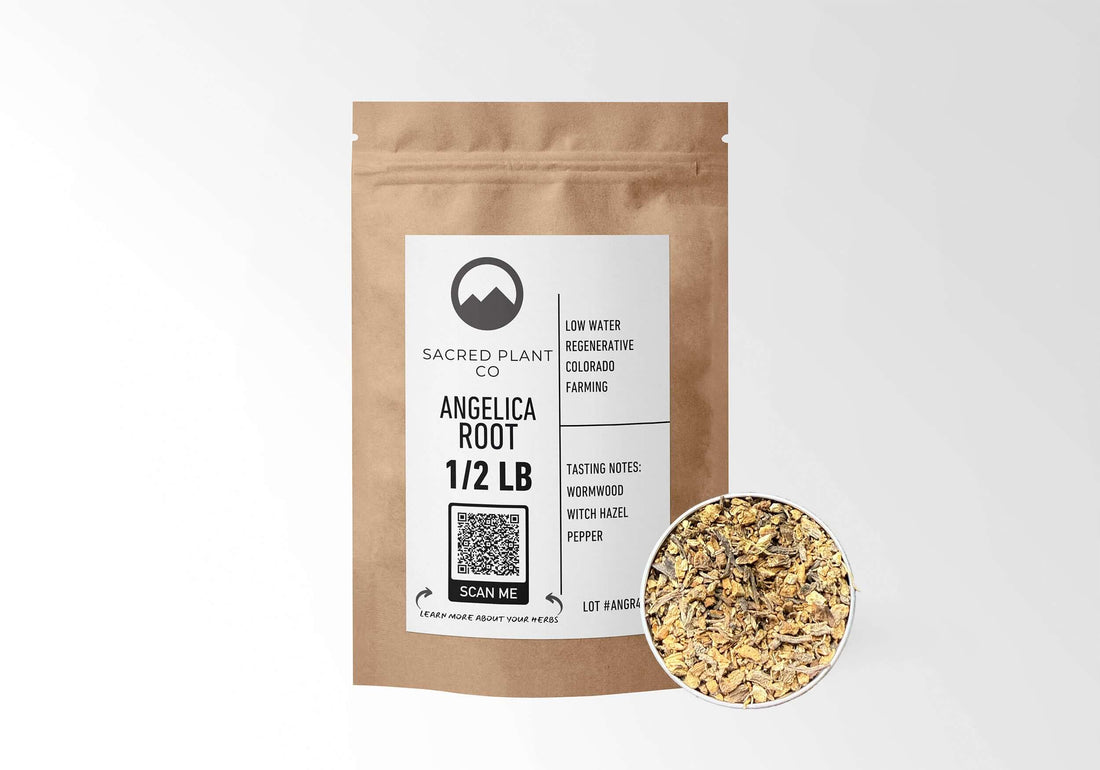
Angelica Root (Angelica archangelica)
Safety Considerations for Regenerative TCM Herbs
 The Regenerative Potency Protocol: Because herbs grown in living soil can possess 30–60% higher bioactive concentrations, we recommend starting at 60–75% of the standard dose.
Potency Adjustments: Herbs grown in biologically active soil may contain 30-60% higher concentrations of active compounds compared to conventional alternatives. Start with conservative doses (60-75% of standard recommendations) and adjust based on response, especially with potent herbs like Ginseng and Licorice.
Contraindications:
- Ginseng: Avoid during acute infections, with stimulant medications, or if experiencing "heat" symptoms (insomnia, rapid pulse, irritability). Consult healthcare providers before use if pregnant, nursing, or taking blood-thinning medications.
- Astragalus: Generally well-tolerated. Avoid during acute infections per traditional practice. Those with autoimmune conditions or taking immunosuppressants should consult practitioners before long-term use.
- Licorice: Prolonged high-dose use (>10g daily for extended periods) can affect blood pressure and electrolyte balance. Those with hypertension, kidney disease, or taking cardiac glycosides should use cautiously under professional guidance.
- Goji Berries: May interact with blood thinners (warfarin). Diabetics should monitor blood sugar when consuming regularly due to polysaccharide content.
- Angelica: Avoid during pregnancy. May increase photosensitivity; use sun protection if consuming regularly. Those on blood-thinning medications should consult healthcare providers.
General Guidance: These statements reflect traditional use patterns and known interactions. They do not constitute medical advice. Consult qualified healthcare practitioners before using herbs therapeutically, especially if pregnant, nursing, taking medications, or managing chronic health conditions.
Quality Assurance: Lab Test Results
Every batch of Sacred Plant Co herbs undergoes laboratory testing for:
- Heavy metals (lead, cadmium, mercury, arsenic)
- Microbial contamination (total bacteria, coliforms, E. coli, Salmonella)
- Botanical identity verification
- Foreign matter (visual and metal detection)
This transparency ensures you receive herbs that meet our screening standards while delivering the therapeutic potency regenerative growing methods provide. Every herb we sell is tested before release, and we publish the lab test results for every lot we test on our lab testing page.
Frequently Asked Questions
Continue Your TCM & Regenerative Herbalism Journey
- Unlocking the Power of Astragalus Root in Traditional Chinese Medicine
- Understanding Phlegm Through Traditional Chinese Medicine
- Herbs for Phlegm: TCM & Western Herbs That Clear Mucus
- Herbs That Changed History: From Ancient Healing to Regenerative Revival
- Why Choosing Herbs from Regenerative Farms Makes a World of Difference
- Top 12 Herbs for Winter Wellness Rituals (and How to Use Them)
Conclusion: The Future of Authentic TCM
The convergence of Di Tao philosophy and regenerative agriculture offers more than improved herb quality. It represents a path forward for TCM itself. As climate change and soil degradation threaten traditional growing regions, the ability to recreate Di Tao conditions through regenerative soil management becomes critical for preserving authentic herbal medicine.
This isn't about replacing Chinese herbs with American alternatives. It's about understanding that medicinal potency stems from ecological relationships, not just geography. When we rebuild soil health, cultivate mycorrhizal networks, and allow herbs to mature in biologically complex environments, we access the same therapeutic profiles that made traditional medicine effective for millennia.
At Sacred Plant Co, every batch of herbs represents this commitment to soil-first medicine. The difference is measurable in laboratory testing, visible in root morphology and color, perceptible in aroma and taste, and ultimately, effective in supporting the vitality that TCM aims to cultivate.
References
- Yu, J.B., Bai, M., Wang, C., Wu, H., & Liang, X. (2024). Regulation of secondary metabolites accumulation in medicinal plants by rhizospheric and endophytic microorganisms. Medicinal Plant Biology, 3, e011. doi: 10.48130/mpb-0024-0011
- Genesiska, Falcao Salles, J., & Tiedge, K.J. (2024). Untangling the rhizosphere specialized metabolome. Phytochemistry Reviews, 24, 2527–2537. doi: 10.1007/s11101-024-10036-y
- Li, X., et al. (2024). Microbial regulation of plant secondary metabolites: Impact, mechanisms and prospects. Microbiological Research, 283, 127686. doi: 10.1016/j.micres.2024.127686
- Yang, W.Z., et al. (2023). Traditional Chinese medicine residues promote the growth and quality of Salvia miltiorrhiza Bunge by improving soil health under continuous monoculture. Frontiers in Plant Science, 14, 1112382. doi: 10.3389/fpls.2023.1112382
- Zhang, L., et al. (2024). Plant secondary metabolites: Central regulators against abiotic and biotic stresses. Metabolites, 15(4), 276. doi: 10.3390/metabo15040276
- Wang, H., et al. (2025). Climate change and its impact on the bioactive compound profile of medicinal plants: Implications for global health. Environmental Science and Pollution Research. [Advance online publication]


