


Burdock Leaf Impact on Lymphatic Support
The relationship between plant vitality and medicinal potency isn't coincidental, it's fundamental. At Sacred Plant Co, this understanding shapes how we source all botanical medicines, including Burdock Leaf. This unassuming green, with its broad texture and subtle earthiness, represents something larger than itself: a connection between soil ecosystems and human health that traditional herbalists recognized millennia ago.
Burdock grows aggressively, sending taproots deep into mineral-rich subsoil while its leaves spread wide to capture sunlight. This vigorous growth pattern isn't mere botanical trivia, it influences the leaf's medicinal compounds. The same resilience that allows Burdock to thrive in disturbed soils translates to polyphenolic antioxidants1 and anti-inflammatory lignans that support lymphatic drainage and blood purification. When we prioritize regenerative thinking in sourcing, we recognize that these therapeutic compounds develop most fully when plants grow in biologically active, minerally balanced soil.
What You'll Learn
- How Burdock Leaf's inulin content supports both gut microbiome health and gentle detoxification pathways
- The difference between Burdock Root and Burdock Leaf applications in traditional herbalism across cultures
- Scientific research validating Burdock's anti-inflammatory effects through specific bioactive lignans like arctigenin
- Traditional European blood-purifying protocols that combine Burdock Leaf with complementary herbs
- Optimal preparation methods including the traditional long-steep infusion technique for maximum compound extraction
- How Burdock Leaf supports lymphatic circulation as a gentle alterative herb for skin health
- Safety considerations and contraindications for pregnant individuals and those with specific conditions
Botanical Profile: Arctium lappa and Arctium minus

Burdock belongs to the Asteraceae family, with two primary medicinal species: Arctium lappa (Greater Burdock) and Arctium minus (Lesser Burdock). Both species produce similar medicinal compounds, though A. lappa typically develops larger leaves with slightly higher concentrations of bioactive constituents.
The leaves contain substantial polyphenolic content, particularly chlorogenic acid, caffeic acid, and quercetin2, alongside the prebiotic fiber inulin that gives Burdock its characteristic sweetness. Unlike the root, which concentrates fructo-oligosaccharides for energy storage, the leaves focus metabolic energy on photosynthesis-related antioxidants and structural lignans that protect against environmental stress.
These compounds serve the plant's defensive needs, but translate remarkably well to human therapeutic applications. The same polyphenols that protect Burdock leaves from oxidative damage demonstrate measurable antioxidant activity in human cells, while the plant's natural antimicrobial compounds support immune function.
Traditional Uses Across Healing Systems
European Folk Medicine
Medieval European herbalists prized Burdock Leaf as a primary "blood purifier," terminology that modern herbalism interprets as alterative and lymphatic support. The leaves were applied fresh as poultices to inflammatory skin conditions, while dried leaf infusions addressed systemic concerns attributed to "stagnant humors."
This wasn't superstition. Burdock's documented ability to support lymphatic circulation3 and reduce inflammatory markers provides mechanistic validation for these traditional applications. The leaves were often combined with Dandelion, Nettle, and Cleavers in spring tonics designed to support elimination after winter's heavier diet.
Traditional Chinese Medicine
In TCM, Burdock Leaf (牛蒫叶, niú bàng yè) falls under herbs that "clear heat and release the exterior." Practitioners used the leaves for conditions manifesting as skin eruptions, sore throat, or fever—presentations modern medicine might classify as immune activation or inflammatory response.
TCM's cooling classification aligns with Burdock's measured anti-inflammatory effects. The tradition of combining Burdock with other heat-clearing herbs like Honeysuckle or Forsythia creates synergistic formulas that address both acute inflammation and underlying immune dysregulation.
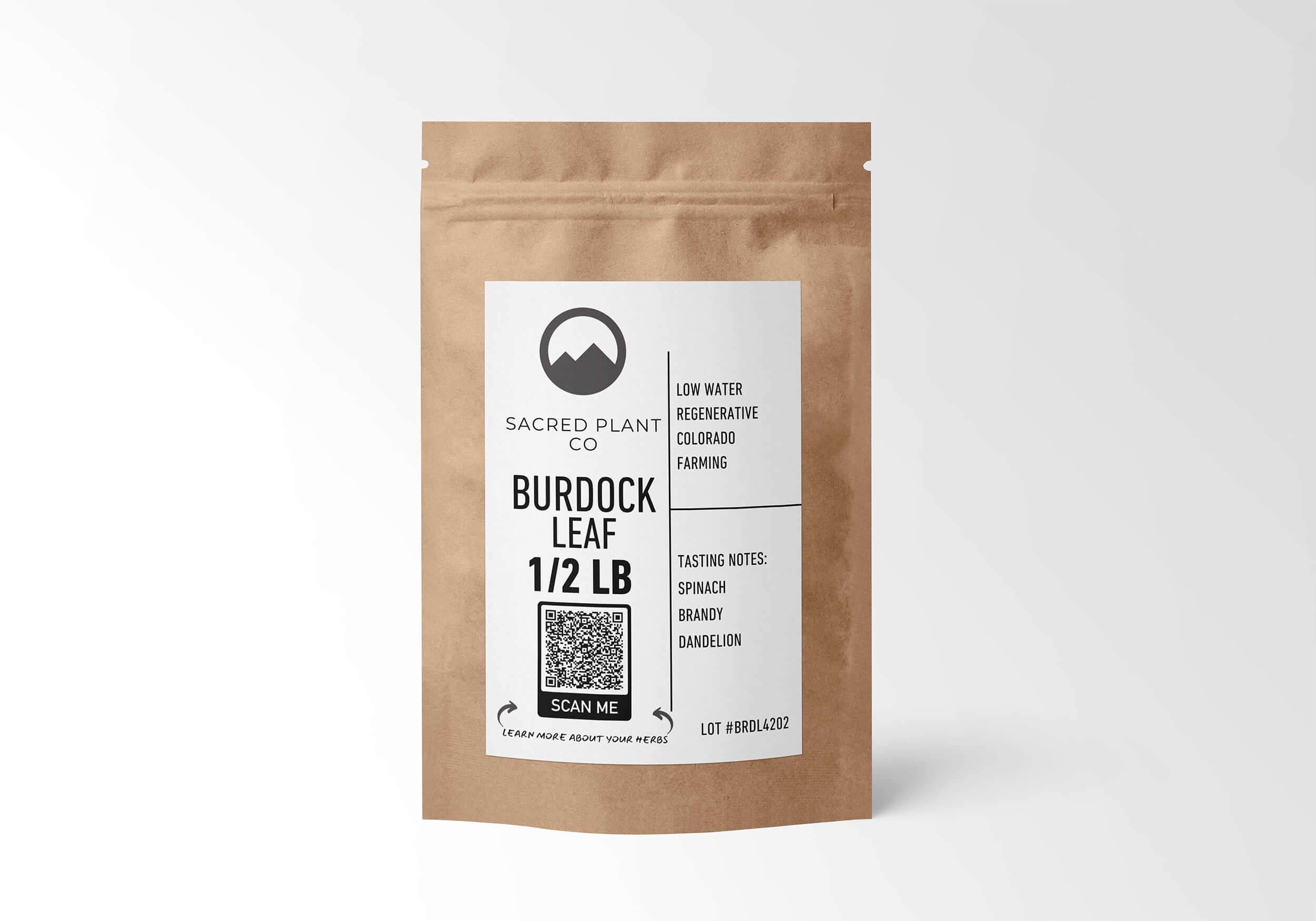
Bulk Burdock Leaf
Starting at $11.92
Wildcrafted Burdock Leaf harvested at peak potency and gently dried to preserve polyphenolic antioxidants and lymphatic-supporting compounds.
Shop Burdock LeafThe Science Behind Burdock Leaf's Therapeutic Effects
Antioxidant and Anti-Inflammatory Compounds
Research confirms what traditional herbalists observed: Burdock leaves contain significant concentrations of therapeutic compounds. Studies demonstrate that Burdock leaf extracts exhibit robust antioxidant activity, with the capacity to neutralize superoxide radicals and reduce oxidative stress markers1.
The primary bioactive compounds include:
Chlorogenic acid demonstrates anti-inflammatory effects by modulating cytokine production and reducing inflammatory signaling pathways. This polyphenol also shows potential for supporting healthy blood sugar metabolism.
Quercetin, a flavonoid antioxidant, helps restore activity of endogenous antioxidant enzymes like superoxide dismutase (SOD) and glutathione peroxidase. Research shows quercetin from Burdock leaves reduces reactive oxygen species and lipid peroxidation in macrophage cells4.
Arctigenin and arctiin—lignan compounds found throughout the plant—exhibit potent anti-inflammatory activity by inhibiting inducible nitric oxide synthase (iNOS) and suppressing the NF-κB inflammatory pathway5. These lignans reduce concentrations of pro-inflammatory cytokines including TNF-α and IL-1β in activated immune cells.
Prebiotic Fiber and Gut Health
Burdock Leaf contains inulin, a fructo-oligosaccharide that serves as prebiotic fiber. While present in lower concentrations than the root, leaf inulin still supports beneficial gut bacteria growth. This matters for detoxification because healthy gut flora prevents toxin production in the intestines, maintains gut barrier integrity, and produces short-chain fatty acids that support liver detoxification enzymes6.
Lymphatic and Alterative Properties
Burdock's traditional classification as a blood purifier translates to measurable lymphatic support. The leaves promote lymphatic circulation and support the body's natural waste elimination processes through the lymphatic system—the body's secondary circulatory network responsible for tissue drainage and immune surveillance3.
This lymphatic action explains Burdock's traditional use for skin conditions. When lymphatic circulation improves, the body more efficiently removes cellular waste products and inflammatory mediators that can manifest as skin eruptions, sluggishness, or swelling.

Traditional Lymphatic Support Infusion
Ingredients:
- 2 tablespoons dried Burdock Leaf
- 1 tablespoon Dandelion Root
- 1 tablespoon Nettle Leaf
- 4 cups filtered water
- Raw honey or maple syrup (optional)
Instructions:
- Combine Burdock Leaf, Dandelion Root, and Nettle Leaf in a medium pot with cold filtered water
- Bring to a gentle boil, then reduce heat to low simmer
- Cover and simmer for 20 minutes to extract medicinal compounds from roots and leaves
- Remove from heat and steep covered for an additional 10 minutes
- Strain through fine mesh or cheesecloth into heat-safe container
- Drink 1-2 cups daily, warm or cool. Store remainder refrigerated for up to 3 days
- Add honey or maple syrup if desired, though the blend has a naturally pleasant earthiness
Traditional Use: This combination supports gentle detoxification through lymphatic circulation (Burdock), bile flow and liver function (Dandelion Root), and mineral-rich kidney support (Nettle). Use consistently for 4-6 weeks as a spring tonic or whenever supporting natural elimination processes.
Practical Preparation Methods
Standard Infusion
For daily use, prepare Burdock Leaf as a standard herbal infusion. Use 1-2 teaspoons dried leaf per 8 ounces water. Pour freshly boiled water over the leaves, cover to retain volatile compounds, and steep 10-15 minutes. The resulting tea has a mild, slightly sweet flavor with pleasant earthiness.
Covering during steeping matters—it prevents aromatic compounds from escaping with steam and maintains water temperature for optimal extraction of polyphenols. Drink 1-3 cups daily for lymphatic support and general wellness maintenance.
Long Steep for Maximum Extraction
Traditional herbalists often prepared Burdock Leaf as overnight infusions to maximize mineral and polyphenol extraction. Place 1/4 cup dried leaf in a quart jar, fill with room temperature water, cover, and let stand 4-8 hours or overnight. Strain and drink throughout the day.
This cold infusion method extracts different compounds than hot water—particularly minerals and some heat-sensitive antioxidants. The result is more mineral-rich and slightly more astringent than hot infusions.
Topical Applications
Fresh or dried Burdock Leaf can be prepared as a strong decoction for external use. Simmer 1 cup dried leaves in 4 cups water for 30 minutes, strain, and use the resulting liquid as a skin wash or compress for inflammatory skin conditions. The anti-inflammatory compounds provide direct topical benefit.
Third-Party Lab Results for Burdock Leaf
Every lot of our Burdock Leaf is tested by an independent third-party laboratory before release, screened for microbial contaminants, heavy metals, and identity and foreign matter. The lab test results for each lot we have on file are linked below. New to reading a lab report? Start with our guide on how to read lab test results.
- Lot BRDL4202 — view the lab test results
We publish the lab test results for every lot we test on our lab testing page.
Safety Considerations and Contraindications
Important Safety Information
Pregnancy and Nursing: Burdock Leaf has traditional use as a uterine stimulant in some herbal systems. Pregnant individuals should avoid Burdock Leaf or consult with a qualified healthcare provider before use. Safety during lactation has not been established through research.
Allergies: Individuals with allergies to plants in the Asteraceae family (ragweed, chrysanthemums, marigolds, daisies) may experience allergic reactions to Burdock. Discontinue use if skin rash, itching, or respiratory symptoms develop.
Medication Interactions: Burdock may interact with blood-thinning medications due to its vitamin K content. Consult healthcare providers before using Burdock if taking anticoagulants, antiplatelet drugs, or diabetes medications, as Burdock may influence blood sugar levels.
Diuretic Effect: Burdock Leaf has mild diuretic properties. Individuals taking diuretic medications or with kidney conditions should consult healthcare providers before use to avoid excessive fluid or electrolyte loss.
Autoimmune Conditions: Because Burdock supports immune function, individuals with autoimmune conditions should consult healthcare providers before use, particularly if taking immunosuppressive medications.
Recommended Dosage Guidelines
Traditional herbalism typically recommends 1-3 cups of Burdock Leaf tea daily, prepared with 1-2 teaspoons dried leaf per 8 ounces water. For therapeutic applications addressing specific conditions, herbalists may suggest higher doses—up to 4-6 grams dried leaf daily—divided across multiple doses.
Start with lower doses (1 cup daily) and observe your body's response before increasing. Burdock works gradually as an alterative herb—expect to use it consistently for 4-8 weeks before evaluating full benefits. This isn't a quick-fix herb but rather a gentle, consistent support for natural elimination processes.
Frequently Asked Questions
Explore Related Articles
- Top Herbs for Detoxification: Complete Natural Cleansing Guide – Discover how Burdock Leaf works synergistically with Milk Thistle, Dandelion, and other detox herbs for comprehensive liver and lymphatic support
- Burdock Root vs. Dandelion: Which Detox Herb Reigns Supreme? – Compare these two powerful blood purifiers and learn how to combine them effectively in detoxification protocols
- The 21-Day Liver Reset Protocol: Herbs for Hepatic Regeneration – Incorporate Burdock into a structured protocol combining multiple herbs for comprehensive liver support and Phase I/II detoxification
Conclusion
Burdock Leaf represents more than a single botanical medicine—it embodies the connection between ecological health and human wellness. The same vigorous growth that makes Burdock a successful wild plant translates to concentrated therapeutic compounds when the plant grows in minerally balanced, biologically active soil.
Traditional herbalists across continents recognized Burdock's value for supporting natural elimination, lymphatic circulation, and skin health. Modern research validates these traditional applications through identified mechanisms: anti-inflammatory lignans, antioxidant polyphenols, prebiotic fibers, and lymphatic-supporting compounds that work synergistically to support the body's innate detoxification processes.
Burdock Leaf excels as a gentle alterative—gradually supporting the body's own healing capacity rather than forcing dramatic changes. This makes it suitable for sustained use as a nutritive tonic, spring cleanser, or component of comprehensive herbal protocols addressing inflammation, skin conditions, or sluggish elimination.
The herb's effectiveness depends partly on quality. Regenerative sourcing practices that prioritize soil health and ecological integrity produce Burdock with higher concentrations of medicinal compounds and lower contamination risk. Laboratory testing via lab test results report the measured results for each lot, so you can read for yourself what was tested.
References
- Shyam M, Sabina EP. Harnessing the power of Arctium lappa root: a review of its pharmacological properties and therapeutic applications. Nat Prod Bioprospect. 2024;14(1):49. doi: 10.1007/s13659-024-00466-8
- Moro TMA, Clerici MTPS. Burdock (Arctium lappa L) roots as a source of inulin-type fructans and other bioactive compounds: Current knowledge and future perspectives for food and non-food applications. Food Res Int. 2021;141:109889. doi: 10.1016/j.foodres.2020.109889
- Chan YS, et al. A review of the pharmacological effects of Arctium lappa (burdock). Inflammopharmacology. 2011;19(5):245-254. doi: 10.1007/s10787-010-0062-4
- Hassanein EHM, et al. Role of Arctium lappa L. Root (Burdock) Extract in CFA-induced Arthritis Rat Model: Impact on Antioxidant Activity and Inflammation. PMC. 2024. PMCID: PMC12523641
- Zhao F, et al. Overview of the anti-inflammatory effects, pharmacokinetic properties and clinical efficacies of arctigenin and arctiin from Arctium lappa L. Acta Pharmacol Sin. 2016;37(6):787-801. doi: 10.1038/aps.2016.32
- Maghsoumi-Norouzabad L, et al. Mechanistic insights on burdock (Arctium lappa L.) extract effects on diabetes mellitus. Food Sci Biotechnol. 2024;33(12):2699-2713. doi: 10.1007/s10068-024-01607-y


