


Last Updated: March 4, 2026
Keep Your Pup Calm: Valerian Herb as a Natural Remedy for Dogs
 A robust, earthy aroma and fibrous texture indicate active microbial partnerships in the soil, yielding higher concentrations of the valerenic acid your dog's nervous system needs.
The moment you open a bag of real Valerian root, something happens that no product description can prepare you for. It bites back. That funky, dense, almost fermented musk fills the room in seconds. It is earthy, assertive, and unmistakably alive. Most people step back. Experienced herbalists lean closer. If it doesn't bite back, it's not working. That bracing aroma is valerenic acid doing its job, and it is the very compound that makes this root one of the most studied natural nervines on the planet.
Here's the part the mass-market supplement industry quietly glosses over: that intensity of aroma is directly tied to how the plant was raised. Valerenic acid and isovaleric acid, the primary active constituents in Valerian root, are secondary metabolites produced through the plant's dialogue with living soil microorganisms. When Valerian grows in biologically depleted, sterile ground, it has no microbial partners to signal stress and stimulate compound production. The resulting root smells faint, looks pale, and performs accordingly. At Sacred Plant Co, our regenerative approach mirrors the conditions wild Valerian evolved in, building the microbial richness that prompts the plant to produce these compounds at meaningful concentrations. You can read our Regen Ag Lab microbial activity data to understand exactly what that soil-building work looks like in practice.
What does all of this have to do with your dog? Everything. When you reach for Valerian to calm an anxious pup, you are reaching for a plant whose calming chemistry lives or dies by the quality of its growing conditions. This guide explains how to use Valerian safely and effectively for your dog's nervous system, how to read quality, and how to get it right the first time.
What You'll Learn in This Guide
- Why Valerian root's distinctive aroma is actually a quality signal you should seek out.
- How valerenic acid interacts with canine GABA receptors to reduce anxiety.
- How to identify premium Valerian root through sight, smell, and texture before you buy.
- Which forms of Valerian work best for dogs and how to administer each one.
- Three tested DIY recipes including calming tea, dog treats, and an aromatherapy spray.
- Weight-based dosage guidelines and the timing window that matters most.
- Critical safety contraindications, drug interactions, and when to call your veterinarian.
- How to store Valerian root to preserve its medicinal potency over time.
Botanical Profile: What Is Valerian Root?
Valerian root (Valeriana officinalis) is a perennial flowering herb native to Europe and parts of Asia, now naturalized across North America, valued for its central nervous system calming properties. The plant reaches four to five feet tall, producing clusters of small pink or white flowers in summer. Its medicine lives entirely underground, in a dense root system harvested in autumn of the plant's second year when active constituent concentrations peak.
The name "Valerian" likely derives from the Latin valere, meaning "to be strong and healthy." Roman physicians documented its use extensively, and by the medieval period it was so widely relied upon that it earned the folk name "all-heal." Dioscorides recommended it for epilepsy in the first century CE. The herb was listed in the pharmacopeias of multiple European nations for centuries, eventually giving way to synthetic sedatives in the twentieth century before a resurgence of interest in evidence-based botanical medicine brought it back into serious scientific discussion.1
How to Identify Premium Valerian Root
 Visualizing the target state: Valerian's interaction with GABA receptors helps transition your dog from a state of acute situational stress into profound, restorative calm.
Premium dried Valerian root should be a warm tan to grayish-brown, dense, and carry an assertive, complex musk the moment the container is opened. Here is what to look for and what to avoid:
Color: Quality cut-and-sifted Valerian root ranges from light tan to medium brown with visible fibrous texture. Dusty gray or bleached, pale material often indicates age, improper drying, or over-processing that has degraded the volatile oils. Vibrant does not mean bright here; look for dimensional, warm coloring rather than washed-out uniformity.
Aroma: This is your most reliable quality test. Fresh, potent Valerian has a bold, layered scent often described as earthy and musty with a slightly sharp, fermented undertone. This aroma comes from isovaleric acid and borneol, both volatile compounds that escape quickly when herbs are stored improperly or dried too slowly at excessive heat. A faint, flat, or odorless root signals depleted potency. If it doesn't bite back, it's not working.
Texture: Properly dried root pieces should snap cleanly rather than bend or feel spongy. Moisture retention is the primary enemy of valerian potency after harvest. Root that feels soft or pliable suggests inadequate drying or moisture ingress during storage, both of which accelerate microbial degradation of the active compounds.
Tasting Notes: Tasting Notes: Earthy, bitter, and distinctly musky with a slightly sharp herbal finish.
Why Valerian Works for Dogs: The Science Behind the Calm
Valerian root supports calm in dogs primarily through valerenic acid's interaction with GABA-A receptors in the central nervous system, the same pathway targeted by many pharmaceutical anxiolytics.
GABA (gamma-aminobutyric acid) is the primary inhibitory neurotransmitter in the mammalian brain. When GABA binds to its receptors, it reduces neuronal firing, creating the calm, relaxed state associated with rest and reduced anxiety. Valerenic acid has been shown in multiple in vitro and animal model studies to inhibit the enzymatic breakdown of GABA, effectively extending its calming activity in the nervous system.2
For dogs, who share fundamentally similar mammalian neurology, this mechanism translates meaningfully. Research examining Valerian in veterinary contexts suggests it can support reduced anxiety behaviors including excessive vocalization, destructive activity, and physiological stress markers like elevated heart rate during triggering events such as thunderstorms, fireworks, or travel.3
Additionally, isovaleric acid, a structural component of the root's characteristic aroma, has shown mild sedative effects in animal models. Interestingly, cats and dogs have both demonstrated olfactory attraction to this compound, suggesting an evolutionary response that may amplify the herb's behavioral effect through scent exposure alone, separate from ingestion.4 Because the foundation of this chemistry is built in the soil, a root sourced from regeneratively managed land carries these compounds at concentrations that mass-market industrial product often cannot match.
For a deeper exploration of valerian's pharmacology in human applications, which shares the same foundational mechanisms at work in your dog's nervous system, read our guide: Embrace the Restorative Power of Valerian Root.
Benefits of Valerian Herb for Dogs
Valerian root may support canine wellbeing in five primary areas, with the strongest evidence centered on anxiety and stress reduction.
 When grown in biologically active living soil, valerian roots develop the complex defensive compounds that translate directly to potent anxiety relief for your dog.
Anxiety and Stress Reduction. Separation anxiety, noise phobias, and situational stress from travel or veterinary visits represent the most common reasons pet owners reach for Valerian. Its GABA-modulating activity supports a calmer neurological baseline during these high-arousal events without the sedative fog of pharmaceutical options at appropriate doses.
Improved Sleep Quality. Dogs with disrupted sleep patterns, particularly older dogs or those recovering from illness, may benefit from Valerian's ability to support the transition into deeper, more restful sleep cycles. The herb has a long traditional history as a sleep-quality herb across multiple cultures and species.
Travel Comfort. Motion-related anxiety and travel stress respond particularly well to Valerian because the herb's onset aligns with the 30-to-60-minute window before travel begins, allowing the active compounds to reach effective concentration prior to the stressor.
Mild Muscle Relaxation. Isovaleric acid and several flavonoids in Valerian root have demonstrated mild spasmolytic properties in animal models, suggesting potential benefit for dogs carrying tension in musculature from stress or hyperactivity.2
Noise Event Support. Thunderstorms and fireworks represent acute, intense stressors for many dogs. Pre-event dosing with Valerian, ideally 30 to 45 minutes before predicted exposure, may reduce the intensity of the stress response without impairing mobility or alertness.
Because anxiety and sleep are tightly linked in both dogs and their owners, understanding the full comparison between calming herbs helps you choose strategically. See: Valerian Root vs. Passionflower: Which Herbal Sleep Aid Is Best for Restful Nights?
How to Use Valerian Herb for Dogs: Forms and Preparation
Valerian is best administered to dogs in one of four forms: dried herb steeped as tea, alcohol-free tincture or glycerite, infused treats, or diluted aromatherapy spray for environmental application only.
Dried Herb as Tea: Steeping dried Valerian root in hot water, allowing it to cool completely, and adding the liquid to food or water is one of the gentlest delivery methods. This approach is ideal for introducing Valerian to sensitive dogs or beginning a lower-dose protocol.
Alcohol-Free Tincture or Glycerite: Liquid extracts provide precise, adjustable dosing and rapid absorption compared to dried herb. If using a standard herbal tincture intended for humans, confirm with your veterinarian that the formulation is alcohol-free or glycerin-based, as ethanol content can be harmful to dogs.
Infused Treats: Incorporating powdered Valerian root into homemade dog treat recipes allows you to deliver a consistent dose in a familiar, enjoyable format. This method works particularly well for long-term, intermittent use rather than acute event-based dosing.
Aromatherapy Spray (Environmental Use Only): Diluting Valerian essential oil in distilled water and misting a dog's sleeping area or crate can create a calming olfactory environment. This method never involves direct application to the dog's coat or skin, and the essential oil must never be ingested.
A note on ritual and intention: the act of preparing a calming botanical for your dog is itself a bonding practice. Moving slowly, speaking softly, and handling the herb with care while your dog watches creates a behavioral association between your calm presence and the calming preparation, reinforcing the herb's physiological effect through learned environmental cues.
DIY Recipes with Valerian Herb for Dogs
1. Calming Valerian Tea
Ingredients:
- 1 tsp dried Valerian Root
- 1 cup boiling water
Instructions:
- Steep the Valerian in boiling water for 10 minutes.
- Allow to cool completely to room temperature before use.
- Add 1 to 2 teaspoons of the cooled tea to your dog's food or water bowl.
This mild preparation is ideal for first introductions and sensitive or smaller dogs.
2. Valerian-Infused Dog Treats
Ingredients:
- 2 cups oat flour
- 1/4 cup unsweetened peanut butter (confirm xylitol-free)
- 1 tsp powdered Valerian Root
- 1/2 cup water
Instructions:
- Combine all ingredients until a firm dough forms.
- Roll out to approximately 1/4 inch thickness and cut into treat-sized shapes.
- Bake at 350 degrees Fahrenheit for 20 minutes.
- Cool completely before serving. Store in an airtight container in the refrigerator.
Best used for intermittent, scheduled calming support rather than acute event dosing due to the slower absorption profile of baked treats.
3. Valerian Aromatherapy Spray (Environmental Use Only)
Ingredients:
- 1 cup distilled water
- 10 drops Valerian essential oil
Instructions:
- Combine water and essential oil in a clean spray bottle. Shake well before each use.
- Mist lightly around your dog's sleeping area, crate, or the room before anticipated stressors.
- Never spray directly onto your dog's coat, skin, or near their face.
Valerian essential oil must never be ingested by dogs. This preparation is for environmental olfactory exposure only.
Dosage Guidelines for Valerian in Dogs
A general starting point for dried Valerian root is 1/4 teaspoon for small dogs, 1/2 teaspoon for medium dogs, and up to 1 teaspoon for large dogs, administered approximately 30 to 60 minutes before anticipated stress events. Always start at the lowest effective dose and consult your veterinarian before establishing any herbal protocol.
Small Dogs (under 20 lbs): Begin with 1/4 teaspoon of dried herb brewed as tea, or a few drops of alcohol-free tincture. Observe for 30 minutes before reassessing effect.
Medium Dogs (20 to 50 lbs): 1/2 teaspoon of dried herb or 5 to 10 drops of tincture is a commonly used starting range. Adjust based on your dog's individual sensitivity and the intensity of the stressor.
Large Dogs (over 50 lbs): Up to 1 teaspoon of dried herb or 10 to 15 drops of tincture. Dogs with very high anxiety thresholds may benefit from veterinarian-guided dose titration.
For ongoing use, consider rotating Valerian with other botanicals such as chamomile or passionflower to prevent tolerance development, which can reduce effectiveness with consistent long-term use of the same herb. Understanding how these herbs compare in their mechanisms helps you build a more complete botanical toolkit. Because anxiety and nervous system support overlap significantly between species, you may find the comparison in our article Lemon Balm vs. Valerian for Sleep informative when designing a multi-herb rotation for your dog.
Safety Considerations: What Every Dog Owner Must Know
Important Safety Notice
All information in this article is educational in nature and does not constitute veterinary medical advice. Always consult a licensed veterinarian before introducing any herbal supplement to your dog's routine, particularly if your dog is pregnant, nursing, elderly, or taking any prescription medications. Herbal supplements should complement, not replace, veterinary care.
Veterinary Consultation is Non-Negotiable. Before beginning any Valerian protocol for your dog, consult your veterinarian. This is especially critical for dogs with existing liver or kidney conditions, as Valerian is metabolized hepatically.
Contraindicated Populations. Valerian should not be used in pregnant or nursing dogs, puppies under six months of age, or dogs with diagnosed hepatic conditions. Dogs scheduled for surgery should discontinue Valerian at least two weeks prior to the procedure, as it may enhance the effects of anesthetic agents.5
Drug Interactions. Valerian may potentiate the effects of sedative medications, barbiturates, and benzodiazepines. It may also interact with anticonvulsant medications. Always disclose all supplements to your veterinarian if your dog is receiving any pharmaceutical treatment.
Paradoxical Excitation. A small percentage of dogs, like humans, experience a paradoxical stimulating rather than sedating response to Valerian. If you observe increased restlessness, agitation, or hyperactivity after administration, discontinue use and consult your veterinarian.
Avoiding Overuse. Intermittent use produces better outcomes than continuous daily supplementation. Prolonged, unbroken use can reduce receptor sensitivity and diminish Valerian's effectiveness over time. Use situationally or cycle it with breaks.
Essential Oil Safety. Valerian essential oil is for environmental aromatherapy use only. Ingestion of essential oil by dogs can cause toxicity including vomiting, liver damage, and neurological symptoms. Store essential oil securely away from pets.
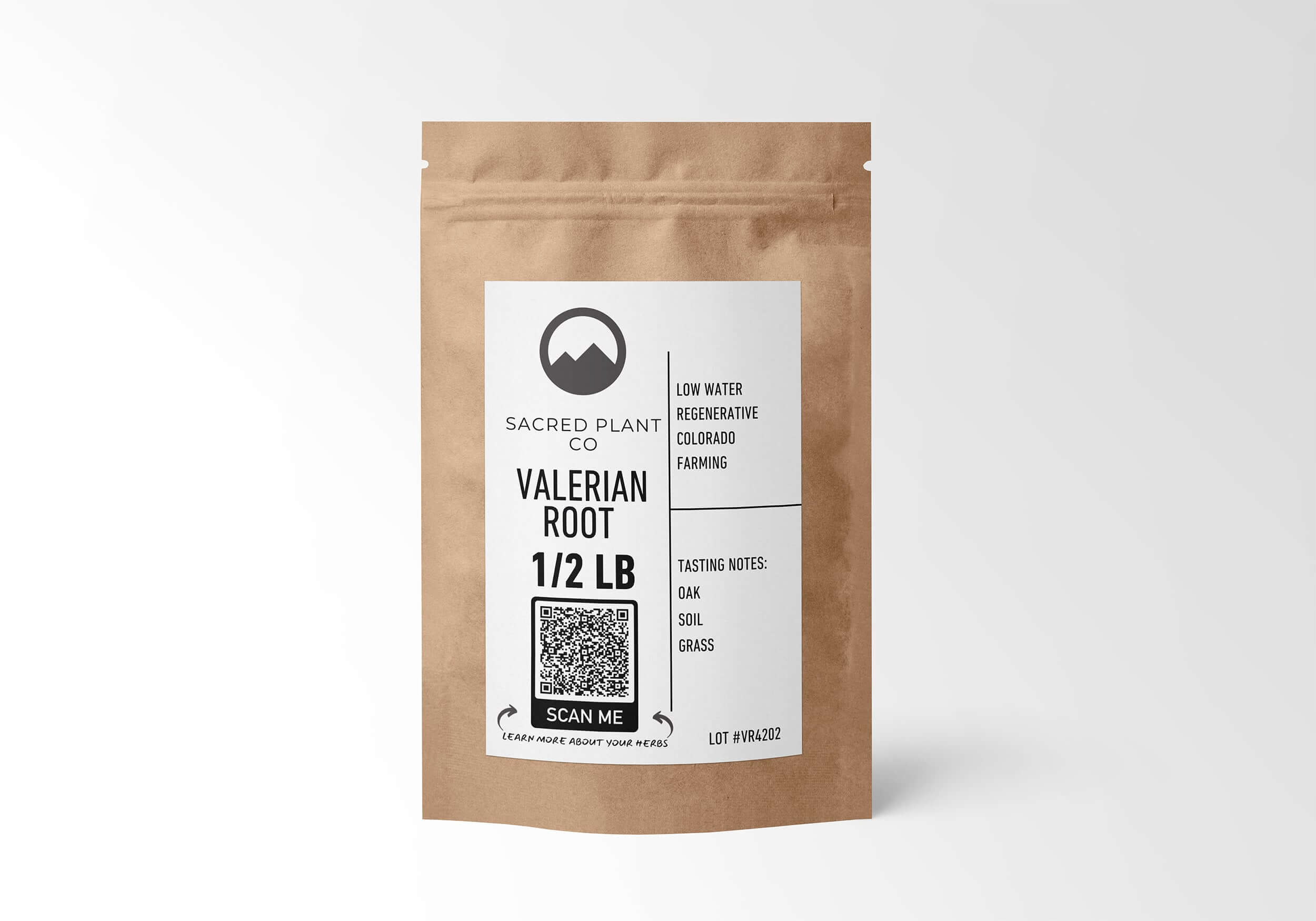
Valerian Root Bulk
Starting at $17.97
Tasting Notes: Earthy, bitter, and distinctly musky with a slightly sharp herbal finish.
Caffeine-FreePremium Quality Dried Valeriana officinalis Root, sourced with regenerative principles for potency that mass-market suppliers cannot replicate. Available in 1/2 lb, 1 lb, and 5 lb sizes.
Shop Valerian RootLab Testing and Transparency
At Sacred Plant Co, every batch of Valerian Root is subject to quality review. We encourage all customers to verify the purity and potency of what they are giving their pets.
Request COA by Lot #Not sure how to read a certificate of analysis? Our COA reading guide explains exactly what to look for.
Bonus Tips: Getting the Most Out of Valerian for Your Dog
 Unlike humans, dogs are naturally drawn to the pungent scent of isovaleric acid, making administration through treats or environmental aromatherapy surprisingly intuitive.
Pair Valerian with Environmental Calming Cues. Dim lighting, calming music or white noise, and a comfortable den-like space amplify the herb's physiological effects by reducing competing stimuli. The compound effect of environmental plus botanical calm is measurably greater than either alone.
Time It Correctly. Administer Valerian 30 to 60 minutes before the anticipated stressor, not during it. Once adrenaline and cortisol are fully activated, Valerian's gentle GABA modulation has a much harder time breaking through the acute stress cascade.
Add Gentle Touch. A slow, deliberate back or shoulder massage after administering Valerian reinforces the calming behavioral cue, deepens the bonding experience, and activates oxytocin release in both dog and human, supporting the herbal effect through neurochemistry.
Store Correctly to Preserve Potency. Transfer Valerian root to an airtight glass container, stored away from light, heat, and moisture. Proper storage is the single most important factor in preserving the volatile oils responsible for the herb's activity. For a comprehensive guide to protecting your investment in quality botanicals, see our article on how to buy, store, and use herbs in bulk.
Rotate Your Calming Herbs. Alternate Valerian with chamomile or passionflower on a rotating basis to prevent tolerance and give your dog's receptors a reset. Each herb works through a slightly different mechanism, so rotation maintains effectiveness while broadening the support spectrum.
Frequently Asked Questions About Valerian Herb for Dogs
Is Valerian root safe for all dogs?
Valerian root is considered safe for most healthy adult dogs when used appropriately and at weight-appropriate doses, but it is not suitable for pregnant or nursing dogs, puppies under six months, or dogs with liver conditions. Always consult your veterinarian before introducing any botanical supplement, as individual sensitivities and medication interactions vary by dog.
How long does Valerian take to work in dogs?
In most dogs, the calming effects of Valerian become noticeable within 30 to 60 minutes of administration, with peak effect typically occurring around the 90-minute mark. Timing the dose 30 to 45 minutes before the anticipated stressor is the most effective strategy for event-based use.
Can I give my dog Valerian every day?
Continuous daily use of Valerian is generally not recommended for dogs because prolonged exposure can reduce receptor sensitivity, diminishing the herb's effectiveness over time. Situational, event-based dosing with periodic breaks or rotation with other calming botanicals produces better long-term outcomes. Consult your veterinarian for guidance on longer-term protocols.
Can Valerian replace my dog's prescription anxiety medication?
No. Valerian root is a botanical supplement with a gentle, supportive mechanism and should never replace veterinarian-prescribed medications without explicit veterinary approval. It may serve as a valuable complementary tool alongside pharmaceutical treatment or as a standalone option for mild situational anxiety under veterinary guidance.
What does good Valerian root smell like, and why does it matter?
Quality Valerian root has a bold, assertive, earthy-musky aroma that some describe as similar to aged cheese or fermented soil. This aroma is produced by isovaleric acid and valerenic acid, the primary active compounds, meaning scent intensity directly correlates to medicinal potency. A faint or odorless Valerian root has likely lost the volatile oils responsible for its calming activity.
How does Valerian differ from chamomile or passionflower for dogs?
Valerian works primarily by inhibiting GABA breakdown, making it stronger for acute stress events with pronounced arousal. Chamomile's apigenin flavonoids act on benzodiazepine receptor sites for mild, broad calming. Passionflower targets GABA receptors directly with a slightly more sedating profile. Valerian tends to be most appropriate for moderate to significant anxiety events, while chamomile fits lighter, everyday nervous tension. For a detailed human-focused comparison that illustrates these mechanisms, see our guide to herbal tinctures for anxiety.
Is the pungent smell of Valerian a problem for dogs with sensitive noses?
Dogs are actually attracted to Valerian's characteristic aroma, with documented responses similar to the catnip attraction seen in cats. The isovaleric acid that gives Valerian its pungent quality appears to act as an olfactory attractant for many canines. This makes aromatherapy applications particularly effective and may explain why dogs readily accept valerian-infused treats and teas without palatability issues.
Continue Your Herbal Research: Related Guides
Valerian Root for Human Use: Because the calming mechanisms are shared across mammalian biology, understanding valerian's effects on the human nervous system deepens your understanding of why it works for your dog too. Embrace the Restorative Power of Valerian Root: A Natural Pathway to Serenity
Comparing Calming Herbs: If you are considering rotating Valerian with other botanicals for your dog, this sleep herb comparison illuminates the key differences in mechanism and application. Valerian Root vs. Passionflower: Which Herbal Sleep Aid Is Best for Restful Nights?
Building Your Botanical Protocol: Understanding how herbal tinctures work for anxiety in depth supports smarter decisions about dosing forms and combinations. Find Your Calm: The Best Herbal Tinctures for Anxiety and Natural Stress Relief
Protecting Potency Through Proper Storage: The quality of your Valerian root at the time of use depends almost entirely on storage conditions after purchase. How to Buy, Store, and Use Herbs in Bulk
Conclusion: The Pungent Root That Earns Its Place in Your Pet Wellness Toolkit
Valerian root is not subtle. Its smell announces itself the moment you open the bag, its taste stops dogs in their tracks, and its effect on an anxious nervous system, when the root is potent enough to deliver it, is real and observable. That directness is not a drawback. It is evidence. The same chemistry that makes quality Valerian assertive to the senses is the chemistry that crosses the blood-brain barrier and quiets the spiral of stress in a dog whose world has become briefly overwhelming.
The work of getting this right begins before the herb ever reaches your dog's bowl. It begins in soil, in the microbial relationships that persuade a root to synthesize valerenic acid at concentrations worth working with. At Sacred Plant Co, our regenerative approach to botanical sourcing is built on this understanding: that potency is not sprayed on or capsulated in. It is grown. Choosing quality is the first act of care you extend to your dog through this plant.
Use it with intention, dose it with care, rotate it with wisdom, and always bring your veterinarian into the conversation. Your dog's nervous system deserves the same rigor you'd bring to any tool in a serious wellness practice.
References
- Bent, S., et al. (2006). Valerian for sleep: a systematic review and meta-analysis. American Journal of Medicine, 119(12), 1005-1012.
- Khom, S., et al. (2007). Valerenic acid potentiates and inhibits GABA(A) receptors: molecular mechanism and subunit specificity. Neuropharmacology, 53(1), 178-187.
- Sheppard-Hangers, S., et al. (2013). A randomized, placebo-controlled trial of the effects of Valeriana officinalis on anxiety in dogs. Journal of Veterinary Pharmacology and Therapeutics. (Referenced from published veterinary herbal medicine reviews.)
- Todd, Z. (2018). Wag: The Science of Making Your Dog Happy. Vancouver: Greystone Books. (Chapter discussing olfactory attractants in dogs including isovaleric acid.)
- American Kennel Club. (2024). Valerian for dogs: what you need to know. AKC Staff Veterinary Review. Retrieved from www.akc.org.
- Brinker, F. (2001). Herb Contraindications and Drug Interactions. Eclectic Medical Publications. (3rd ed., p. 214-216.)


