


Orange Peel A Zesty Treasure for Wellness
Last Updated: June 24, 2026
Ahoy there, kitchen witches, herbal alchemists, and tea brewers seeking something extraordinary. Ready to cut through the ordinary and sail into the sun-drenched world of citrus medicine? Climb aboard as we navigate the tangy, vibrant realm of orange peel with Sacred Plant Co. Forget the usual citrus spiel. This is about peeling back layers to reveal nature's zestiest, most underappreciated treasures.
Here is the sommelier's secret that most citrus guides miss: a lack of aroma equals a lack of medicine. Real orange peel should shock the senses. When you crush a piece of premium dried peel, the volatile oils should leap off the rind in a bright, almost peppery citrus cloud. If it does not bite back, it is not working. That intensity is not random. It is the direct signature of how the plant was grown and dried.
This is where the Soil-to-Potency Thesis comes in. At Sacred Plant Co, we believe the aromatic punch and bioactive richness of any botanical trace back to the living biology of the soil it came from. The more diverse the microbial life feeding the plant, the more secondary metabolites (the very compounds that create aroma, color, and medicinal action) the plant produces. You can see the field data behind this idea in our research on how we achieved a 400% increase in soil biology in a single season. That same regenerative thinking guides how we source and prepare every citrus peel we carry.
What You'll Learn in This Guide
- Traditional medicine applications across Chinese, Ayurvedic, and European herbal systems
- Modern scientific research on orange peel's bioactive compounds and health benefits
- Practical preparation methods including teas, tinctures, and culinary applications
- Digestive support mechanisms and how orange peel aids gut health
- How to identify premium orange peel by color, aroma, and texture
- Tea recipes and blends for different wellness goals
- Safety considerations including medication interactions and quality sourcing
- How to dry your own orange peel at home to preserve essential oils
Key Takeaways
- Orange peel (Citrus sinensis) contains d-limonene, a monoterpene that can make up to 95% of its essential oil and drives its bright citrus aroma.
- In Traditional Chinese Medicine, aged orange peel is called Chen Pi and is dosed at 3 to 10 grams of dried peel per day in decoction to regulate Qi and strengthen the Spleen.
- Orange peel contains hesperidin, a flavonoid present in far higher concentration in the peel than in orange juice.
- Properly stored dried orange peel retains its aromatic potency for 12 to 18 months in an airtight container away from light and heat.
- Orange peel contains furanocoumarins that can affect CYP3A4 liver enzymes, so caution is warranted alongside certain medications.
- Sacred Plant Co orange peel is caffeine-free and third-party lab tested for microbial contaminants, heavy metals, and identity and foreign matter.
By the Numbers: Orange Peel at a Glance
| Attribute | Detail |
|---|---|
| Latin Name | Citrus sinensis |
| Family | Rutaceae |
| Parts Used | Dried peel (outer flavedo and inner albedo) |
| Primary Active Compounds | D-limonene (up to 95% of essential oil), hesperidin, pectin, vitamin C |
| Traditional Energetics | Warm, pungent, bitter (Spleen and Lung meridians) |
| Typical Dosage Range | 3 to 10 grams dried peel per day in decoction |
| Drying Method | Cut and sift, low-temperature dried to preserve volatile oils |
| Shelf Life | 3 years from manufacture (Batch ORAN-8352 COA) |
| Caffeine Status | Caffeine-Free |
| Sacred Plant Co COA | Available (Batch ORAN-8352) |
Premium Orange Peel
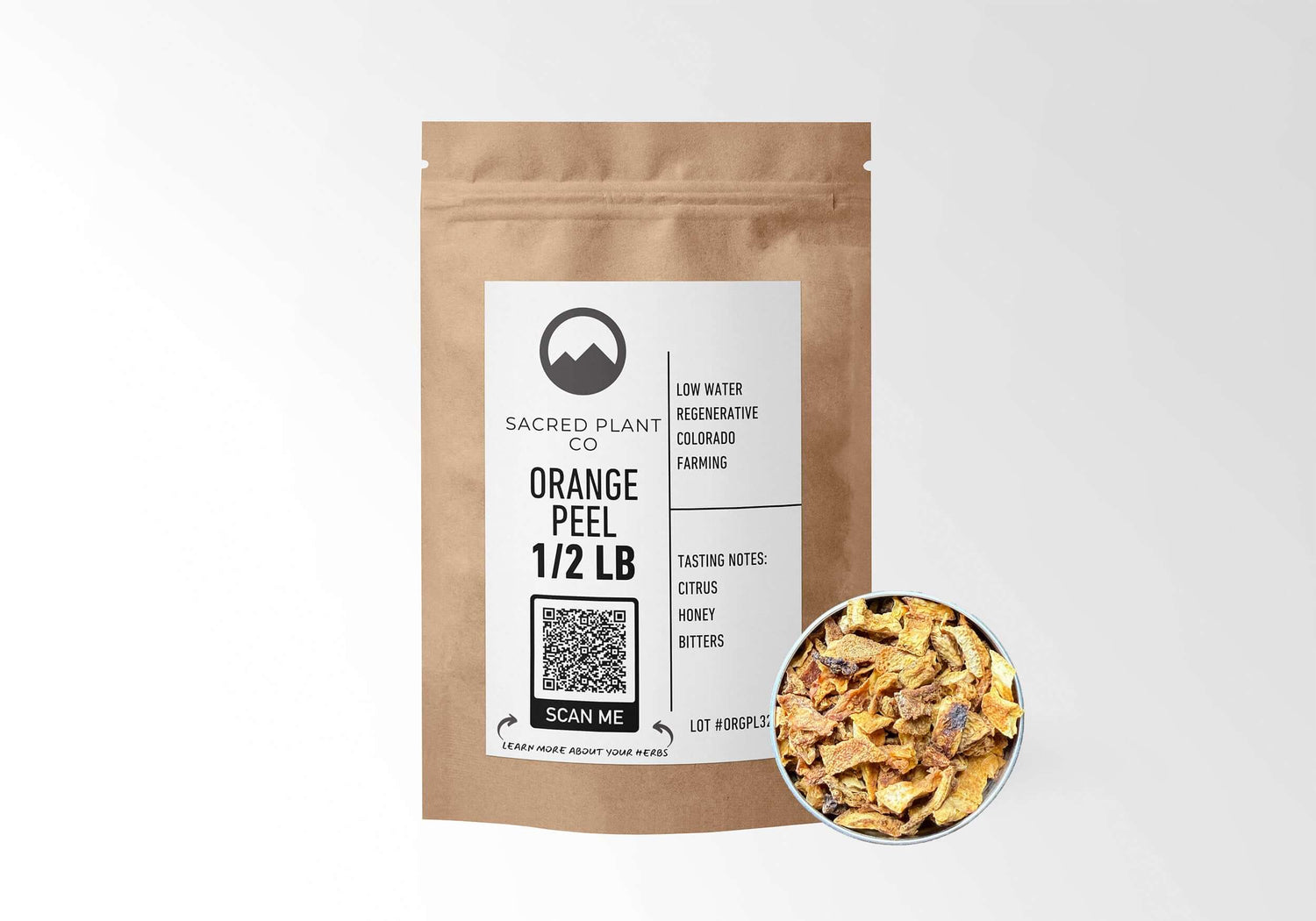
Tasting Notes: Citrus, Honey, Bitters
Caffeine-FreeHand-selected Citrus sinensis peel, carefully dried to preserve essential oils, vitamin C, and beneficial flavonoids. Perfect for teas, tinctures, and culinary creations.
Explore Orange PeelWhat Is Orange Peel and Why Does It Matter
Orange peel is the dried rind of the sweet orange, prized as both a culinary spice and a traditional medicine for digestion, respiratory comfort, and Qi regulation. While the juice gets all the attention, the peel holds the plant's most concentrated aromatic and bioactive treasures.
The common orange (Citrus sinensis): beloved for its juice, yet its peel is often tossed aside, forgotten in the compost bin or garbage disposal. What a mistake. Because hidden in those fragrant skins lies the true essence of the orange, concentrated, invigorating, and bursting with volatile oils that have been embraced by healers, chefs, and medicine makers for millennia.
Orange peel is not simply the outer skin of the fruit. It consists of two distinct layers: the outer zest (flavedo) rich in essential oils, and the inner white pith (albedo) containing higher concentrations of pectin and flavonoids. Both offer therapeutic value, though traditional preparations often favor one over the other depending on the intended use.
The Botanical Profile of Orange Peel
The chemistry of orange peel reveals why it has earned such respect in traditional medicine. The essential oil composition includes d-limonene (up to 95% of the oil), linalool, citral, and various aldehydes that create the characteristic aroma.4 Beyond volatile oils, orange peel contains impressive amounts of vitamin C, hesperidin (a bioflavonoid with significant research backing), pectin fiber, calcium, magnesium, and various carotenoids.
How to Identify Premium Orange Peel
Premium dried orange peel reveals itself through three senses: a vibrant orange-to-amber color, a firm but pliable texture, and an aroma so bright it almost stings the nose when crushed. These three signals tell you whether the essential oils that carry the medicine are still intact.
Color: Look for peel that holds bright orange to deep amber tones depending on variety and drying method. Faded, dull brown peel signals age, heat damage, or poor storage, and with it a loss of volatile oils.
Aroma: This is the single most important test. Crush a small piece between your fingers. Genuine, potent orange peel releases an immediate, intense citrus burst with a slightly bitter, peppery edge. Our orange peel carries tasting notes of Citrus, Honey, and Bitters, a profile that reflects intact essential oils and a balanced flavedo-to-albedo ratio. A weak or flat aroma means the medicine has already evaporated.
Texture and drying method: Quality peel is cut and sifted cleanly, snapping crisply when fully dry rather than bending limply. Low-temperature drying preserves volatile oils far better than high heat, which is why careful drying is as important as the growing itself. This is the sensory expression of the Soil-to-Potency Thesis in your own kitchen.
Orange Peel in Traditional Medicine Systems
Traditional Chinese Medicine: Chen Pi
In Traditional Chinese Medicine, orange peel, particularly aged tangerine or orange peel called Chen Pi, holds foundational status. TCM practitioners classify it as warm in temperature, pungent and bitter in taste, and having an affinity for the Spleen and Lung meridians.
Chen Pi's primary actions include regulating Qi (vital energy), strengthening the Spleen, resolving phlegm, and drying dampness. It appears in numerous classical formulas, particularly those addressing digestive weakness, bloating, nausea, and phlegm accumulation in the respiratory system. You can explore this energetic framework further in our guide to key TCM herbs for balancing Qi.
The aging process matters in TCM. Freshly dried orange peel is called Qing Pi and has different properties than aged Chen Pi, which becomes more valued over time. Some aged Chen Pi specimens reach considerable value, comparable to fine wines. The aging process mellows the peel's intensity while concentrating certain therapeutic compounds.
Common TCM applications include combining Chen Pi with ginger for digestive upset, with pinellia for phlegm-dampness patterns, and with astragalus to enhance Spleen Qi. Because it excels at resolving phlegm, Chen Pi pairs naturally with the principles covered in our discussion of understanding phlegm through Traditional Chinese Medicine. The herb's ability to "move" stagnant Qi makes it useful for abdominal distension and poor appetite.
Ayurvedic Perspectives
While not indigenous to ancient India, citrus fruits were incorporated into Ayurvedic practice over centuries of trade. Orange peel in Ayurveda is generally classified as having pungent (katu) and bitter (tikta) tastes with heating (ushna) energy.
Ayurvedic practitioners use orange peel primarily for kindling digestive fire (agni), clearing kapha accumulation, and supporting healthy respiratory function. The pungent-bitter-heating combination makes it particularly useful for conditions involving congestion, sluggish digestion, and excess moisture in the system.
Orange peel often appears in warming digestive formulas alongside ginger, black pepper, and cardamom. Because of this synergy, it pairs beautifully with our regeneratively sourced ginger root in warming blends. Its aromatic quality (prabhava) is valued for its ability to clear channels and promote the downward flow of vata in the digestive tract.
European Folk Medicine
European herbalism has long treasured orange peel, particularly after citrus cultivation spread throughout Mediterranean regions. Medieval and Renaissance herbalists valued it for stomach complaints, as a vehicle for other medicines (masking unpleasant tastes), and in liqueurs and digestifs.
The tradition of bitter aperitifs and digestifs in European cuisine often features orange peel prominently. These preparations, from Italian amaro to French orange liqueurs, represent functional medicine disguised as sophisticated beverages. The bitter compounds stimulate digestive secretions, while essential oils provide carminative (gas-relieving) benefits.
In British herbal medicine, orange peel found use in tonics for strengthening digestion, particularly when combined with gentian, wormwood, or other bitters. The aromatic component made it more palatable than intensely bitter herbs alone.
Modern Science Meets Ancient Wisdom
Contemporary research has begun illuminating the mechanisms behind orange peel's traditional applications. While much remains to be studied, several compounds have attracted significant scientific attention.
Flavonoids and Cardiovascular Support
Hesperidin, the predominant flavonoid in orange peel, has demonstrated remarkable properties in laboratory and clinical studies.1 Research suggests hesperidin may support healthy blood pressure, reduce inflammatory markers, and improve endothelial function (the health of blood vessel linings).
A meta-analysis of randomized controlled trials found that hesperidin supplementation was associated with improvements in several cardiovascular risk markers.1 The mechanism appears to involve enhanced nitric oxide production, reduced oxidative stress, and modulation of inflammatory pathways.
The concentration of hesperidin in orange peel far exceeds what's found in orange juice, making the peel a superior source for those seeking these benefits. However, absorption can be enhanced by certain preparation methods, and individual variation in gut bacteria affects how well we metabolize these compounds.
Limonene and Its Diverse Applications
D-limonene, the primary component of orange peel essential oil, has been studied for numerous applications.2 Research has explored its potential for supporting healthy inflammation responses, acting as a natural solvent in cleaning products, and even its chemopreventive properties in laboratory studies.
Some studies suggest limonene may support gastroesophageal health, potentially helping with occasional heartburn and reflux symptoms.2 The mechanism may involve promoting gastric motility and protective mucus production. However, most studies have used concentrated extracts rather than whole food preparations.
In aromatherapy research, limonene inhalation has been associated with improved mood and reduced stress markers. The uplifting quality of orange peel's aroma appears to be more than just pleasant. It may influence neurotransmitter activity and stress hormone levels.
Antimicrobial and Antifungal Properties
Orange peel essential oil has demonstrated broad-spectrum antimicrobial activity in laboratory testing.3 Studies show effectiveness against various bacteria, fungi, and even some viruses. This explains traditional uses for preservation and as a natural cleaning agent.
The combination of limonene and other volatile compounds appears to disrupt microbial cell membranes. While topical and environmental applications are well-supported, using orange peel internally for infections requires professional guidance and should not replace appropriate medical treatment.
Digestive Support Mechanisms
Research supports orange peel's traditional use for digestive complaints through multiple mechanisms. The bitter compounds stimulate bitter taste receptors throughout the digestive tract, triggering increased production of digestive secretions including saliva, gastric acid, bile, and pancreatic enzymes.
The carminative essential oils help relax smooth muscle in the digestive tract, reducing spasms and facilitating the movement of gas. The pectin fiber in the pith can support healthy gut flora and regular elimination. For a broader look at this category, see our overview of herbal teas for digestion.
Small studies on citrus peel extracts have reported improvements in symptoms of functional dyspepsia, bloating, and sluggish digestion. While larger trials are needed, the safety profile and traditional use support its application for common digestive discomfort.
Explore More: Discover how orange peel enhances our signature citrus tea blend in Discover Manatea: The Quintessence of Florida in a Cup, or compare citrus rinds in our guide to Lemon Peel: The Zest of Life.
Practical Preparations and Applications
Orange peel does more than grace your grandmother's marmalade. It's a natural for skin care, a digestive aid, and a source of abundant antioxidants. It's the unsung hero in desserts, cocktails, and savory dishes across global cuisines.
Sunset Bliss: Twilight Orange Peel Tea

This warming blend combines orange peel's digestive benefits with complementary herbs for a ritual tea perfect for unwinding after dinner or before bed.
Sunset Bliss: Twilight Orange Peel Tea
Ingredients:
- 1 tablespoon dried orange peel
- 1 teaspoon dried lavender flowers
- 1 teaspoon dried chamomile flowers
- 1 teaspoon cinnamon chips or 1 cinnamon stick
- 1 teaspoon fresh grated ginger (or 1/2 teaspoon dried)
- 10 ounces hot water
- Raw honey or agave to taste
Instructions:
- Combine orange peel, lavender, and chamomile in a teapot or large infuser.
- Pour hot water (just off the boil) over the herbs and cover immediately to trap essential oils.
- Steep for 5 minutes to allow the floral and citrus notes to meld.
- Add cinnamon and ginger, steep for an additional 3 minutes.
- Strain into your favorite mug, sweeten with honey or agave as desired.
- Sip slowly as you watch the sunset and feel tension dissolve.
A note from Patrick: This is my wind-down cup, the one I steep when the day finally goes quiet. I always cover the pot the second the water goes in. The first time I left it open, half the citrus aroma drifted off into the kitchen before I ever lifted the lid, and now I treat that cover like part of the recipe.
Why Each Component Matters
Orange peel: Provides the aromatic base while supporting digestion and offering vitamin C and flavonoids. The essential oils create an uplifting sensory experience.
Lavender: Contributes calming properties through its interaction with GABA receptors. The floral note softens orange peel's intensity while supporting relaxation.
Chamomile: Adds gentle sedative effects and additional digestive support. Learn more in our guide to dried chamomile flowers from cultivation to cup. The apple-like sweetness balances the tea's flavor profile.
Cinnamon: Provides warming energy, stabilizes blood sugar, and adds depth. Cinnamon's sweet-spicy character complements citrus beautifully.
Ginger: Offers powerful digestive stimulation, warming properties, and anti-nausea effects. The spicy kick enlivens the blend and enhances circulation.
Digestive Tonic Tea
For sluggish digestion, bloating, or post-meal discomfort, try this more medicinal preparation.

Digestive Tonic Tea
Ingredients:
- 2 tablespoons dried orange peel
- 1 tablespoon fresh grated ginger
- 1 teaspoon fennel seeds
- 1 teaspoon peppermint leaf
- 12 ounces water
Instructions:
- Combine orange peel, ginger, and fennel seeds in a small pot.
- Add water and bring to a gentle simmer (not a rolling boil).
- Simmer covered for 10 minutes to extract deeper medicinal compounds.
- Remove from heat, add peppermint, and steep covered for 5 more minutes.
- Strain and drink 15-30 minutes before meals for best digestive support.
A note from Patrick: I keep this one deliberately strong and short. Ten minutes at a bare simmer pulls a deep amber color and a peppery edge that a quick steep never reaches. I add the peppermint right at the end, off the heat, so it stays bright and cool against the warm ginger underneath.
This preparation is more potent than a simple infusion. The simmering extracts more essential oils and bitter compounds, making it suitable for chronic digestive weakness rather than daily enjoyment tea. If you are weighing soothing herbs for the gut, our comparison of peppermint versus ginger for digestion is a helpful companion read.

Manatea: Authentic Florida Blend
Tasting Notes: Sunshine, Sea Breeze, Sweetness
Experience a signature citrus blend featuring orange peel, lemongrass, and premium Nektaro black tea. A bright, sunlit cup with a botanical bounty.
Try ManateaThe black tea base in Manatea is our Nektaro Flowery Orange Pekoe, and for another bright morning option you can explore our Sunrise Citrus Tea.
Culinary Applications Beyond Tea
Orange peel's versatility extends far beyond the teapot. Here are practical ways to incorporate this citrus treasure into your kitchen repertoire.
Ground Orange Peel Powder
Grind dried orange peel in a spice grinder or high-powered blender to create a versatile powder. Use it in:
- Smoothies for a citrus boost and vitamin C
- Baked goods including muffins, cookies, and quick breads
- Spice rubs for poultry, fish, or pork
- Salad dressings and marinades
- Hot chocolate or golden milk for depth and warmth
Start with small amounts (1/4 to 1/2 teaspoon) as the flavor is concentrated. The powder stores well in an airtight container for several months.
Simmering Potpourri and Home Atmosphere
Orange peel simmered with cinnamon sticks, cloves, and star anise creates a natural air freshener that also humidifies dry indoor air. The aromatic compounds have genuine mood-lifting properties beyond just smelling pleasant.
Keep a small pot simmering on the stove during cold months, adding water as needed. The practice transforms your home into an aromatic sanctuary while providing subtle aromatherapeutic benefits.
Candied Orange Peel
This traditional confection preserves orange peel while creating an elegant dessert garnish or standalone treat. The process mellows bitterness while concentrating sweetness and essential oils.
Simmer peel strips in simple syrup (1:1 sugar to water ratio) until translucent, then dry on parchment. The result is a sophisticated sweet with digestive benefits, proof that medicine can be delicious.
Traditional Chinese Medicine Applications
For those interested in incorporating TCM principles, understanding Chen Pi's energetic properties allows for more targeted use.
Patterns and Presentations
TCM practitioners recommend Chen Pi for:
- Spleen Qi deficiency manifesting as poor appetite, bloating, loose stools, and fatigue
- Qi stagnation presenting as abdominal distension, nausea, and belching
- Phlegm-dampness characterized by chest congestion, productive cough with white phlegm, and feeling of heaviness
- Food stagnation from overeating or poor digestion
Chen Pi is typically combined with other herbs in formulas rather than used alone. Classic pairings include Atractylodes for Spleen strengthening, Pinellia for phlegm transformation, and Magnolia bark for Qi circulation. To understand how living soil shapes the potency of these botanicals, see our piece on oriental herbs in Traditional Chinese Medicine.
Preparation Differences
In TCM, orange peel is usually decocted (simmered) rather than infused, especially when used medicinally. Standard dosing ranges from 3-10 grams per day in decoction form. The longer cooking time extracts compounds not available through simple steeping.
Fresh orange peel (Qing Pi) from unripe fruit has different applications than aged ripe peel (Chen Pi). Qing Pi is considered more aggressive for moving Liver Qi and is used for different pattern presentations. Most Western practitioners work primarily with Chen Pi.
Skin Care Applications
Orange peel's benefits extend to topical use, where its antioxidants, vitamin C, and antimicrobial properties shine.
Face Masks and Exfoliants
Finely ground orange peel powder mixed with honey or yogurt creates a gentle exfoliating face mask. The vitamin C supports collagen production while natural fruit acids provide mild chemical exfoliation. The aromatic experience adds an aromatherapeutic dimension to your skin care ritual.
For oily or acne-prone skin, the antimicrobial properties may help reduce blemish-causing bacteria. The astringent quality can temporarily tighten pores and reduce excess oil production.
Infused Oils
Dried orange peel infused in carrier oils (jojoba, sweet almond, or olive oil) creates a vitamin-rich base for massage oils, body butters, or facial serums. The process extracts fat-soluble compounds including carotenoids while imparting the uplifting citrus aroma.
Use the folk method: fill a jar 3/4 full with dried orange peel, cover completely with oil, cap tightly, and let sit in a warm location for 4-6 weeks, shaking daily. Strain and use within 6 months.
Safety Considerations and Responsible Use
As wondrous as orange peel is, it's wise to approach any botanical medicine with appropriate caution and respect.
Contraindications and Medication Interactions
Orange peel, like grapefruit, contains furanocoumarins that can interfere with cytochrome P450 enzymes in the liver. These enzymes metabolize many medications, and inhibiting them can lead to higher drug levels in the bloodstream.
While orange has lower levels of these compounds than grapefruit, caution is warranted if you take medications metabolized by CYP3A4, including certain statins, calcium channel blockers, immunosuppressants, and others. Consult your pharmacist or physician if you take prescription medications and plan to use orange peel regularly in therapeutic amounts.
Pregnancy and Nursing
Orange peel in culinary amounts is generally considered safe during pregnancy and nursing. However, concentrated extracts or large medicinal doses should be discussed with healthcare providers.
Traditional Chinese Medicine has specific considerations for Chen Pi use during pregnancy, generally favoring gentler digestive herbs in this population. When in doubt, work with qualified practitioners familiar with botanical medicine in pregnancy.
Traditional and Energetic Considerations
In TCM terms, orange peel is warming and drying, so it is traditionally used with care in patterns of heat or dryness, such as a dry cough without phlegm. Its Qi-moving, dispersing nature is energetically considered better suited to stagnation and dampness than to deficiency of fluids.
Allergies and Sensitivities
Citrus allergies, while relatively uncommon, do occur. Those with known citrus sensitivities should avoid orange peel. Topical application can cause photosensitivity in some individuals, because essential oils make skin more susceptible to sun damage.
If using orange peel topically, perform a patch test first and avoid sun exposure for several hours after application. The same caution applies to limonene-rich products.
Important Safety Information
This content is for educational purposes and does not constitute medical advice. Orange peel is not intended to diagnose, treat, cure, or prevent any disease. Consult qualified healthcare providers before using orange peel therapeutically, especially if pregnant, nursing, taking medications, or managing diagnosed health conditions. Choose certified, regeneratively sourced orange peel to minimize pesticide exposure. Discontinue use if adverse reactions occur.
Selecting and Storing Quality Orange Peel
The therapeutic value of orange peel depends entirely on quality sourcing and proper storage.
What to Look For
High-quality dried orange peel retains vibrant color, bright orange to deep amber depending on variety and drying method. It should smell intensely citrusy when crushed. Faded brown peel with weak aroma indicates age or poor storage.
Look for peel that's been properly cut and sifted, free of excess pith if you prefer less bitterness, or with pith included if you value the pectin and additional flavonoids. At Sacred Plant Co., we carefully balance these considerations in our preparation methods.
Storage Best Practices
Store dried orange peel in airtight glass containers away from light, heat, and moisture. The essential oils are volatile and will dissipate if exposed to air. Dark glass offers superior protection against light degradation. For a complete system, see our guide on how to buy, store, and use herbs in bulk.
Properly stored orange peel maintains its aromatic potency for 12-18 months. Date your containers and use the "first in, first out" principle to rotate stock. If the peel loses its characteristic citrus punch, it's time to refresh your supply.
Whole dried peel strips store better than ground powder, which has more surface area exposed to air. Grind only what you need for immediate use to maximize freshness and potency.
Quality Assurance: Certificates of Analysis
We provide third-party lab testing for all our botanical products, ensuring purity, safety, and botanical identity. Not sure how to read one? Start with our guide on how to read a Certificate of Analysis.
Batch ORAN-8352 tested at a total plate count below 10 CFU/g against a 500,000 CFU/g release limit, with mold below 10 CFU/g, lead at 0.03 ppm against a 3 ppm limit, and arsenic at 0.02 ppm against a 1 ppm limit. Salmonella and E. coli both returned negative. The lot was confirmed grown without pesticides and produced without solvents, additives, or preservatives.
Batch ORAN-8352 Lab Results (third-party tested)
| Test | Release Limit | Result | Status |
|---|---|---|---|
| Total Plate Count | 500,000 CFU/g | <10 CFU/g | Pass |
| Yeast | 1,000 CFU/g | 50 CFU/g | Pass |
| Mold | 5,000 CFU/g | <10 CFU/g | Pass |
| Total Coliform | 1,000 CFU/g | <10 CFU/g | Pass |
| E. Coli | <10 CFU/g or Negative/25g | <10 CFU/g | Pass |
| Salmonella | Negative/25g | Negative/25g | Pass |
| Arsenic | 1 ppm | 0.02 ppm | Pass |
| Cadmium | 1 ppm | Not Detected | Pass |
| Lead | 3 ppm | 0.03 ppm | Pass |
| Mercury | 1 ppm | Not Detected | Pass |
Each batch undergoes testing for microbial contaminants, heavy metals, and identity and foreign matter. For a lot not listed above, request the matching report by emailing care@sacredplantco.com with your batch number. We publish the signed Certificate of Analysis for every lot we test on our lab testing page.
Growing and Drying Your Own Orange Peel
For those blessed with citrus-growing climates or potted citrus trees, producing your own dried orange peel connects you intimately with this botanical ally.
Sourcing Fresh Oranges
If purchasing fresh oranges for drying peel, seek out certified specimens from farmers' markets or specialty stores. Conventionally grown supermarket oranges often carry wax coatings and heavy pesticide residues unsuitable for medicinal use.
Wash oranges thoroughly with a vegetable wash or vinegar solution before peeling. Even certified fruit may carry surface residues from handling and transport.
Drying Methods
Remove peel from fruit using a vegetable peeler for thin strips of zest only, or by hand for larger pieces including some pith. Arrange in a single layer on screens or parchment paper in a warm, dry, well-ventilated location away from direct sunlight.
Air drying typically takes 3-7 days depending on humidity and peel thickness. The peel should be crisp and snap easily when fully dry. Any remaining moisture will cause mold during storage.
Alternatively, use a food dehydrator set to 95-115°F for faster, more controlled drying. Low temperatures preserve essential oils better than high heat. A low oven (170°F or lowest setting) with the door propped open also works, though it's less efficient.
Store dried peel immediately in airtight containers once completely cool. Residual warmth can create condensation that leads to spoilage.
The Ritual of Orange Peel
Working with orange peel transcends extracting compounds for health benefits. This botanical teacher invites us into relationship with the plant world, the seasons, and the cycles of cultivation and harvest.
The act of preparing orange peel tea becomes a sensory meditation. The bright aroma awakens the mind while the warming bitter-sweet taste activates digestion. The Sacred ritual of preparation, measuring herbs, heating water, timing the steep, savoring the first sip, creates space for presence and intentionality in our often-hurried lives.
Some practitioners speak to their herbs, expressing gratitude for the medicine they provide. Others incorporate orange peel into seasonal rituals, particularly around the winter solstice when citrus fruits reach peak season. There's no prescribed way to honor your relationship with plant medicine, so let authenticity guide your practice.
Consider keeping a journal of your experiences with orange peel. Note how different preparations affect your digestion, mood, and energy. Track which blends resonate most deeply. This mindful observation deepens your understanding of how botanical allies work with your unique constitution.
Frequently Asked Questions About Orange Peel
What is orange peel good for?
Orange peel is traditionally used to support digestion, ease bloating and gas, regulate Qi in Traditional Chinese Medicine, and soothe respiratory congestion, thanks to its bitter compounds, carminative essential oils, and the flavonoid hesperidin. It also serves as a culinary spice and a topical skin care ingredient.
How much orange peel tea should I drink a day?
Most herbalists suggest 1 to 3 cups of orange peel tea daily, using 1 to 2 teaspoons of dried peel steeped 10 to 15 minutes, while medicinal Chen Pi decoctions use 3 to 10 grams of dried peel. Start low and adjust to your comfort.
What is Chen Pi in Traditional Chinese Medicine?
Chen Pi is aged, dried orange or tangerine peel used in Traditional Chinese Medicine to regulate Qi, strengthen the Spleen, resolve phlegm, and dry dampness. The longer the peel ages, the more it is valued, with some specimens prized like fine vintage wines.
Can you eat orange peel?
Yes, orange peel is edible and is widely used as zest, powder, candied peel, and tea, though it tastes bitter and aromatic rather than sweet like the fruit. Choose certified, well-washed peel to avoid wax coatings and pesticide residues that concentrate on the rind.
Does orange peel interact with medications?
Orange peel contains furanocoumarins that can affect CYP3A4 liver enzymes, so it may interact with statins, calcium channel blockers, immunosuppressants, and other CYP3A4-metabolized drugs, though its levels are lower than grapefruit. Consult your pharmacist if you take prescriptions regularly.
Is orange peel safe during pregnancy?
Orange peel in normal culinary amounts is generally considered safe during pregnancy and nursing, but concentrated extracts or large medicinal doses should first be discussed with a qualified healthcare provider. Traditional Chinese Medicine tends to favor gentler digestive herbs during pregnancy.
What does quality orange peel taste like?
Premium dried orange peel delivers a bright, intense citrus aroma with notes of honey and a clean bitter edge, our peel is described with tasting notes of Citrus, Honey, and Bitters. A flat or faint aroma signals that the essential oils have degraded.
How do you dry orange peel at home?
Peel certified, washed oranges, arrange the strips in a single layer away from direct sunlight, and air dry for 3 to 7 days until crisp, or use a dehydrator set to 95 to 115°F to preserve volatile oils. Store immediately in airtight glass once fully cool.
Is orange peel caffeine-free?
Yes, pure dried orange peel is naturally caffeine-free, which makes it a suitable choice for relaxing evening teas, for bedtime blends, and for anyone who is sensitive to or actively reducing their caffeine intake. Note that blends pairing orange peel with black or green tea, such as Manatea, will contain caffeine from the tea leaf.
What is the difference between Qing Pi and Chen Pi?
Qing Pi is unripe green citrus peel considered more aggressive for moving Liver Qi, while Chen Pi is aged ripe peel used to strengthen the Spleen and resolve phlegm. Most Western herbalists work primarily with Chen Pi for digestive and respiratory support.
Related Reading and Internal Resources
Because orange peel sits at the crossroads of digestion, citrus aromatics, and Traditional Chinese Medicine, it pairs naturally with several companion guides. To deepen your sensory understanding, compare it with our Lemon Peel guide and our look at aromatic spearmint. For gut-focused readers, our peppermint versus chamomile for digestion comparison helps you choose the right ally. And to understand the regenerative foundation behind our potency claims, read how our soil tested at a Haney Score of 25.4, surpassing pristine forest benchmarks.
Begin Your Journey with Orange Peel
At Sacred Plant Co., we believe every botanical carries stories, of the soil it grew in, the cultures that treasured it, the hands that harvested it. Our orange peel represents more than dried citrus skin. It embodies sunshine, careful cultivation, traditional wisdom, and modern quality standards.
We invite you to explore orange peel with curiosity and respect. Start small, perhaps with a simple afternoon tea. Notice how your body responds to the aromatic oils, the gentle bitters, the warming energy. Gradually expand your relationship with this versatile ally as understanding deepens.
Whether you seek digestive support, immune system nourishment, or simply a moment of sensory pleasure, orange peel offers its gifts generously. This is botanical wisdom that tastes good, smells wonderful, and connects us to thousands of years of human experience with plant healing.
So until our next culinary escapade or herbal adventure, bask in the orange glow of life's juiciest moments. Explore our premium orange peel and discover why this humble citrus treasure deserves a permanent place in your botanical apothecary.
Cheers to you, intrepid explorers, as you sip, cook, and live on the bright side.


