


Natural Herbs for Nerve Regeneration & Nervous System Support
Last Updated: May 31, 2026

Hericenones, curcumin, withanolides, hypericin. The herbs people reach for when their nerves are frayed or healing share something specific: dense, defensive plant chemistry. These are not gentle flavor compounds. They are secondary metabolites a plant builds to survive, and they are the reason a tea can do real work for the nervous system.
That chemistry does not appear by accident. A plant manufactures its strongest compounds when it is challenged: when it has to defend itself, compete for nutrients, and negotiate with a crowded community of soil microbes. This is what we mean by chemistry created by struggle, not comfort. An herb pampered in sterile, heavily fertilized ground has little reason to invest in the very molecules we want.
This is the heart of our Soil-to-Potency Thesis: microbial diversity in living soil directly increases secondary metabolite production in medicinal herbs. We have measured this on our own beds, which tested at a Haney Score of 25.4, a figure that exceeds many pristine-forest reference soils.5 You can read the full breakdown in our deep dive on how our soil regeneration produced a Haney Score of 25.4. Potent nerve support starts in the ground, long before it reaches your cup.
What You'll Learn
- How nerve tissue actually repairs itself, and the typical rate of regrowth in healthy conditions
- The four mechanisms herbs use to support the nervous system: inflammation control, NGF support, circulation, and stress regulation
- Which botanicals are best matched to which nerve-support goal
- How to identify premium nerve-support herbs by color, aroma, and texture
- Four simple daily preparations for Lion's Mane, turmeric, Ginkgo, and Ashwagandha
- How to structure a consistent morning-to-evening nerve-support routine
- Safety considerations and the most important herb-drug interactions to watch
- Why living soil changes the potency of the herbs you choose
Key Takeaways
- Peripheral nerves regenerate slowly, typically around 1 to 3 millimeters per day, and up to 3 to 4 millimeters per day in well-vascularized tissue.6
- Lion's Mane Mushroom (Hericium erinaceus) contains hericenones and erinacines, compounds shown in laboratory studies to stimulate Nerve Growth Factor synthesis.1,3
- Curcumin from turmeric is poorly absorbed on its own, but piperine from black pepper can increase its bioavailability by up to 2,000 percent.2
- Ashwagandha (Withania somnifera) was shown in a 2012 trial to reduce serum cortisol by roughly 28 percent at 300 milligrams twice daily, easing stress load on the nervous system.4
- Ginkgo Biloba leaf, standardized in research to 120 to 240 milligrams daily, is studied for improving microcirculation to the brain and peripheral nerves.
- Sacred Plant Co's regenerative beds tested at a Haney Score of 25.4, a soil-health benchmark that exceeds many undisturbed forest soils.5
Nerve Support By the Numbers
| Primary Nerve-Support Herbs | Lion's Mane, Turmeric, Gotu Kola, Ginkgo Biloba, Ashwagandha, St. John's Wort |
|---|---|
| Key Compound Classes | Hericenones and erinacines, curcumin, triterpenoid saponins, flavone glycosides, withanolides, hypericin |
| Typical Nerve Regrowth Rate | 1 to 3 mm per day, up to 3 to 4 mm per day in well-vascularized tissue6 |
| Curcumin Absorption Boost | Up to 2,000 percent when paired with piperine from black pepper2 |
| Traditional Systems | Ayurveda, Traditional Chinese Medicine, European folk herbalism |
| Sacred Plant Co Soil Benchmark | Haney Score of 25.4, exceeding many pristine-forest reference soils5 |
| Sacred Plant Co COA | Available by lot number on request. See our guide to reading a Certificate of Analysis |
Understanding Nerve Damage and Regeneration

Nerve regeneration is the body's natural process of repairing or regrowing damaged nerve fibers to restore sensation, movement, and function, and it happens more slowly than almost any other kind of tissue repair. Under healthy conditions, peripheral nerves regrow at roughly 1 to 3 millimeters per day, and that pace can rise to 3 to 4 millimeters per day where blood supply is strong.6
Nerve regeneration is the physiological process by which peripheral nerve fibers regrow after injury, characterized by axonal sprouting, remyelination, and dependence on neurotrophic factors such as Nerve Growth Factor (NGF) to guide and sustain repair.
Several things can damage nerves:
- Physical injuries: cuts, burns, or trauma that sever or compress nerve fibers
- Chronic conditions: diabetes, multiple sclerosis, or autoimmune disorders
- Persistent inflammation: long-term swelling that degrades nerve tissue
- Toxic exposure: certain medications, chemotherapy, or environmental toxins
Because nerve cells rebuild so slowly, recovery usually means addressing the underlying inflammation, supporting the cell's own repair machinery, and creating an environment where healing can proceed without interference. This is exactly the territory where well-chosen herbs traditionally earn their place.
How Herbs Support Your Nervous System
Herbs support the nervous system through four main pathways: lowering inflammation, encouraging the body's own Nerve Growth Factor production, improving circulation to nerve tissue, and regulating the stress response that otherwise slows repair. No single plant does all four, which is why these botanicals are traditionally layered together.
The Soil-to-Potency Thesis is Sacred Plant Co's foundational principle that microbial diversity in living soil directly increases secondary metabolite production in medicinal herbs. The compounds that act on nerve tissue, from curcumin to withanolides, are precisely the defense molecules a plant produces most abundantly when it grows in biologically active ground.
Reducing Inflammation at the Source
Chronic inflammation stalls repair. Curcumin, the pigment compound in turmeric, has been studied for its ability to down-regulate inflammatory signaling, helping clear the way for nerve tissue to recover. For a wider look at this mechanism, see our overview of herbal anti-inflammatory remedies, which complements the nerve-specific focus here.
Supporting Nerve Growth Factor Production
One of the more striking findings in this field involves Nerve Growth Factor (NGF), a protein essential to nerve cell survival and growth. Certain mushrooms and herbs contain compounds that, in laboratory settings, stimulate the body's own NGF synthesis.1,3
Improving Circulation to Damaged Areas
Repair needs fuel. Ginkgo Biloba is traditionally used to improve blood flow to peripheral nerves, helping regenerating tissue receive oxygen and nutrients. Because that same circulatory action supports the heart and vessels, Ginkgo often appears alongside other circulatory herbs, as we explore in Ginkgo versus Hawthorn for circulation.
Supporting Overall Nervous System Resilience
Adaptogenic herbs help regulate the body's stress response, reducing the cortisol load that can impair nerve regeneration. This is the bridge between nerve repair and everyday nervous-system care. If your primary concern is tension rather than injury, our guide to nurturing the nervous system with adaptogens and calmatives is a natural next step.
How to Identify Premium Nerve-Support Herbs
High-quality nerve-support herbs announce themselves through vivid color, sharp aroma, and intact structure, because those sensory cues track directly with the concentration of active compounds. A faded, scentless herb has usually lost the very chemistry you are buying it for.
- Turmeric: look for a deep, saturated gold-orange powder. Pale, mustard-toned turmeric signals low curcumin and old stock. Premium turmeric smells warm and slightly peppery, with sensory notes of earth, musk, and pepper.
- Ginkgo Biloba leaf: well-dried Ginkgo holds an olive-to-tan green with the leaf's fan shape still visible, never crumbled to dust. Its character leans toward cherry, cranberry, and a faintly bitter astragalus note.
- Ashwagandha root: quality root carries a distinct, almost horse-like earthiness, the trait behind its Sanskrit name. Expect aromas of soil, mushroom, and forest. A bland root has been over-processed or aged.
- St. John's Wort: intact flowering tops with visible golden buds, and a press test that leaves a faint reddish stain from hypericin, indicate fresh, potent material.
The throughline is gentle, careful drying. Heat and time strip volatile compounds, which is why slow, low-temperature drying preserves the aromatic intensity that distinguishes living-soil herbs.
Your Complete Guide to Nerve-Regenerating Herbs

Lion's Mane Mushroom: The NGF Powerhouse
Lion's Mane (Hericium erinaceus) is an edible medicinal mushroom traditionally used for cognitive and nerve support, characterized by hericenones and erinacines, compounds studied for their ability to stimulate Nerve Growth Factor. A 2009 double-blind, placebo-controlled trial found that around 3,000 milligrams per day improved cognitive scores in older adults with mild impairment.1
More recently, researchers at the University of Queensland identified a Lion's Mane compound that promoted neurite outgrowth, helping neurons extend and form new connections in laboratory models.3 These growth cones are essential for brain cells to sense their environment and wire new circuits.
How to use it: steep 1 teaspoon of dried Lion's Mane in hot water for 10 to 15 minutes. It also folds easily into soups or can be taken as a capsule.

Turmeric Root Powder
Caffeine-FreeStarting at $12.99
Tasting Notes: Earth, Musk, Pepper
Our turmeric is prized for its curcumin content, the compound behind its inflammation-calming reputation and its role in nerve support. Tested by lot for microbial contaminants, heavy metals, and identity and foreign matter.
Shop Turmeric PowderTurmeric: Calming Inflammation at the Nerve
Turmeric (Curcuma longa) is a rhizome in the Zingiberaceae family traditionally used for inflammation and joint comfort, characterized by curcumin, a polyphenol pigment with well-documented anti-inflammatory activity. By reducing oxidative stress at damaged nerve sites, curcumin helps create conditions where nerves can repair with less interference.
Critical tip: always pair turmeric with black pepper. The piperine in black pepper can increase curcumin absorption by up to 2,000 percent, dramatically raising how much actually reaches your tissues.2
How to use it: whisk 1 teaspoon of turmeric powder with a quarter teaspoon of black pepper into warm plant milk with honey for a soothing evening drink.
Gotu Kola: The Brain and Nerve Tonic
Gotu Kola (Centella asiatica) is a creeping herb in the Apiaceae family traditionally used in Ayurveda for cognition and tissue repair, characterized by triterpenoid saponins such as asiaticoside that support collagen formation. It is valued for improving circulation to the brain and peripheral nerves while reinforcing the connective tissue that sheaths nerve fibers.
How to use it: steep 1 to 2 teaspoons in hot water for 10 minutes and drink 2 to 3 times daily, or take as a tincture at 30 to 40 drops twice daily.
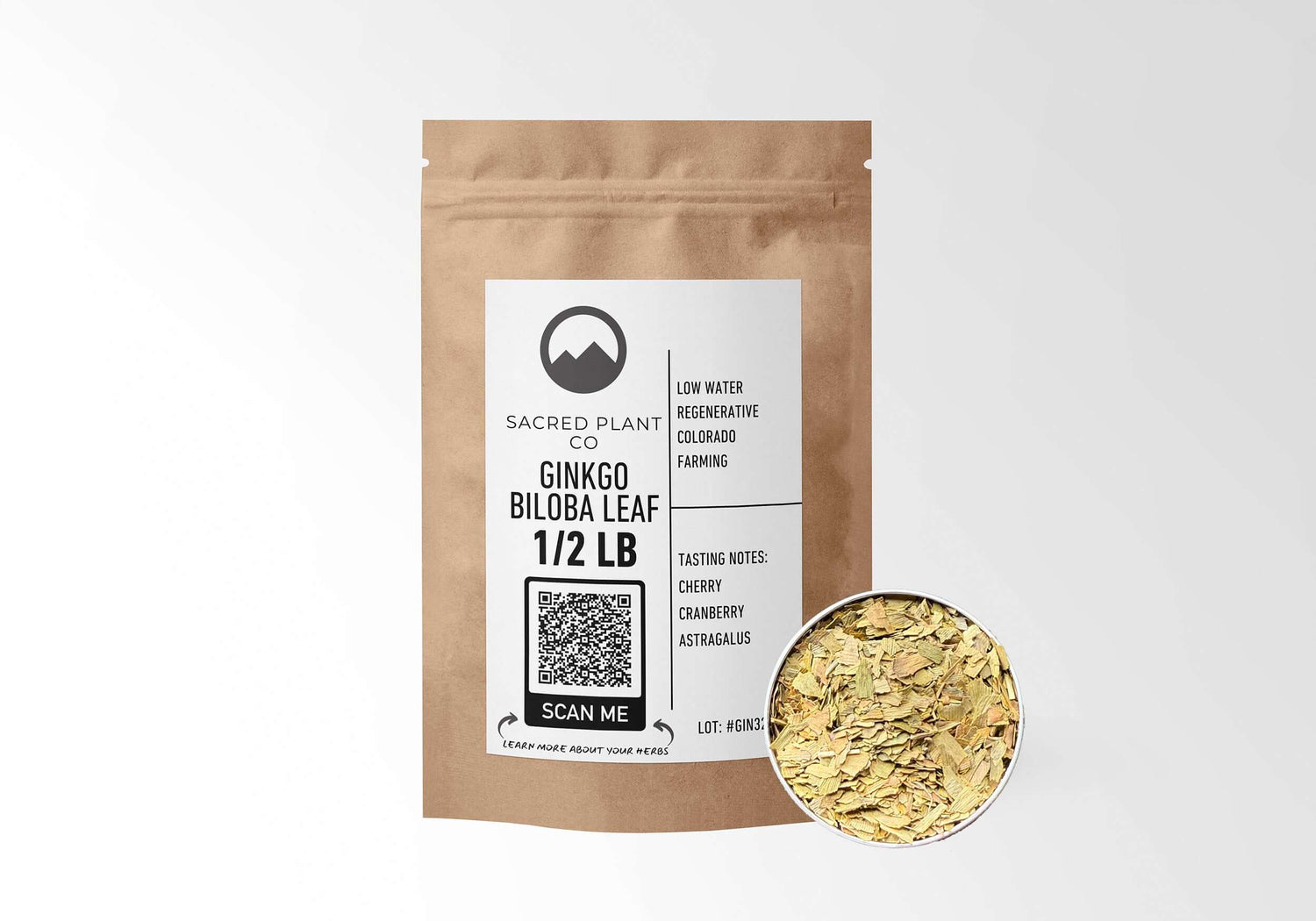
Ginkgo Biloba Leaf
Caffeine-FreeStarting at $14.99
Tasting Notes: Cherry, Cranberry, Astragalus
Carefully dried Ginkgo leaf, traditionally used to support blood flow to the brain and peripheral nerves. One of Earth's oldest tree lineages, offered for modern circulatory support.
Shop Ginkgo BilobaGinkgo Biloba: Circulation Specialist
Ginkgo Biloba is a deciduous tree whose leaf is traditionally used to support circulation, characterized by flavone glycosides and terpene lactones studied in standardized extracts of 120 to 240 milligrams per day. Better circulation means more oxygen, nutrients, and growth factors reach nerves that are working to repair.
How to use it: steep 1 teaspoon of dried leaf in hot water for 8 to 10 minutes and drink twice daily, morning and afternoon. Because Ginkgo is also a classic cognition herb, it features heavily in our guide to herbs for focus, concentration, and mental clarity.
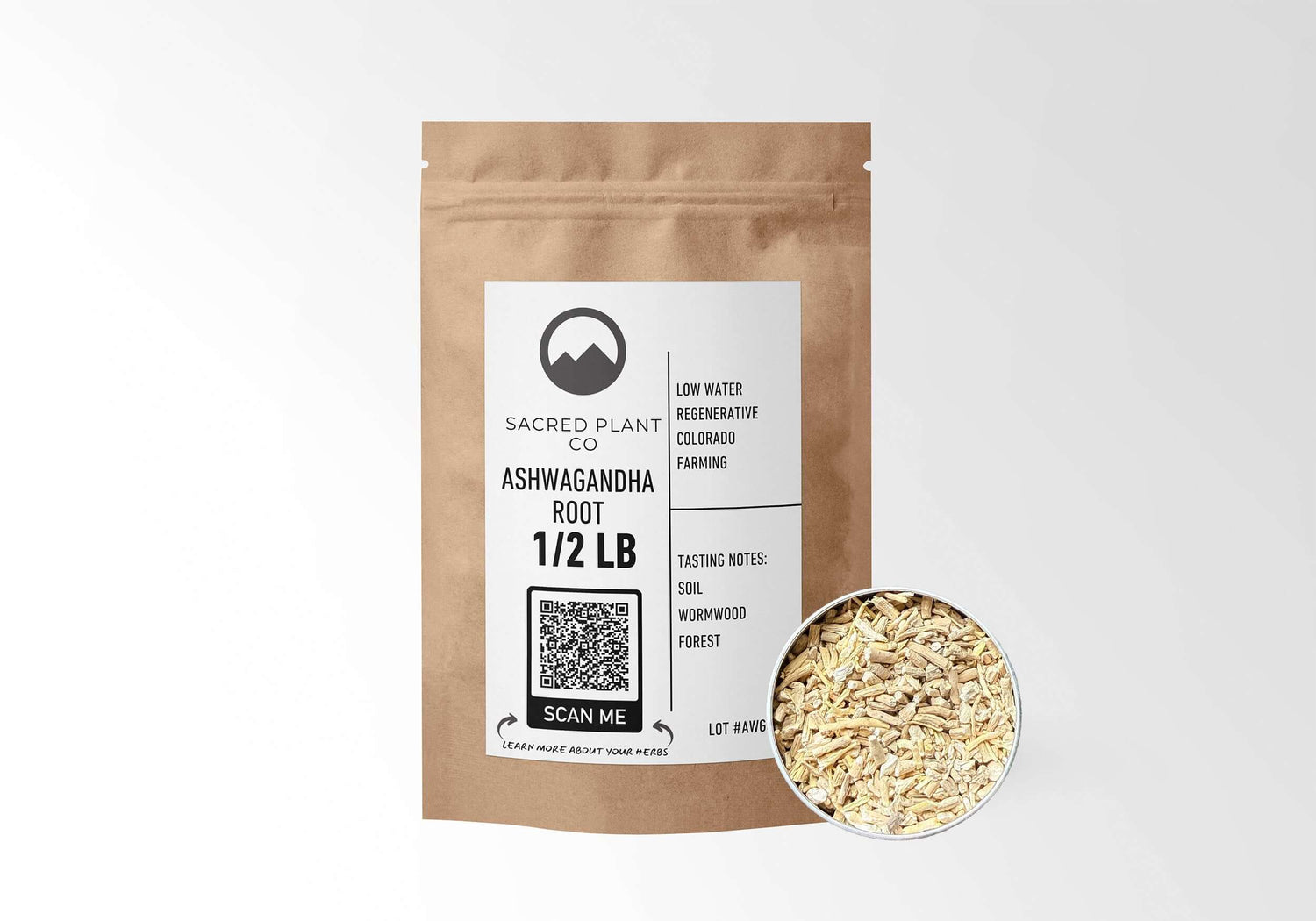
Ashwagandha Root
Caffeine-FreeStarting at $8.99
Tasting Notes: Soil, Mushroom, Forest
A premium adaptogenic root traditionally used to ease the stress response and support the body's natural repair rhythms. Tested by lot for microbial contaminants, heavy metals, and identity and foreign matter.
Shop Ashwagandha RootAshwagandha: The Nervous System Protector
Ashwagandha (Withania somnifera) is an evergreen shrub in the Solanaceae family traditionally used for stress adaptation and restorative sleep, characterized by withanolides, a class of steroidal lactones unique to this plant. Because stress hormones like cortisol can impair nerve regeneration, calming that response indirectly supports repair. In a 2012 trial, 300 milligrams twice daily lowered serum cortisol by roughly 28 percent.4
How to use it: simmer 1 teaspoon of powdered root in warm milk for 5 minutes, add honey and cinnamon, and drink before bed. For a fuller portrait of this herb, see Ashwagandha, the rejuvenating herb of vitality.

St. John's Wort
Caffeine-FreeStarting at $9.88
Traditionally used to soothe nerve discomfort and support tissue repair, our St. John's Wort is favored for peripheral nerve care. Brews as a tea or steeps into an infused oil.
Shop St. John's WortSt. John's Wort: Soothing Nerve Discomfort
St. John's Wort (Hypericum perforatum) is a flowering herb traditionally used for nerve discomfort and mood support, characterized by hypericin and hyperforin, the red-pigmented compounds concentrated in its golden flowering tops. It has a long history of use for peripheral nerve discomfort, both internally and as a topical infused oil.
How to use it: brew 1 to 2 teaspoons in hot water for 10 minutes, or apply a St. John's Wort infused oil to the affected area. Note that this herb interacts with many medications, covered in the safety section below.
Nerve-Supporting Recipes and Rituals
At Sacred Plant Co, we treat each preparation as a small, deliberate ritual. The act of measuring, steeping, and sitting with a warm cup is part of how these herbs work: it slows the nervous system before the chemistry even arrives. There is something quietly sacred in that pause. The recipes below are built around steady daily use rather than quick fixes.

Lion's Mane Nerve-Support Tea
Ingredients:
- 1 tsp dried Lion's Mane Mushroom
- 1 cup hot water, not boiling
- 1 tsp raw honey, optional
- Squeeze of lemon, optional
Instructions:
- Heat water to about 180 degrees F, just below boiling
- Add Lion's Mane and steep for 10 to 15 minutes
- Strain and add honey if desired
- Drink daily, preferably in the morning
Why this works: the extended steep draws out beneficial compounds including hericenones, while the gentle temperature protects heat-sensitive constituents.

Inflammation-Calming Golden Milk
Ingredients:
- 1 tsp Turmeric Powder
- 1 cup warm almond or coconut milk
- 1/4 tsp black pepper, essential
- 1/4 tsp cinnamon
- 1 tsp honey or maple syrup
- Pinch of ginger powder
Instructions:
- Warm milk gently in a saucepan, do not boil
- Whisk in turmeric, black pepper, cinnamon, and ginger
- Simmer for 2 to 3 minutes, stirring constantly
- Remove from heat and add sweetener
- Drink warm before bed
Why this works: the fat in the milk helps carry curcumin, black pepper boosts its bioavailability, and evening use aligns with overnight repair.

Circulation-Minded Morning Smoothie
Ingredients:
- 1 tsp Ginkgo Biloba Powder
- 1 ripe banana
- 1/2 cup fresh spinach
- 1/2 cup almond milk
- 1 tbsp almond butter
- 1/2 cup frozen blueberries
Instructions:
- Add all ingredients to a blender
- Blend until completely smooth
- Add ice if you prefer it colder
- Drink within 30 minutes for best nutrient retention
Why this works: healthy fats, antioxidants, and Ginkgo combine into a circulation-minded formula that genuinely tastes good.

Calming Ashwagandha Night Elixir
Ingredients:
- 1 tsp Ashwagandha Powder
- 1 cup warm coconut milk
- 1/2 tsp cinnamon
- 1/4 tsp cardamom
- 1 tsp honey
- Pinch of nutmeg
Instructions:
- Warm coconut milk in a small saucepan
- Add Ashwagandha and spices
- Whisk well and simmer gently for 3 to 4 minutes
- Strain if desired, or drink with the powder
- Add honey and enjoy 30 to 60 minutes before bed
Why this works: Ashwagandha's cortisol-lowering action pairs with calming warm spices to encourage the restful sleep during which most nerve repair occurs.
Building Your Daily Nerve-Support Routine
Consistency matters more than intensity for nerve support. Here is a simple way to structure the day.
Morning, 7 to 9 AM: Energize and Boost Circulation
- Start with Ginkgo Biloba tea or the circulation-minded smoothie
- Add Gotu Kola to breakfast or take it as a tincture
- Light movement such as yoga, walking, or stretching to promote blood flow
Midday, 12 to 2 PM: Maintain Support
- Stay hydrated with turmeric-infused water, a pinch of turmeric and black pepper in warm water
- Take a 10 to 15 minute walk to keep circulation active
- If discomfort flares, apply St. John's Wort oil topically
Evening, 6 to 8 PM: Prepare for Repair
- Brew Lion's Mane tea with dinner
- Practice gentle stretching or restorative yoga
- Reduce screen time to support natural melatonin production
Before Bed, 9 to 10 PM: Optimize Overnight Healing
- Drink the Calming Ashwagandha Night Elixir
- Practice 5 to 10 minutes of meditation or deep breathing
- Keep the room cool and dark for deep sleep
Dosage Guidelines at a Glance
For most adults, gentle daily doses sustained over weeks to months are more effective for nerve support than high doses taken briefly. The figures below reflect commonly used traditional and research-informed ranges, not medical prescriptions.
- Lion's Mane: 1 teaspoon dried as tea
- Turmeric: 1 teaspoon powder daily, always with a pinch of black pepper
- Gotu Kola: 1 to 2 teaspoons as tea, 2 to 3 times daily, or 30 to 40 drops of tincture twice daily
- Ginkgo Biloba: 1 teaspoon dried leaf as tea
- Ashwagandha: 1 teaspoon powder in warm milk
- St. John's Wort: 1 to 2 teaspoons as tea, or topical infused oil, with attention to drug interactions
Lab Testing and Certificates of Analysis
Every batch we offer is laboratory tested for microbial contaminants, heavy metals, and identity and foreign matter. Because our inventory moves in lots, we provide the Certificate of Analysis (COA) for your specific lot on request. New batch results are always added alongside prior batches, never replacing them.
If you are new to lab reports, our walkthrough on how to read a Certificate of Analysis explains exactly what the numbers mean. Every herb we sell is tested before release, and we publish the signed Certificate of Analysis for every lot we test on our lab testing page.
Request COA by Lot #Lifestyle Practices That Amplify Herbal Benefits
Herbs work best as part of a wider approach.
Nutrition for Nerve Health
- B-vitamins: essential for nerve function, found in leafy greens, legumes, and whole grains
- Omega-3 fatty acids: support nerve membranes, found in walnuts, flaxseeds, and chia seeds
- Antioxidants: protect nerves from oxidative damage, found in berries and green tea
- Magnesium: supports nerve transmission, found in pumpkin seeds, almonds, and dark leafy greens
Movement, Stress, and Sleep
Gentle, consistent movement such as swimming, tai chi, or gentle yoga improves circulation without overtaxing healing nerves. Chronic stress raises cortisol, which impairs regeneration, so daily breathing, meditation, or time outdoors pays real dividends. And because most nerve repair happens during deep sleep, a steady 7 to 9 hours is one of the most powerful things you can offer your nervous system.
Safety Considerations
Contraindications and Drug Interactions
Several nerve-support herbs carry meaningful interactions, so anyone on prescription medication, pregnant, or nursing should consult a healthcare provider before starting.
- Ginkgo Biloba: may increase bleeding risk when combined with blood thinners
- St. John's Wort: interacts with many medications, including antidepressants, birth control, and numerous prescription drugs
- Ashwagandha: may not be appropriate for certain thyroid or autoimmune conditions
- All herbs: start with small amounts to test for individual sensitivity, and introduce one herb at a time
Seek prompt medical attention for sudden weakness or numbness, loss of bladder or bowel control, severe pain that does not improve with rest, or signs of infection such as fever, redness, and swelling.
Traditional and Energetic Considerations
In traditional systems, nerve-support herbs are chosen by energetic quality as well as chemistry. Ashwagandha and warming roots are considered grounding and restorative, well suited to depletion and burnout. Cooling, circulatory herbs like Ginkgo are matched to stagnation and sluggish flow. St. John's Wort carries solar, brightening associations in European folk practice. These frameworks are not a substitute for medical care, but they help explain why certain herbs feel right at certain times. Herbs are complementary to, not replacements for, professional medical treatment.
Ready to Start Your Nerve Support Journey?
We have curated a collection of botanicals chosen for their nerve-supporting tradition and chemistry. Every herb is tested by lot for purity and packaged with care.
Explore Our Nerve Support CollectionFrequently Asked Questions About Natural Herbs for Nerve Regeneration
1. Can natural herbs really help with nerve regeneration?
Herbs cannot switch on nerve regrowth the way a drug might, but several botanicals are traditionally used to support the body's own nerve repair by easing inflammation, aiding circulation, and encouraging Nerve Growth Factor activity. Plants like Lion's Mane, turmeric, Ginkgo Biloba, Gotu Kola, Ashwagandha, and St. John's Wort each work through a different pathway. They are best used within a wider plan that includes nutrition, movement, sleep, and guidance from a healthcare provider.
2. How long does nerve regeneration take when using herbs?
Nerves regrow slowly, often around 1 to 3 millimeters per day in good conditions, so meaningful change from herbal support usually unfolds over weeks to months rather than days. Consistency is what matters: small daily habits, nerve-supporting teas, and a steady routine outperform a short, high-dose burst that is then abandoned.
3. Which herbs are best for nerve regeneration and nervous system support?
The most commonly used nerve-support herbs are Lion's Mane for NGF activity, turmeric for inflammation, Gotu Kola for circulation and collagen, Ginkgo for blood flow, Ashwagandha for stress, and St. John's Wort for nerve discomfort. Because each one acts on a different mechanism, they are traditionally layered together. The best choice for you depends on your inflammation, circulation, stress load, and any underlying conditions.
4. Can I combine Lion's Mane, turmeric, Ginkgo, and Ashwagandha together?
Yes, many people use a layered nerve-support protocol that combines several herbs at lower doses rather than relying on a single plant, with each herb covering a different mechanism. A typical approach uses Lion's Mane for NGF support, turmeric for inflammation, Ginkgo for circulation, and Ashwagandha for stress and sleep. Introduce one herb at a time, watch for interactions with any medications, and work with a practitioner if your health picture is complex.
5. Are herbs for nerve regeneration safe if I am on medication?
Some nerve-support herbs are gentle, but others, especially Ginkgo, St. John's Wort, and Ashwagandha, carry important drug interactions that make professional guidance essential before you start. Ginkgo may increase bleeding risk with blood thinners, St. John's Wort interacts with antidepressants and many prescriptions, and Ashwagandha may not suit certain thyroid or autoimmune conditions. If you are pregnant, nursing, or managing a chronic condition, speak with your healthcare provider first.
6. What is the best way to take nerve-support herbs, tea, tincture, or capsules?
The best form is the one you will take every single day, since steady, long-term use matters far more than the delivery method for nerve support. Teas and decoctions suit daily rituals and gradual support, tinctures offer concentrated and easy-to-dose extracts, and capsules or powders are convenient for higher standardized amounts of mushrooms and roots. Many routines pair a morning tea or smoothie with a tincture or capsule later in the day.
7. How will I know if nerve-support herbs are working?
Because nerve healing is gradual, look for small shifts over time rather than an overnight change, such as less burning or tingling, better coordination, improved sleep, and more stamina for gentle movement. Keeping a simple nerve-healing journal of pain levels, sensations, sleep, and energy helps you notice progress that is easy to miss day to day. If symptoms worsen or new neurological signs appear, contact your healthcare provider promptly.
8. Does soil quality really change how potent a nerve-support herb is?
Yes, the compounds that act on nerve tissue are largely defensive secondary metabolites, and plants produce them most abundantly in biologically active living soil rather than sterile, over-fertilized ground. This is the basis of our Soil-to-Potency Thesis. Our regenerative beds tested at a Haney Score of 25.4, a soil-health benchmark that exceeds many undisturbed forest soils, which is why we treat soil biology as the true starting point of herbal potency.
9. Can Lion's Mane and Gotu Kola be taken every day?
Both Lion's Mane and Gotu Kola are traditionally used as daily tonics, and consistent low-dose use is the standard way they are taken for cognitive and nerve support. Lion's Mane is gentle enough for daily tea or capsules, while Gotu Kola is often cycled, several weeks on followed by a short break, in some Ayurvedic traditions. As with any herb, begin with a modest amount and observe how your body responds.
10. What is the difference between nerve regeneration and nerve pain relief?
Nerve regeneration is the slow structural regrowth of damaged nerve fibers, while nerve pain relief targets the uncomfortable signals those nerves send, and the two goals call for somewhat different herbs. Turmeric, Lion's Mane, and Gotu Kola lean toward repair and support, while St. John's Wort and the herbs in our guide to sciatica and nerve pain relief lean toward easing discomfort. A complete approach usually addresses both.
Conclusion
Nerve repair is slow work, but it is real work, and the right herbs can make the body's own efforts more effective. The throughline across Lion's Mane, turmeric, Gotu Kola, Ginkgo, Ashwagandha, and St. John's Wort is potent, defensive plant chemistry, the kind that only develops when a plant grows in living, biologically rich soil. That is why, for us, nerve support does not begin in the cup. It begins in the ground. Choose herbs grown for potency, use them consistently, and give your nervous system the nutrition, movement, and sleep it needs to do the rest.
References
- Mori K, Inatomi S, Ouchi K, et al. Improving effects of the mushroom Yamabushitake (Hericium erinaceus) on mild cognitive impairment: a double-blind placebo-controlled clinical trial. Phytotherapy Research. 2009;23(3):367-372.
- Shoba G, Joy D, Joseph T, et al. Influence of piperine on the pharmacokinetics of curcumin in animals and human volunteers. Planta Medica. 1998;64(4):353-356.
- Martinez-Marmol R, Chai Y, Conroy JN, et al. Hericerin derivatives activate a pan-neurotrophic pathway in central hippocampal neurons. Journal of Neurochemistry. 2023;165(6):791-808. University of Queensland.
- Chandrasekhar K, Kapoor J, Anishetty S. A prospective, randomized double-blind, placebo-controlled study of the safety and efficacy of a high-concentration full-spectrum extract of Ashwagandha root. Indian Journal of Psychological Medicine. 2012;34(3):255-262.
- Sacred Plant Co. The science behind Sacred Plant Co's soil regeneration: Haney Score 25.4 surpasses pristine forest. Nature's Pharmacy, 2026.
- Menorca RMG, Fussell TS, Elfar JC. Nerve physiology: mechanisms of injury and recovery. Hand Clinics. 2013;29(3):317-330.
- The Ayurvedic Pharmacopoeia of India. Government of India, Ministry of Health and Family Welfare. Monographs on Mandukaparni (Centella asiatica) and Ashwagandha (Withania somnifera). Traditional materia medica reference.


