


Last Updated: July 16, 2026

The relationship between plant vitality and human health runs deeper than most realize. When a plant's roots reach into living, mineral-rich soil teeming with beneficial microorganisms, something remarkable happens at the cellular level. The resulting compounds become more bioavailable, more complex, and more therapeutically potent. At Sacred Plant Co, we've built our understanding of Echinacea purpurea around this fundamental principle. This striking purple coneflower, native to North America's prairies, has served as immune support for generations. We approach this powerful herb with regenerative thinking at every step, from evaluating growing conditions to selecting partners who share our commitment to soil health and ecological integrity.
Echinacea represents more than a seasonal remedy. These compounds are defense mechanisms created by the plant when it interacts with living microbes. The alkamides, polysaccharides, and caffeic acid derivatives that give Echinacea its immune-modulating properties appear in higher concentrations when the plant receives proper microbial support during growth. This is chemistry created by struggle, not comfort, and it is the intersection of traditional knowledge and modern soil science. You can see how we measure this living-soil advantage in our Haney Score soil regeneration data, and it guides how we source every herb in our collection.
What You'll Learn
- How Echinacea's bioactive compounds, including alkamides, polysaccharides, and caffeic acid derivatives, work synergistically to modulate both innate and adaptive immunity
- The extensive history of Echinacea use among at least 15 Plains Indian tribes, including specific applications for respiratory infections, wounds, and pain management
- Clinical research demonstrating Echinacea's ability to reduce upper respiratory infection duration by up to 5 days and enhance natural killer cell activity
- The critical difference between acute immune support (2 weeks maximum) and the risks associated with prolonged use beyond 8 weeks
- Traditional preparation methods including cold infusions, decoctions, and tincture protocols that maximize therapeutic compound extraction
- Important safety considerations including allergic reactions in those sensitive to Asteraceae plants, autoimmune disease contraindications, and potential drug interactions
- How regenerative growing practices influence Echinacea's phytochemical composition and therapeutic efficacy
- The distinction between Echinacea species (E. purpurea, E. angustifolia, E. pallida) and which forms show the strongest research support
- How to read our lab test results for each Echinacea lot, including the actual heavy-metal and microbial figures
Key Takeaways
- Echinacea purpurea reduced the reported duration of upper respiratory infections from 8.6 days to 3.4 days in a placebo-controlled trial, a difference of roughly 5 days.
- At least 15 documented Plains Indian tribes used Echinacea species medicinally, making it the most widely used Indigenous medicinal plant of North America's Great Plains.
- In an 8-week Korean trial, 200 mg per day of Echinacea purpurea extract significantly increased natural killer cell cytotoxic activity and raised IL-2, IFN-gamma, and TNF-alpha levels, with no adverse reactions reported.
- Echinacea is best used short term, and continuous use beyond 8 weeks may reduce immune benefit.
- Sacred Plant Co lot ECHI-9810 tested lead at 0.16 ppm against a 3 ppm release limit and arsenic at 0.08 ppm against a 1 ppm limit, with full results published in the lab-results table below.
- People with autoimmune conditions or those taking immunosuppressant medications should avoid Echinacea because it stimulates immune activity.
Echinacea By the Numbers
| Latin Name | Echinacea purpurea |
|---|---|
| Family | Asteraceae (Compositae) |
| Parts Used | Herb (aerial parts), flowers, and roots |
| Primary Active Compounds | Alkamides, polysaccharides, caffeic acid derivatives (cichoric acid, echinacoside, cynarin), flavonoids |
| Traditional Energetics | Cooling, dispersing, stimulating to immune function |
| Typical Dosage Range | 1 to 2 grams dried herb, 3 times daily, up to 10 to 14 days |
| Caffeine Status | Caffeine-Free |
| Sacred Plant Co Lab Test Results | Available per lot. Latest ECHI-9810: lead 0.16 ppm (limit 3 ppm), arsenic 0.08 ppm (limit 1 ppm). Full results in the lab-results table below. |
Botanical Profile: Understanding Echinacea Purpurea
Echinacea purpurea, known as Purple Coneflower, is a North American perennial in the Asteraceae family, traditionally used for immune support and wound care, and characterized by its immune-active alkamides, polysaccharides, and caffeic acid derivatives. This defining profile is what separates true medicinal coneflower from ornamental garden varieties.
Echinacea purpurea stands as one of nine species within the Echinacea genus, all native to eastern and central North America. The name derives from the Greek word "ekhinos," meaning hedgehog, a reference to the plant's distinctive spiny central cone. This herbaceous perennial thrives in prairies and open woodland areas, displaying vibrant purple-pink ray flowers surrounding a prominent orange-brown central disk.
The plant typically reaches heights of 2 to 4 feet with lance-shaped leaves that have a rough, hairy texture. Unlike E. angustifolia and E. pallida, which develop deep taproots, E. purpurea features a fibrous root system that makes it more adaptable to cultivation. The aerial parts (flowers, leaves, and stems) along with the roots contain the medicinally active compounds, though different plant parts yield varying concentrations of specific constituents.
The Soil-to-Potency Thesis is Sacred Plant Co's foundational principle that microbial diversity in living soil directly increases secondary metabolite production in medicinal herbs. This is why we evaluate every batch of Echinacea for the growing conditions behind it, not just the finished appearance of the cut herb.
How to Identify Premium Echinacea
High-quality cut-and-sift Echinacea herb shows a color that runs from green to brown, reflecting a careful dry that preserves the aerial parts rather than scorching them. The aroma should be woody and earthy with a slightly floral top note, and the taste is bitter and earthy with a faintly sweet finish. A well-known marker of active Echinacea is a light tingling or numbing sensation on the tongue, traditionally linked to its alkamide content. A flat, hay-like herb with no aroma and no tingle signals a tired, over-processed batch. These sensory markers are recorded on the lab test results for each lot, so you can match what are in your cup to what the lab documented.
Active Constituents and Mechanisms
Echinacea's therapeutic effects stem from a complex array of bioactive compounds. The primary constituents include alkamides (also called alkylamides), which demonstrate significant immunomodulatory properties; polysaccharides, responsible for much of the plant's immune-stimulating effects; caffeic acid derivatives including cichoric acid, echinacoside, and cynarin; flavonoids; and essential oils. Research indicates these compounds work synergistically rather than in isolation.1
The alkamides in particular have garnered substantial scientific attention. These lipophilic compounds readily cross cellular membranes and interact with cannabinoid receptors (CB2), modulating immune cell activity and inflammatory responses. Studies demonstrate that Echinacea extracts enhance macrophage phagocytosis, stimulate natural killer cell activity, and promote the production of various cytokines including tumor necrosis factor-alpha (TNF-alpha) and interleukins.2
Traditional Uses Across Indigenous Cultures
Echinacea is the most widely used medicinal plant among Plains Indian tribes of North America, applied traditionally for coughs, colds, sore throats, wounds, toothache, and snakebite. This depth of documented use is part of why it remains a cornerstone of Western herbalism today.
Archaeological evidence dates its use back to the 18th century, with Echinacea roots excavated from a Pawnee earthen lodge near Guide Rock, Nebraska, carbon-dated to 1600 to 1800 AD. At least 15 documented tribes employed various Echinacea species, with E. angustifolia being the most frequently cited in ethnobotanical records.3
The Kiowa, Cheyenne, Pawnee, Omaha, Lakota, and other tribes used Echinacea for an impressive range of conditions. Traditional applications included addressing coughs, colds, and sore throats by chewing fresh root and allowing the saliva to run down the throat. The numbing sensation Echinacea produces made it valuable for toothache relief. Tribes applied poultices of the fresh or dried root to wounds, burns, and insect bites to help prevent infection and support healing.
Perhaps most notably, Echinacea served as the primary remedy for snakebites across the Great Plains. Multiple tribal accounts describe specific protocols for addressing venomous snake bites, including both internal consumption and topical application of mashed roots. The plant also addressed symptoms of rabies, inflammatory conditions, and served as a general analgesic. When Meriwether Lewis and William Clark encountered Echinacea during their expedition in 1804 to 1805, they recognized its importance and shipped roots and seeds back to President Jefferson as one of their most significant botanical discoveries.4
Modern Scientific Research and Clinical Evidence
Immune System Modulation
Contemporary research has validated many traditional uses of Echinacea while revealing the complex mechanisms underlying its effects. A comprehensive study published in the Journal of Immunopharmacology examined how Echinacea purpurea extracts enhance immune function in human primary monocyte-derived macrophages. The research identified that aqueous extracts from flowers demonstrated the most powerful immunostimulant properties, triggering phosphorylation of key signaling pathways (ERK 1/2 and p38) and upregulating cyclooxygenase-2 expression.5
Studies investigating both innate and adaptive immunity show that Echinacea preparations stimulate various immune cell populations. Research in BALB/c mice found that alcohol extracts from three Echinacea species increased percentages of CD49+ and CD19+ lymphocytes in the spleen while enhancing natural killer cell cytotoxicity. The study noted that while all three species (E. angustifolia, E. pallida, and E. purpurea) demonstrated immunomodulatory effects, they showed differential changes based on their varying concentrations of lipophilic amides and hydrophilic caffeic acid derivatives.6
Respiratory Infection Support
Clinical trials examining Echinacea for upper respiratory tract infections have produced noteworthy results. One randomized, double-blind, placebo-controlled study investigated Echinacea purpurea's effects on mucosal immunity and respiratory infection incidence. The research involved 32 subjects who underwent an exercise protocol known to affect mucosal immunity. Following a 4-week intervention with Echinacea supplementation, the treatment group showed a significant difference compared to placebo. While there was no significant difference in the number of upper respiratory infections between groups, the reported duration was dramatically different, at 8.6 days for the control group versus 3.4 days for the Echinacea group.7
A more recent clinical trial conducted in Korea with 80 volunteers demonstrated Echinacea's immune-enhancing effects. After 8 weeks of consuming 200 mg daily of E. purpurea 60% ethanolic extract, participants showed significant increases in natural killer cell cytotoxic activity compared to placebo. Additionally, serum cytokine levels of IL-2, IFN-gamma, and TNF-alpha increased significantly following Echinacea consumption. Importantly, no adverse reactions were reported throughout the 8-week study period.8
Anti-Inflammatory Properties
Research into Echinacea's anti-inflammatory mechanisms reveals a sophisticated dual action. Under normal conditions, aqueous extracts stimulate macrophages to produce pro-inflammatory cytokines (TNF-alpha, IL-1-beta, and IL-6) and generate reactive oxygen and nitrogen species, an appropriate immune response to potential threats. However, under inflammatory conditions, Echinacea extracts significantly reduce the production of these same pro-inflammatory mediators.
Particularly interesting is the finding that dichloromethanolic extracts, which are enriched in alkamides, demonstrated the strongest anti-inflammatory activity. Moreover, Echinacea purpurea extracts generally showed more robust anti-inflammatory effects than commonly used pharmaceutical anti-inflammatory drugs including dexamethasone, diclofenac, salicylic acid, and celecoxib.9
Preparation Methods and Traditional Recipes
At Sacred Plant Co, we approach preparation as a small ritual, a Sacred pause that turns dried herb into medicine with intention and attention. The three methods below draw the active compounds out in different ways.

Traditional Echinacea Cold Infusion
Best for preserving heat-sensitive compounds
Ingredients:
- 2 to 3 tablespoons dried Echinacea root or herb (chopped or powdered)
- 1 quart (4 cups) cool filtered water
- Optional: 1 tablespoon raw honey, fresh lemon juice
Instructions:
- Place Echinacea in a glass jar with tight-fitting lid
- Pour cool water over the herb material
- Cover and refrigerate for 4 to 8 hours or overnight
- Strain thoroughly through cheesecloth or fine-mesh strainer
- Add honey or lemon if desired
- Consume within 48 hours, storing in refrigerator
Serving: 1 to 2 cups daily, for 7 to 10 days maximum.
A note from Patrick: The cold infusion is my quiet favorite. I set the jar in the fridge before bed and the next morning the water has turned a soft amber with that unmistakable earthy, faintly floral smell. I always take the first sip slowly, because that gentle tingle on the tongue tells me the herb is very much alive.

Immunity Boost Herbal Tea Blend
Synergistic formula for seasonal immune support
Ingredients:
- 1 tablespoon dried Echinacea herb and root blend
- 1 tablespoon dried Elderberries
- 1 teaspoon fresh grated Ginger root
- 1/2 teaspoon dried Turmeric root
- 1 cinnamon stick
- 3 cups water
- Raw honey and fresh lemon to taste
Instructions:
- Bring water to boil in a non-reactive pot
- Add all herbs except honey and lemon
- Reduce heat and simmer gently for 15 to 20 minutes
- Remove from heat and steep covered for an additional 10 minutes
- Strain thoroughly into mugs
- Add honey and fresh lemon juice to taste
Notes: This formula pairs Echinacea with Elderberry, warming Ginger, and Turmeric. Use at first sign of a cold or during high-risk exposure periods.
A note from Patrick: This is the blend that fills my kitchen with the smell of autumn. The cinnamon and ginger rise first, then the deep, almost wine-dark note of the elderberries comes through as it simmers. I let it steep with the lid on a little longer than the recipe says, because those extra ten minutes make the cup rounder and warmer on the throat.

Fresh Echinacea Root Tincture
Traditional alcohol extraction for long-term storage
Ingredients:
- Fresh Echinacea roots, thoroughly cleaned and chopped
- 80-proof vodka or brandy (40% alcohol)
- Glass jar with tight-fitting lid
Instructions:
- Fill jar 3/4 full with freshly chopped Echinacea root
- Cover completely with alcohol, ensuring all plant material is submerged
- Seal jar and label with herb name and date
- Store in cool, dark location for 4 to 6 weeks
- Shake jar daily for the first 2 weeks
- Strain through cheesecloth, pressing out all liquid
- Store finished tincture in dark glass bottles
Serving: 30 to 60 drops (1 to 2 ml) in water or juice. Maximum duration: 2 weeks continuous use.
A note from Patrick: There is something grounding about the daily shake of a tincture jar. Over the weeks the liquid deepens from pale straw to a rich golden brown, and by the time I strain it, a single drop on the tongue gives that bright, tingling bite that tells me the extraction worked. I like to label the bottle with the date so I remember the season it was made.
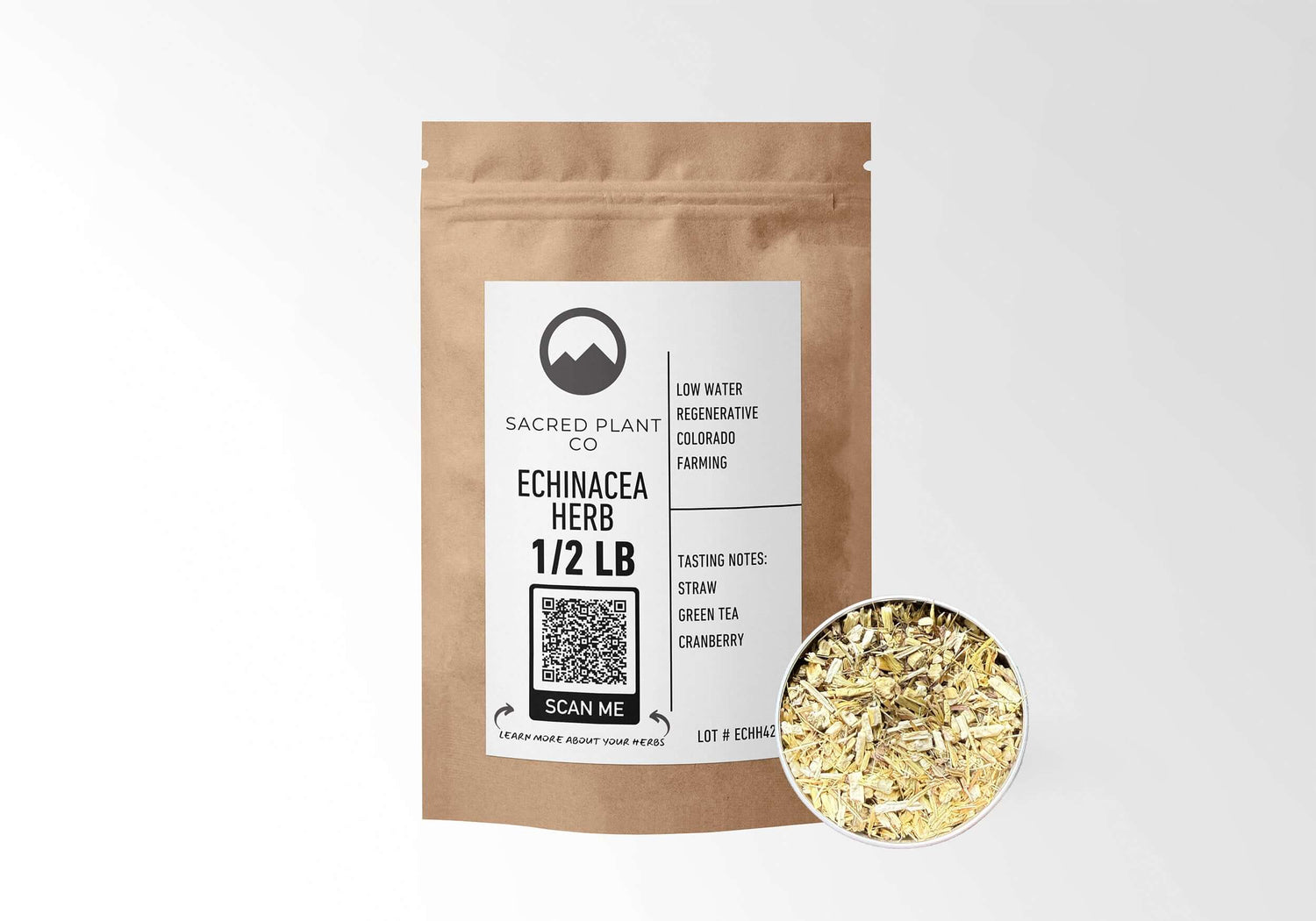
Premium Echinacea Herb
Starting at $15.99
Tasting Notes: Woody, earthy, slightly floral aroma with a bitter, earthy, slightly sweet finish.
Sourced with regenerative principles in mind, our Echinacea purpurea herb provides comprehensive immune support backed by centuries of traditional use and modern research.
Shop EchinaceaDosage Guidelines and Administration
Echinacea is traditionally limited to 10 to 14 days of continuous use.
Acute Immune Support (Upper Respiratory Infections)
Dried Herb Tea or Decoction: Dried root or aerial parts are prepared as a tea or decoction. Maximum duration: 10 to 14 days.
Alcohol Tincture (1:5 ratio): 2 to 3 ml (40 to 60 drops) in water or juice.
Critical Timing and Duration Considerations
Research emphasizes the importance of proper timing and limited duration for Echinacea use. Studies show greatest effectiveness when Echinacea is initiated at the very first signs of upper respiratory symptoms, the prodromal stage when you feel something coming on but aren't yet fully ill. Early intervention appears more effective than starting after symptoms have fully developed.
Equally important is the limitation on continuous use. While short-term use (up to 2 weeks) demonstrates safety and efficacy, prolonged use beyond 8 weeks may lead to diminished immune response or potential immunosuppression. This differs from adaptogenic herbs like Astragalus, which may be used for extended periods. For seasonal immune support, herbalists recommend intermittent use, taking Echinacea for 2 weeks, then taking a 1 to 2 week break before resuming if needed.
Safety Considerations and Contraindications
Important Safety Information
Allergic Reactions
Echinacea belongs to the Asteraceae (Compositae) family, which includes ragweed, chrysanthemums, marigolds, and daisies. Individuals with known allergies to plants in this family may experience allergic reactions to Echinacea, ranging from mild skin rashes to severe reactions including difficulty breathing, facial swelling, or anaphylaxis. Start with very small doses to assess tolerance.
Autoimmune Conditions
Because Echinacea stimulates immune system activity, it should be avoided by individuals with autoimmune disorders including rheumatoid arthritis, multiple sclerosis, lupus, scleroderma, and other collagen diseases. The immune-stimulating properties could potentially exacerbate these conditions.
Immunosuppressant Medications
Do not use Echinacea if taking immunosuppressant drugs for organ transplants, chemotherapy, or autoimmune disease management. Echinacea may counteract the intended effects of these medications, potentially leading to organ rejection or treatment failure.
Pregnancy and Breastfeeding
Limited research exists on Echinacea safety during pregnancy and lactation. Some studies suggest possible safety for up to 7 days during the first trimester, but the lack of comprehensive safety data means pregnant and breastfeeding women should consult healthcare providers before use.
Children Under 12
European regulatory bodies have recommended against Echinacea use in children under 12 years old as a precautionary measure, following reports of rash development in some children during clinical trials. Always consult a pediatrician before giving Echinacea to children.
Drug Interactions
While most drug interactions with Echinacea are not considered clinically significant, over 400 theoretical interactions have been documented. Of particular note:
- Hepatotoxic drugs: Use beyond 8 weeks may increase risk of liver damage when combined with medications like acetaminophen, methotrexate, or ketoconazole
- Caffeine: Echinacea may increase blood caffeine levels by up to 30%
- CYP3A4 substrates: Conflicting evidence exists about Echinacea's effects on liver enzyme metabolism
Duration Limits
Do not use Echinacea continuously for more than 2 weeks without consulting a healthcare provider. Long-term use has not been proven beneficial and may potentially suppress immune function. If symptoms persist beyond 10 days or worsen, seek professional medical evaluation.
Traditional and Energetic Considerations
In traditional Western herbalism, Echinacea is regarded as a cooling, dispersing herb best suited to the acute, early stage of an illness rather than long-term daily tonic use. Traditional practice pairs it with rest and warmth and treats it as a short intervention, which aligns with the modern guidance to use it in bursts rather than continuously.
Quality Assurance: Lab Test Results for Echinacea
Every batch of Echinacea we sell is laboratory tested before release for microbial safety, heavy metals, and foreign matter, and we publish the result for each lot below with the full lab test results linked. New to reading a lab report? Start with our guide on how to read lab test results.
Lot ECHI-9810 (manufactured 01.01.2025, retest due 01.01.2028)
| Test | Method | Result | Release Limit | Status |
|---|---|---|---|---|
| Microbial | ||||
| Total Plate Count | Petrifilm AOAC 990.12 | 19,500 CFU/g | 10,000,000 CFU/g | Pass |
| Yeast | Petrifilm AOAC 2014.05 | 1,060 CFU/g | 10,000 CFU/g | Pass |
| Mold | Petrifilm AOAC 2014.05 | 1,060 CFU/g | 10,000 CFU/g | Pass |
| Total Coliform | Petrifilm AOAC 991.14 | 590 CFU/g | 1,000 CFU/g | Pass |
| E. Coli | Petrifilm AOAC 991.14 | Negative | Negative | Pass |
| Salmonella | BAX (PCR) AOAC 2013.02 | Negative/25g | Negative/25g | Pass |
| Heavy Metals | ||||
| Arsenic | #C55 AOAC 2015.01 | 0.08 ppm | 1 ppm | Pass |
| Cadmium | #C55 AOAC 2015.01 | Not Detected | 1 ppm | Pass |
| Lead | #C55 AOAC 2015.01 | 0.16 ppm | 3 ppm | Pass |
| Mercury | #C55 AOAC 2015.01 | Not Detected | 1 ppm | Pass |
| Foreign Matter | ||||
| Foreign matter | Visual and metal detection | Pass | <2.0% by weight | Pass |
Material: Echinacea purpurea herb, cut and sift, wild crafted. Sterilization method: Steam Treated. Certified Kosher. No pesticides were used to grow this product, and it contains no additives, preservatives, or solvents. View the full lab test results for lot ECHI-9810 (PDF). We publish the lab test results for every lot we test on our lab testing page.
New Harvest Alerts
Our herbs are released in small, lab-tested lots as each fresh harvest comes in. Get notified the moment a new batch of Echinacea is available so you can order at peak potency.
Sign Up for Harvest AlertsEchinacea and Regenerative Agriculture
The connection between soil health and plant medicine quality represents a frontier in herbal research. Recent NCCIH-sponsored studies have revealed that Echinacea's activity and phytochemical composition are influenced by soil conditions that affect the plant's bacterial community. This validates what regenerative farmers have observed: plants grown in biologically diverse, mineral-rich soils produce more complex and therapeutically active compounds. We have documented this pattern directly in our own fields, where a single season of regenerative practice drove a 400% increase in soil biology.
In regenerative systems, we focus on building soil carbon, supporting beneficial microbial populations, and maintaining proper mineral balance. These practices influence how plants synthesize and store medicinal compounds. The mycorrhizal networks in healthy soil help Echinacea access nutrients and water more efficiently, potentially increasing the plant's production of alkamides and polysaccharides, the very compounds that provide immune benefits.
At our I·M·POSSIBLE Farm we practice Korean Natural Farming methods that prioritize soil biology, the same approach at the heart of our Terra Volcancia Regenerative System. While our sourcing mix includes partnerships beyond our farm operations, we evaluate every supplier through a regenerative lens. This means asking questions about cultivation practices, soil management, and ecological integrity, because we believe these factors ultimately affect the herbs you use for your health. If you are stocking up, our guide to how to buy, store, and use herbs in bulk will help you keep that potency intact at home.
Frequently Asked Questions
Can I take Echinacea every day to prevent colds?
Daily preventive use of Echinacea is not well supported by research, and use beyond 8 weeks raises concerns about reduced immune benefit.
Which is better: Echinacea root or aerial parts?
Roots tend to be higher in alkamides, while aerial parts and flowers show higher levels of caffeic acid derivatives, so whole-plant preparations combining both often offer the most complete profile. Studies suggest the synergy of multiple compounds matters more than any single part. Choose preparations that specify which plant parts were used and look for standardized extracts when possible.
Is Echinacea safe if I have an autoimmune disease like rheumatoid arthritis or lupus?
No, Echinacea should be avoided by individuals with autoimmune conditions because it stimulates immune function and could worsen an already overactive immune system. This contraindication applies to conditions including rheumatoid arthritis, multiple sclerosis, lupus, scleroderma, and other collagen diseases. If you have an autoimmune condition, work with an herbalist familiar with immune-modulating rather than immune-stimulating herbs.
What's the difference between Echinacea purpurea, angustifolia, and pallida?
All three species are medicinal but differ in phytochemistry: E. purpurea has the strongest research base, E. angustifolia was most used by Plains tribes and is higher in certain alkamides, and E. pallida has a different alkamide profile with less clinical study. Most commercial preparations use E. purpurea or combinations of E. purpurea and E. angustifolia, which research suggests may offer complementary benefits.
Can children take Echinacea for colds?
European regulatory agencies recommend against Echinacea in children under 12 as a precaution, after some children developed rashes in clinical trials. Some research suggests E. purpurea extract may be safe for short-term supervised use. If considering Echinacea for a child, always consult their pediatrician first, start with very small doses, watch carefully for any allergic reaction, and never use for more than 10 days.
Does Echinacea interact with birth control pills or other medications?
Over 400 theoretical drug interactions with Echinacea have been documented, but most are not considered clinically significant and the risk of serious interactions with most medications is low. Notable concerns include a possible 30% increase in caffeine levels, interference with immunosuppressant medications, and theoretical interactions with drugs metabolized by liver enzyme CYP3A4. Always inform your healthcare provider about all herbs and supplements you take.
How quickly does Echinacea work for a cold?
Clinical studies have reported cold duration reductions of about 3 to 5 days compared to placebo when Echinacea was started at the first sign of symptoms.
How do I know Sacred Plant Co Echinacea is clean and safe?
Every lot is laboratory tested for microbial safety, heavy metals, and foreign matter, with the full results published on this page, for example lot ECHI-9810 tested lead at 0.16 ppm against a 3 ppm limit. The lab test results for each lot are linked directly in the lab-results table above, so you can verify the exact figures rather than trusting a label alone.
Related Reading on Sacred Plant Co
- Best Herbal Tinctures for Immune Support and Natural Defense, a companion guide for turning Echinacea and its allies into ready-to-use tinctures
- Elderberry vs. Astragalus: Which Immune-Boosting Herb Is Best?, which contrasts acute support like Echinacea with the long-term tonic herbs
- Breathe Better: Best Herbal Tinctures for Respiratory Support, a natural next step once you move from immune defense to lung and airway support
- Bear Root (Osha Root): Powerful Herbal Benefits for Respiratory Health, another Indigenous respiratory remedy that pairs well with Echinacea in seasonal care
- How to Read Lab Test Results, so you can interpret the Echinacea lab results above with confidence
Conclusion: Echinacea's Place in Modern Herbalism
Echinacea purpurea stands as a bridge between traditional Indigenous wisdom and contemporary scientific validation. The extensive use of this plant by at least 15 Plains tribes, combined with modern research demonstrating its immunomodulatory mechanisms, confirms what traditional healers understood: this purple coneflower offers genuine support for the body's natural defenses.
At Sacred Plant Co, we approach Echinacea with both respect for its history and commitment to quality. The regenerative principles that guide our work, attention to soil health, support for beneficial microbial communities, and evaluation of growing practices, reflect our understanding that plant medicine quality begins in the ground. When you choose Echinacea for immune support, you're participating in a tradition that spans centuries while benefiting from modern extraction methods and published lab testing.
Remember that Echinacea works best as part of a comprehensive approach to wellness. Adequate sleep, stress management, nutrient-dense food, and other healthy lifestyle practices form the foundation. Echinacea serves as targeted, short-term support when your immune system faces particular challenges, not as a substitute for these fundamentals. Used appropriately, with attention to proper timing, dosage, and duration, this remarkable plant continues to serve as one of nature's most valuable immune allies.
References
- Manayi A, Vazirian M, Saeidnia S. Echinacea purpurea: Pharmacology, phytochemistry and analysis methods. Pharmacognosy Reviews. 2015;9(17):63-72. PMID: 26009693
- Dias DA, et al. Evaluation of Echinacea purpurea Extracts as Immunostimulants: Impact on Macrophage Activation. International Journal of Molecular Sciences. 2024;25(19):10461. PMID: 39419081
- Kindscher K. The Uses of Echinacea angustifolia and Other Echinacea Species by Native Americans. In: Echinacea: Herbal Medicine with a Wild History. Springer; 2016. DOI: 10.1007/978-3-319-18156-1_2
- Barrett B. Medicinal properties of Echinacea: a critical review. Phytomedicine. 2003;10(1):66-86. PMID: 12622467
- Bauer R, et al. Enhancement of Innate and Adaptive Immune Functions by Multiple Echinacea Species. Journal of Medicinal Food. 2005;8(3):360-368. PMC: PMC2362099
- Zhai Z, et al. Enhancement of Innate and Adaptive Immune Functions by Multiple Echinacea Species. Journal of Medicinal Food. 2007;10(3):423-434. PMC: PMC2362099
- Hall H, Fahlman MM, Engels HJ. Echinacea purpurea and mucosal immunity. International Journal of Sports Medicine. 2007;28(9):792-797. PMID: 17436202
- Kim YS, et al. A randomized, double-blind, placebo-controlled study on immune improvement effects of ethanolic extract of Echinacea purpurea in Korean adults. Phytotherapy Research. 2024;38(4):1892-1904. PMID: 38743584
- Correia-da-Silva M, et al. On the Bioactivity of Echinacea purpurea Extracts to Modulate the Production of Inflammatory Mediators. Pharmaceuticals. 2022;15(11):1321. PMID: 36362404
- Nagoor Meeran MF, et al. Can Echinacea be a potential candidate to target immunity, inflammation, and infection. Heliyon. 2021;7(2):e05990. PMID: 33585706


