


Marshmallow Root: Ancient Demulcent for Digestive & Respiratory Wellness
Last updated: November 1, 2025
Greetings from Sacred Plant Co. Today we explore a botanical treasure valued for millennia: marshmallow root (Althaea officinalis). Native to Europe, North Africa, and Western Asia, this unassuming plant produces roots containing a remarkable substance called mucilage that has soothed irritated tissues for thousands of years. From ancient Egyptian physicians to modern herbalists, marshmallow root's gentle power has transcended cultural boundaries.
 Regenerative cultivation practices stress the plant just enough to encourage deep root systems, resulting in higher concentrations of the clinical mucilage required for therapeutic efficacy.
The name Althaea derives from the Greek word altho, meaning "to heal" - a fitting designation for an herb that forms protective coatings over inflamed mucous membranes. While the fluffy confection shares marshmallow's name (manufacturers originally used the root's mucilage in candy production), today's marshmallows contain none of this therapeutic plant. The true medicinal value lies in the root itself, harvested, dried, and prepared to deliver its soothing compounds.
What You'll Learn in This Guide
- Traditional applications across ancient Egypt, Greece, Rome, Native American medicine, TCM, and Ayurveda
- How mucilage works to coat and protect irritated tissues in the respiratory and digestive systems
- Scientific research on anti-inflammatory, antioxidant, and wound-healing properties
- Practical preparation methods including cold infusions that maximize mucilage extraction
- Safety considerations including medication timing and contraindications
- Quality documentation with transparent lab test results access
Marshmallow root's ancient lineage
Marshmallow root holds a distinguished position among humanity's oldest documented medicinal plants. Archaeological evidence and written records span over 3,000 years of continuous use across diverse healing traditions.
Ancient Egypt, Greece, and Rome: Egyptian physicians recorded marshmallow root in medical papyri for treating wounds and soothing inflamed tissues. Greek physician Hippocrates recommended it for bruises and blood loss around 400 BCE. Theophrastus, the "father of botany," documented marshmallow's cultivation and medicinal applications in his botanical writings. Roman naturalist Pliny the Elder praised marshmallow in his Natural History, noting its effectiveness for wounds, stings, and internal inflammation. Romans prepared marshmallow root in wine or water to treat digestive complaints and respiratory conditions.
Native American Medicine: While not native to the Americas, marshmallow root was adopted by various Indigenous tribes after European introduction, recognizing its alignment with existing plant medicine principles. Cherokee and Iroquois healers integrated marshmallow into their materia medica, using it for digestive upset, respiratory conditions, and topical wound care. The herb's soothing nature resonated with traditional concepts of cooling and moistening inflamed tissues.
Traditional Chinese Medicine: Though not a classical TCM herb, marshmallow root shares therapeutic territory with herbs like Lu Gen (Reed Rhizome) and Mai Men Dong (Ophiopogon). TCM practitioners recognize marshmallow's cooling, moistening properties that nourish yin and clear heat from the lung and stomach channels. The root's demulcent action aligns with TCM principles of protecting and lubricating mucous membranes damaged by pathogenic heat and dryness.
Ayurvedic Medicine: In Ayurveda, marshmallow root parallels herbs like Yashtimadhu (licorice root), valued for soothing Pitta dosha (heat, inflammation) and nourishing tissue layers affected by excess dryness or heat. The herb's sweet (madhura) and cooling (shita) qualities make it particularly suited for inflammatory digestive conditions, respiratory irritation, and tissue repair. Ayurvedic texts describe similar mucilaginous herbs as shlakshna (unctuous/lubricating), properties that calm aggravated Vata (dryness, irregular function) and cool inflamed Pitta.
European Folk Medicine: Medieval European herbalists cultivated marshmallow in monastery gardens, recognizing it as essential medicine for the common people. The entire plant found use: leaves for poultices, flowers for coughs, and roots for the most powerful preparations. Peasant healers prepared marshmallow syrup for children's coughs and digestive troubles. The herb's gentle nature made it suitable for vulnerable populations including infants, elderly, and those recovering from illness.
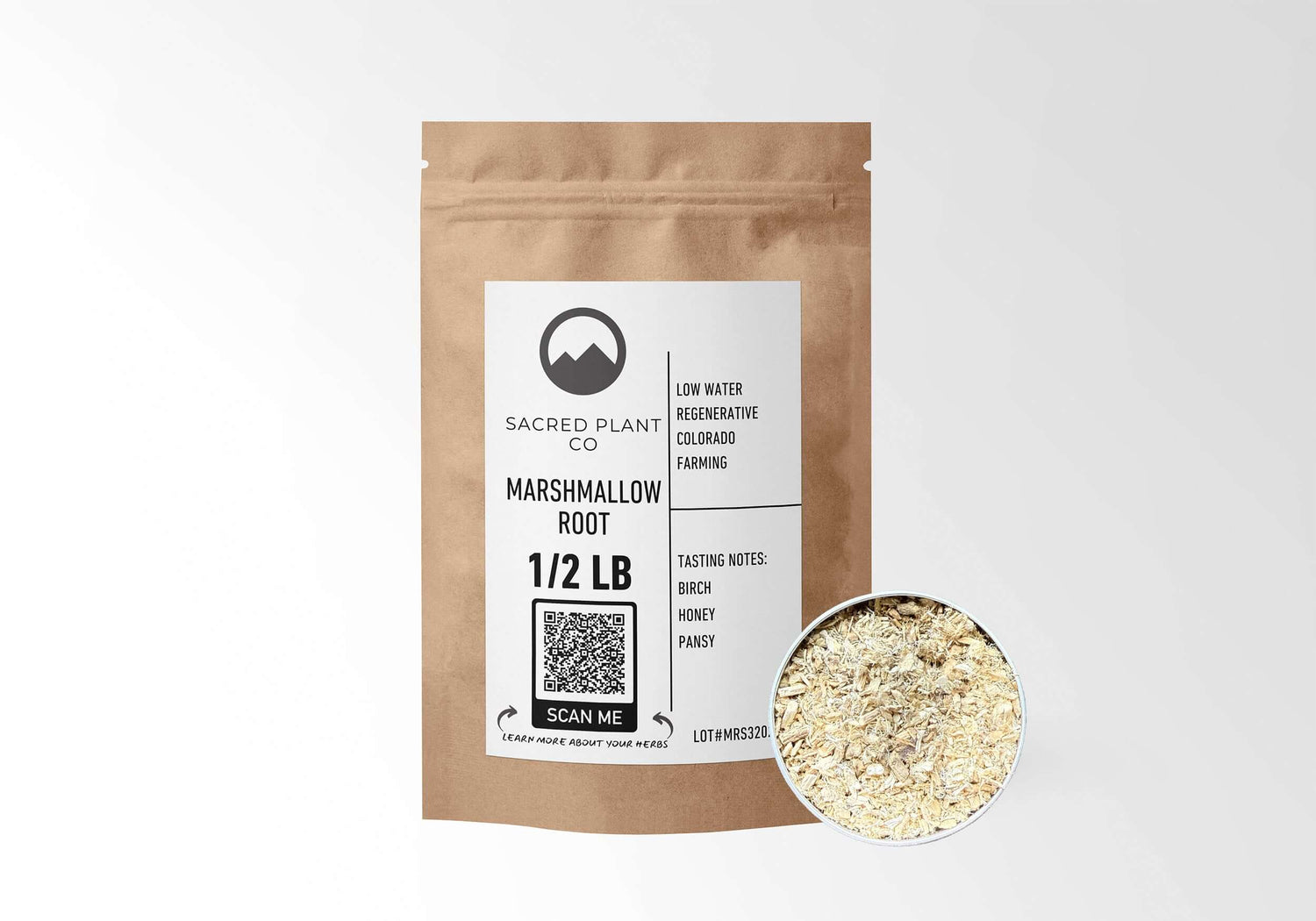
Bulk Marshmallow Root
Premium cut-and-sifted Althaea officinalis root, carefully processed to preserve mucilage content. Ideal for decoctions, cold infusions, and topical preparations supporting digestive and respiratory wellness.
Explore this herbUnderstanding mucilage: marshmallow's healing mechanism
Marshmallow root's therapeutic effects stem primarily from its high mucilage content (5 to 11 percent by weight). Mucilage is a complex mixture of polysaccharides that becomes gel-like when mixed with water, creating a slippery, protective coating over mucous membranes. This coating shields irritated tissues from further damage while supporting natural healing processes.
Key active constituents
Polysaccharides: The primary therapeutic compounds in marshmallow root include galacturorhamnans, arabinans, glucans, and arabinogalactans. These long-chain sugars form the mucilaginous gel responsible for demulcent (soothing) and emollient (softening) actions. Research published in the Frontiers in Pharmacology demonstrates that these polysaccharides exhibit anti-inflammatory and antioxidant properties while improving cellular viability.
Flavonoids: Marshmallow root contains beneficial flavonoids including quercetin, kaempferol, and isoquercitrin. These compounds contribute antioxidant activity, helping neutralize free radicals and reduce oxidative stress markers associated with inflammation.
Phenolic acids: Compounds like caffeic acid and p-coumaric acid provide additional anti-inflammatory and antimicrobial effects. These phenolic acids work synergistically with mucilage to support tissue healing.
Asparagine: This amino acid, present in notable concentrations, supports protein synthesis and cellular repair processes. Traditional herbalists recognized marshmallow as nourishing and building, which modern research connects to its amino acid content.
Pectin and starch: These components contribute to marshmallow root's demulcent properties and provide gentle bulk that can support healthy digestive function.
How marshmallow protects and heals
When marshmallow root mucilage contacts inflamed tissues, it creates a physical barrier that:
- Shields irritated nerve endings, reducing pain signals
- Prevents further mechanical or chemical irritation
- Maintains moisture in affected areas, preventing drying and cracking
- Allows underlying tissues to repair without continuous re-injury
- Provides soothing contact that triggers reflexive calming of smooth muscle spasms
Research published in PMC examining marshmallow root extract's effects on epithelial cells found that even low concentrations significantly enhanced cell viability and proliferation. The polysaccharides were actively internalized into cells, supporting repair mechanisms at the cellular level.
Modern research validates traditional applications
Respiratory support: The European Medicines Agency (EMA) recognizes marshmallow root for treating mouth and throat irritation with associated dry cough. Clinical studies examining cough syrups containing marshmallow root extract found that treatments reduced irritation often within 10 minutes of use. The mucilage creates a protective film over inflamed laryngopharyngeal mucosa, reducing cough reflex triggers while supporting tissue regeneration. A 2018 survey examining user experiences with marshmallow root extract for irritative cough found high satisfaction rates regarding effectiveness and tolerability.
Digestive wellness: Research demonstrates marshmallow root's ability to protect and repair the gastrointestinal lining. Studies on rat models found that marshmallow root extract helped restore gut lining integrity by forming protective layers around intestinal junctions. This protective mechanism makes marshmallow valuable for inflammatory bowel conditions, gastric ulcers, gastritis, and general digestive irritation. A study published in Food Science & Nutrition (2023) examining marshmallow root's protective effects against liver damage found significant antioxidative and anti-inflammatory benefits through multiple cellular pathways.
Anti-inflammatory and antioxidant activity: Peer-reviewed research published in PMC demonstrated that marshmallow root extract exhibits significant anti-inflammatory effects on activated macrophages (immune cells involved in inflammatory responses). The extract reduced production of pro-inflammatory cytokines and reactive oxygen species while improving cell viability under oxidative stress conditions. These anti-inflammatory properties extend beyond simple mechanical coating, involving active modulation of inflammatory pathways.
Wound healing and skin support: A 2013 review found that topical ointment containing 20 percent marshmallow root extract significantly reduced skin irritation. Researchers suggested the herb stimulates cells with anti-inflammatory activity. Studies on wound healing in rat models showed marshmallow leaf extract promoted faster tissue repair and demonstrated antibacterial activity. Research examining marshmallow root extracts for UV protection found they significantly reduced UVA-induced DNA damage in cultured human fibroblasts, suggesting potential for dermatological applications.
Urinary tract soothing: Traditional use of marshmallow root for urinary tract discomfort has preliminary research support. The EMA recognizes marshmallow for mild stomach and gut discomfort, and herbalists extend this soothing action to the urinary tract. The mucilage's coating properties may ease irritation associated with urinary tract infections, though more human studies are needed to confirm this traditional application.
Comprehensive healing protocols: The Herbal Path to Healing: A Plant-Based Protocol Mirroring the Therapeutic Arc of BPC-157 explores marshmallow root within integrated gut-healing formulations.
Preparing marshmallow root for maximum benefit
Preparation method significantly influences mucilage extraction. Unlike many herbs that require heat, marshmallow root yields optimal therapeutic compounds through cold infusion.
Cold infusion method (preferred for maximum mucilage)
 Cold infusing Althaea officinalis protects delicate polysaccharide structures from heat degradation, ensuring optimal mucilage viscosity for tissue support.
Cold water extracts mucilage without extracting excessive starch or causing the polysaccharides to break down from heat.
Instructions:
- Place 1 tablespoon (approximately 5 grams) of dried cut marshmallow root in a glass jar
- Pour 1 cup (8 ounces) of room temperature or cold filtered water over the root
- Cover jar and let stand at room temperature for 4 to 8 hours (or refrigerate overnight)
- Strain through fine-mesh sieve or cheesecloth, gently pressing root to extract liquid
- The resulting infusion will be slightly viscous and slippery
- Consume within 24 hours; refrigerate if not using immediately
Why cold infusion works best: Heat can break down some mucilage polysaccharides and extract more starch, creating a thicker but less therapeutically optimal preparation. Cold infusion preserves the specific polysaccharide structures that provide maximum soothing action. The resulting liquid should feel smooth and slightly slippery - this indicates successful mucilage extraction.
Warm decoction method (alternative for those preferring hot beverages)
While not as mucilage-rich as cold infusion, warm preparation still provides therapeutic benefits and may be more palatable for some users.
Instructions:
- Add 1 tablespoon marshmallow root to 1.5 cups cold water in a small pot
- Slowly heat water to a gentle simmer (do not boil vigorously)
- Reduce heat and maintain bare simmer for 10 to 15 minutes
- Remove from heat and let steep another 10 minutes
- Strain and drink warm
Marshmallow Soothing Tea Blend
 A synergistic combination addressing both respiratory and digestive comfort. This blend has been used traditionally for coughs, sore throats, and digestive upset.
Ingredients:
- 2 teaspoons dried marshmallow root
- 1 teaspoon dried chamomile flowers
- 1 teaspoon dried lemon balm leaves
- 2 cups cold filtered water
- Raw honey to taste (optional, add after straining)
Instructions:
- Combine marshmallow root, chamomile, and lemon balm in a glass jar or pitcher
- Pour cold water over herbs
- Cover and let stand at room temperature for 6 to 8 hours (or overnight in refrigerator)
- Strain through fine mesh, pressing herbs gently to extract all liquid
- If desired, gently warm strained tea without boiling
- Add honey to taste if using
- Sip slowly, allowing tea to coat throat
Why this combination works: Marshmallow root provides the primary soothing mucilage. Chamomile adds anti-inflammatory compounds and mild sedative properties. Lemon balm contributes antiviral activity, nervous system calming, and pleasant flavor. Together, these herbs create a formula addressing multiple aspects of respiratory and digestive discomfort while supporting relaxation.
Dosage suggestion: Consume 1 to 3 cups daily as needed for acute symptoms. For ongoing support, one cup morning and evening provides consistent benefit.
Topical applications
Poultice for skin irritation: Grind dried marshmallow root to powder, mix with enough water to form paste, apply to affected area, cover with clean cloth, leave 30 to 60 minutes. The mucilage will hydrate and soothe irritated skin.
Wound care compress: Prepare strong cold infusion (double the root amount), soak clean cloth in liquid, apply to minor wounds or burns for 15 to 20 minutes. The antimicrobial and tissue-repair properties support healing.
Dosage guidelines and timing considerations
Standard therapeutic dosing for marshmallow root ranges from 2 to 5 grams of dried root taken two to three times daily, typically prepared as cold infusion or gentle decoction.
Important timing note for medication users: Marshmallow root's mucilage may coat the digestive tract and potentially slow absorption of oral medications. Take marshmallow root at least 1 to 2 hours before or 2 to 4 hours after other medications or supplements. Some herbalists recommend even longer spacing (4 to 6 hours) for critical medications. This timing ensures medications absorb properly before mucilage coats the intestinal lining.
For acute respiratory or digestive symptoms, marshmallow can be used for 1 to 2 weeks. For chronic conditions, consult an herbalist or healthcare provider about appropriate long-term use patterns.
Third-Party Lab Results for Marshmallow Root
Every lot of our marshmallow root is tested by an independent third-party laboratory before release, screened for microbial contaminants, heavy metals, and identity and foreign matter, and we publish the actual results for each lot below. Rather than ask you to request a report, we link the lab test results alongside each lot. New to reading a lab report? Start with our guide on how to read lab test results.
Lot MRS5202 (manufactured 7/2/2025, Best By 7/2/2028)
| Test | Method | Result | Release Limit | Status |
|---|---|---|---|---|
| Microbial | ||||
| Total Plate Count | Petrifilm AOAC 990.12 | 73,000 cfu | < 10,000,000 cfu | Pass |
| Yeast | Petrifilm AOAC 2014.05 | <10 cfu | < 10,000 cfu | Pass |
| Mold | Petrifilm AOAC 2014.05 | <10 cfu | < 10,000 cfu | Pass |
| Total Coliform | Petrifilm AOAC 991.14 | <10 cfu | < 1,000 cfu | Pass |
| E. Coli | Petrifilm AOAC 991.14 | Negative | Negative | Pass |
| Salmonella | BAX (PCR) AOAC 2013.02 | Negative | Negative | Pass |
| Heavy Metals | ||||
| Arsenic | #C55 AOAC 2015.01 | 0.18 ppm | < 1ppm | Pass |
| Cadmium | #C55 AOAC 2015.01 | 0.12 ppm | < 1ppm | Pass |
| Lead | #C55 AOAC 2015.01 | 1.14 ppm | < 3ppm | Pass |
| Mercury | #C55 AOAC 2015.01 | Not detected | < 1ppm | Pass |
Material: Marshmallow root, cs (cut and sift), approximately 1/4" cut (Althaea officinalis). Sterilization: STEAM TREATED. No pesticides were used to grow this product. This product is free of any additives or preservatives. View the full lab test results for lot MRS5202 (PDF).
Lot MARS-3035 (manufactured 6.1.2025, retest 6.1.2028)
| Test | Method | Result | Release Limit | Status |
|---|---|---|---|---|
| Microbial | ||||
| Total Plate Count | Petrifilm AOAC 990.12 | 300 CFU/g | 100,000 CFU/G | Pass |
| Yeast | Petrifilm AOAC 2014.05 | <10 CFU/G | 10,000 CFU/G | Pass |
| Mold | Petrifilm AOAC 2014.05 | 10 CFU/G | 10,000 CFU/G | Pass |
| Total Coliform | Petrifilm AOAC 991.14 | <10 CFU/G | 1,000 CFU/G | Pass |
| E. Coli | Petrifilm AOAC 991.14 | Negative | Negative | Pass |
| Salmonella | BAX (PCR) AOAC 2013.02 | Negative /25G | Negative /25G | Pass |
| Heavy Metals | ||||
| Arsenic | #C55 AOAC 2015.01 | 0.16 PPM | 1 PPM | Pass |
| Cadmium | #C55 AOAC 2015.01 | 0.10 PPM | 1 PPM | Pass |
| Lead | #C55 AOAC 2015.01 | 0.82 PPM | 3 PPM | Pass |
| Mercury | #C55 AOAC 2015.01 | Not Detected | 1 PPM | Pass |
Material: Marshmallow root, cut and sift, approximately 1/4" cut (Althaea officinalis). Sterilization: Steam treated. No pesticides were used to grow this product. This product is free of any additives or preservatives. No solvents were used to produce this product, nor excipients. View the full lab test results for lot MARS-3035 (PDF).
We publish the lab test results for every lot we test on our lab testing page.
Storage and shelf life
Proper storage preserves marshmallow root's mucilage content and prevents moisture absorption that can lead to mold growth.
Storage guidelines:
- Store dried marshmallow root in airtight glass containers or sealed bags
- Keep in cool, dark, dry location away from heat sources and humidity
- Avoid plastic containers for long-term storage as they may allow moisture exchange
- Label containers with purchase or harvest date
- Properly stored marshmallow root maintains quality for 12 to 18 months
Signs of degradation: Musty or moldy odor, visible moisture or clumping, discoloration, presence of insects or webbing. Discard marshmallow root showing any of these signs.
Prepared infusions: Cold-prepared marshmallow infusions should be refrigerated and consumed within 24 hours. The mucilage-rich liquid provides an ideal environment for microbial growth at room temperature, so prompt use or refrigeration is essential.
Comprehensive storage guide: How to Buy, Store, and Use Herbs in Bulk provides detailed guidance applicable to all dried botanicals in your collection.
Safety considerations and contraindications
Marshmallow root demonstrates excellent safety when used appropriately. However, specific situations require caution.
Important Safety Information
Medication absorption concerns: The most significant consideration when using marshmallow root involves its mucilage coating the digestive tract. This protective layer may interfere with medication absorption. Take marshmallow root at least 1 to 2 hours before or 2 to 4 hours after prescription medications, supplements, or other herbs. For critical medications (cardiac drugs, diabetes medications, immunosuppressants), consult your healthcare provider about appropriate timing and whether marshmallow use is advisable.
Diabetes and blood sugar: Preliminary research suggests marshmallow root may lower blood sugar levels in some individuals. Those with diabetes, hypoglycemia, or taking blood sugar-lowering medications should monitor glucose levels closely when using marshmallow root and consult their healthcare provider before beginning supplementation.
Surgery considerations: Marshmallow flower (less commonly used than root) may slow blood clotting. While less concern exists for marshmallow root, herbalists recommend discontinuing use at least 2 weeks before scheduled surgery to reduce any theoretical bleeding risk and avoid interaction with anesthesia.
Pregnancy and nursing: Insufficient safety data exists for medicinal doses of marshmallow root during pregnancy and lactation. While traditional herbalists have used marshmallow safely, we recommend consulting your healthcare provider before use during pregnancy or breastfeeding. Occasional food amounts (such as in herbal tea blends) are generally considered lower risk than concentrated therapeutic preparations.
Children: The European Medicines Agency approves marshmallow root for children over 3 years of age for respiratory symptoms and over 12 years for digestive complaints. Use age-appropriate dosing (typically one-quarter to one-half adult dose depending on age and weight). Consult a pediatrician or pediatric herbalist before giving marshmallow root to young children.
Allergic reactions: While rare, allergic reactions to marshmallow root can occur. Those with allergies to plants in the Malvaceae family (including hollyhock, hibiscus, okra) may be more susceptible. Start with small amounts to assess tolerance. Discontinue use if you experience rash, itching, respiratory difficulty, or digestive upset.
This information is educational and not medical advice. Sacred Plant Co products are not intended to diagnose, treat, cure, or prevent any disease. Consult qualified healthcare providers for medical concerns, particularly if you have existing conditions or take prescription medications.
Why quality matters for therapeutic results
Marshmallow root's medicinal value depends entirely on mucilage content, which varies based on growing conditions, harvest timing, and processing methods.
Cultivation factors: Marshmallow grown in moist, nutrient-rich soil produces roots with higher mucilage concentrations. Plants stressed by drought or poor soil may develop smaller roots with reduced therapeutic compounds. Two-year-old roots generally contain more mucilage than first-year roots.
Harvest timing: Marshmallow roots are traditionally harvested in autumn after the aerial parts die back, when the plant has concentrated energy and compounds in the root system. This timing maximizes mucilage content.
Processing and drying: Gentle drying at low temperatures preserves mucilage integrity. High heat or overly rapid drying can degrade polysaccharides. Properly dried marshmallow root should be pale yellow to beige, not brown or discolored.
At Sacred Plant Co, we source marshmallow root from suppliers using best practices for cultivation and processing. Every batch undergoes third-party testing for microbial contaminants, heavy metals, and identity and foreign matter. Our lab test results report the measured results against our release limits.
Frequently Asked Questions
- How long does it take for marshmallow root to work?
- For acute symptoms like cough or sore throat, many people report noticeable soothing effects within 10 to 30 minutes of consuming marshmallow root preparation. The mucilage provides immediate coating and comfort. For digestive applications supporting gut lining repair, consistent use over 2 to 4 weeks typically provides more substantial benefits as tissues heal.
- Can I take marshmallow root with other herbs?
- Yes, marshmallow root combines well with many herbs and is frequently used in blended formulas. For respiratory support, it pairs with licorice root, mullein, and wild cherry bark. For digestive health, herbalists combine it with slippery elm, chamomile, and calendula. However, take marshmallow-containing formulas at different times than medications to avoid absorption interference.
- Why does cold infusion work better than hot tea?
- Cold water preferentially extracts the specific polysaccharides that form therapeutic mucilage while leaving behind more starch. Hot water extraction still provides benefits but may break down some beneficial polysaccharide structures and extract more starch, creating a less therapeutically optimal (though thicker) preparation. Cold infusion produces the highest quality mucilage.
- Is marshmallow root the same as slippery elm?
- No, though they share similar demulcent properties. Marshmallow root (Althaea officinalis) and slippery elm bark (Ulmus rubra) are different species with different constituent profiles. Both contain mucilage and soothe tissues, but they come from different plant families. Some herbalists prefer marshmallow for respiratory applications and slippery elm for digestive focus, though both work for multiple systems. Sustainability concerns affect slippery elm more significantly as it comes from inner bark of slow-growing trees, making marshmallow a more renewable choice.
- Can marshmallow root help with acid reflux or GERD?
- Many herbalists recommend marshmallow root for gastroesophageal reflux disease (GERD) and acid reflux due to its ability to coat and protect the esophageal lining from stomach acid. The mucilage forms a protective barrier that may reduce irritation and burning sensations. However, research specifically on marshmallow for GERD is limited. Use as complementary support alongside lifestyle modifications and medical treatment as needed. Consult your healthcare provider if symptoms persist or worsen.
- How much marshmallow root is in commercial cough syrups?
- Commercial preparations vary significantly. Research studies examining marshmallow root cough syrups typically used formulations containing marshmallow root extract at concentrations providing approximately 35 to 60 milligrams of extract per dose. Home preparations using whole root will have different concentration profiles. Follow product labels for commercial preparations or herbalist guidance for homemade formulas.
- Does marshmallow root interact with diabetes medications?
- Preliminary research suggests marshmallow root may lower blood sugar levels, which could theoretically potentiate diabetes medications, increasing risk of hypoglycemia. Those taking metformin, insulin, or other blood sugar-lowering drugs should monitor glucose levels closely when using marshmallow root and discuss use with their healthcare provider. The timing issue (taking marshmallow away from medications) becomes especially important for diabetes drugs.
Educational purposes only. This information has not been evaluated by the FDA. Our products are not intended to diagnose, treat, cure, or prevent any disease. Consult qualified healthcare providers for medical concerns.


