


Last updated: July 17, 2026
Lavender: The Aromatic Herb of Calm, Sleep, and Sensory Ritual

Lift a handful of true lavender to your face and it should stop you mid-breath. Not a faint, soapy whisper, but a deep, sweet, almost herbaceous wave with a cool camphor edge. That intensity is not decoration. It is the plant's medicine announcing itself. A lack of aroma equals a lack of medicine, and real lavender should shock the senses.
If it does not bite back, it is not working. The fragrance you smell is a dense cloud of volatile compounds, chiefly linalool and linalyl acetate, and a flower can only build them in abundance when it grows under real biological pressure rather than in sterile, over-fertilized ground. This is the heart of our Soil-to-Potency Thesis, and it is why we measure living soil biology rather than chasing a bigger, blander bloom. You can see the difference our regenerative approach makes in our documented 400% soil biology increase in a single season.
At Sacred Plant Co, our approach is rooted in regenerative thinking. In this guide we walk through lavender's long history across cultures, what modern research actually says, how to brew it well, how to use it safely, and how to read the lab test results we publish for every lot. Consider it your complete, sensory-first field guide to one of the world's most beloved calming botanicals.
What You'll Learn
- How to identify premium lavender by color, aroma, and cut before you buy
- The traditional roles lavender played across Greek, Roman, medieval, and Eastern practice
- What the two key aromatic compounds, linalool and linalyl acetate, actually do
- A step-by-step Purple Peace lavender tea method that protects the volatile oils
- How to use lavender topically and in smoke blends with sensible precautions
- The safety facts every parent and caregiver should know, including the gynecomastia case reports
- Sensible dosage ranges for tea, culinary use, and infused oil
- How to read our per-lot lab test results and verify purity for yourself
Key Takeaways
- Lavender (Lavandula angustifolia) is an aromatic mint-family flower traditionally used for calm, restful sleep, and skin care, driven by the compounds linalool and linalyl acetate.
- Aroma intensity is the fastest quality signal. Faded, brownish, low-scent flowers indicate age or poor drying and weaker aromatic content.
- Sacred Plant Co lot LAVE-6193 tested lead at 0.34 ppm against a 3 ppm release limit, and total plate count at 240,000 CFU/g against a 500,000 CFU/g limit.
- A standard calming infusion uses about 1 to 2 teaspoons of dried flowers per cup, steeped covered for roughly 5 minutes to preserve volatile oils.
- Concentrated lavender essential oil products should be kept away from prepubertal boys. A 2007 New England Journal of Medicine report linked repeated topical use to reversible breast tissue development.
- Every batch we release is laboratory tested for microbial safety, heavy metals, and foreign matter, with the full lab test results published per lot.
Lavender by the Numbers
| Latin Name | Lavandula angustifolia (English lavender). Our current Extra grade lot is Lavandula x intermedia. |
|---|---|
| Family | Lamiaceae (the mint family) |
| Parts Used | Flowers and flowering tops |
| Primary Active Compounds | Linalool and linalyl acetate (aromatic monoterpenes) |
| Traditional Energetics | Cooling, relaxing, aromatic nervine |
| Native Range | Mediterranean basin and surrounding highlands |
| Harvest Season | Summer, cut when about half the florets on the spike have opened |
| Caffeine Status | Caffeine-Free |
| Sacred Plant Co Lab Test Results | Available per lot. Latest LAVE-6193: lead 0.34 ppm (limit 3 ppm) and arsenic 0.14 ppm (limit 1 ppm). Full results in the lab-results table below. |
What Is Lavender and Why Is It So Calming?
Lavender is an aromatic flowering herb valued for its ability to ease tension, quiet a busy mind, and support restful sleep, effects traditionally attributed to the fragrant oils concentrated in its flowers. Those oils are dominated by two molecules, linalool and linalyl acetate, which researchers have studied for gentle, calming activity in the nervous system.
Lavender (Lavandula angustifolia) is an aromatic flowering herb in the mint family (Lamiaceae) traditionally used for calm, restful sleep, and skin care, characterized by the fragrant monoterpenes linalool and linalyl acetate concentrated in its flowers.
The Soil-to-Potency Thesis is Sacred Plant Co's foundational principle that microbial diversity in living soil directly increases secondary metabolite production in medicinal herbs. For an aromatic flower like lavender, those secondary metabolites are the very oils you smell and rely on, which is why we treat soil biology as the first ingredient in potency.
How to Identify Premium Lavender
Premium lavender announces itself through vivid color, a clean floral aroma, and intact flower structure, with the scent hitting you before you ever brew a cup. The sensory check below is the same one we apply to every lot before it earns a place in our apothecary.
Color: Look for vibrant lavender-blue to bluish-purple calyces. Extra grade material should be rich in color with minimal browning. Gray, dull, or faded buds signal age, heat damage, or careless drying.
Aroma: The scent should be intensely floral and penetrating, a classic lavender note that is clean, sweet, and herbaceous with a slight camphoraceous undertone. A weak or musty smell means weak medicine.
Taste and texture: Well-dried lavender tastes bitter, slightly sweet, and aromatic, with a complex floral character and faint citrus and camphor top notes. The small calyces, roughly 4 to 6 mm, should feel dry and springy, never damp or dusty.
Drying method: The best lavender is dried slowly and gently, out of direct heat, so the volatile oils survive. Proper drying is exactly what our storage guidance is built to protect. For the full method, see our guide on how to buy, store, and use herbs in bulk.
The Ancient Wisdom of Lavender Across Cultures
Lavender has been used for at least two thousand years as a cleansing, calming, and protective herb across Mediterranean, European, and Eastern traditions. Its story is remarkably consistent. Wherever people met this plant, they reached for it to soothe the mind and freshen the body.
The Greeks and Romans knew lavender as "nardus" and prized it for relaxation, for cleansing the skin, and for keeping linens fragrant. Roman soldiers carried it to cleanse and dress wounds, and Greek physicians documented its uses in their medical texts.
In medieval Europe, lavender became a staple of monastery gardens. Hildegard of Bingen, the renowned twelfth-century herbalist, praised lavender for its ability to support a peaceful mind. During the plague years it was burned in the streets and worn in pouches, believed to offer protection from illness.
In Traditional Chinese Medicine, lavender, or "Xun Yi Cao," is used to promote the flow of Qi, to dissipate heat, and to settle the mind. Practitioners associate it with the Heart and Liver meridians, using it to address stagnation and restore balance.
In Ayurveda, lavender does not map to a single classical herb, yet its cooling, calming profile echoes that of Jatamansi and Brahmi, both traditionally used to quiet the mind and support the nervous system. Later, after lavender reached the Americas, it was folded into local aromatic and culinary practice, blending Old World habits with New World creativity.
What Does Modern Research Say About Lavender?
Contemporary research suggests lavender's aromatic compounds, especially linalool and linalyl acetate, interact with the nervous system in ways that may support relaxation and healthy sleep, though it is not a substitute for professional care. A widely cited 2013 review in Evidence-Based Complementary and Alternative Medicine summarized this body of work on lavender and the nervous system.1
Standardized oral lavender oil preparations have been studied for occasional anxious feelings, with several randomized trials reporting meaningful calming effects for mild concerns.2 Aromatherapy and sleep research points in a similar direction, with pooled analyses associating lavender inhalation with modest improvements in perceived sleep quality.3 We emphasize that lavender supports relaxation. It does not replace mental health care.
Topically, lavender-infused oils have a long traditional use for minor skin irritations, and laboratory work has explored the antimicrobial activity of its volatile oils. The evidence base here is promising but still developing, so we describe these uses as traditional and supportive rather than proven remedies.
Related Reading: To place lavender in the wider calming toolkit, explore our guide on choosing peace on purpose with calming herbs, then see how the same principles apply through the cold months in nurturing the winter nervous system.
Preparation and Ritual: Brewing Lavender Tea
The best way to prepare lavender tea is to steep about 1 to 2 teaspoons of dried flowers in just-off-the-boil water, covered, for around 5 minutes, which extracts the calming oils without pulling harsh, bitter tannins. Treat the steep as a small sacred pause, a few minutes set aside on purpose. The ritual is part of the effect.
Purple Peace Lavender Tea

Ingredients
- 1 teaspoon dried lavender flowers
- 1 teaspoon dried chamomile flowers
- 2 cups filtered water
- Optional: raw honey or a slice of lemon to taste
Instructions
- Bring filtered water to a rolling boil, then let it rest for 30 seconds. This brief cool-down keeps the water from scorching the delicate flowers.
- Place the lavender and chamomile in a teapot or heat-safe vessel.
- Pour the hot water over the herbs so every flower is submerged.
- Cover and steep for 5 minutes. Steeping past 7 minutes tends to turn the cup bitter.
- Strain thoroughly, pressing gently on the flowers to release the last of the essence.
- Pour into a favorite cup and sip slowly, letting the aroma settle you before the first taste.
A note from Patrick: I steep this one covered every time, because the moment I lift the lid the whole room fills with that sweet, cool lavender cloud and I know the good stuff would have drifted off if I had left it open. Chamomile takes the faint camphor bite off the finish, and five minutes is my hard stop. A minute longer and it turns grassy on me.
Pairing note: Lavender and chamomile are natural evening partners. For the other half of this duo, read our guide to chamomile flower tea for calmness and better sleep. To weigh lavender's aromatic calm against a brighter, citrusy nervine, compare notes in lemon balm versus chamomile flower.
Lavender in Herbal Smoking Blends
Lavender contributes a smooth, sweet, floral note to herbal smoke blends and is traditionally used as a calming, ceremonial botanical rather than a habitual one. Its smoke is notably gentle, with a slightly camphoraceous quality that pairs well with mullein, rose petals, and other ceremonial herbs.
The practice spans European folk custom and contemporary herbal ceremony. As with any smoke, the point here is intention, not habit, so lavender works best as an occasional tool for meditation or ritual.
Explore Further: Our guide to herbal smoking blends for calm, clarity, and ceremony offers detailed recipes and safety protocols, and our overview of the best herbs for smoking maps out how lavender fits alongside its companions.
Topical Uses and Skin Care
Lavender is traditionally applied to the skin as an infused oil or balm to soothe minor irritations and to lend a calming aroma, always after a patch test and with essential oils properly diluted. Infused oils, made by steeping the flowers in a carrier like jojoba, olive, or almond oil, are gentle and time-honored, and they differ greatly from concentrated essential oils, which demand careful dilution.
When trying any new topical, apply a small amount to the inner forearm and wait 24 hours to check for a reaction. Sensitive skin should start with heavily diluted preparations. Lavender is a common partner in body-care formulas for exactly this reason: it is gentle, aromatic, and versatile.

Goddess Body Balm
Starting at $25.25
For External Use Only
A rich balm infused with rose, calendula, and lavender for daily moisturizing rituals and everyday skin comfort.
Discover the BalmExtend the ritual: Carry lavender's calm from the cup to the bath with our herbal bath remedies for self-care, and see how the same nervines support recovery in our guide to herbs for nervous system repair.
Safety Considerations and Responsible Use
Lavender is generally well tolerated in food and tea, but concentrated essential oil products carry real precautions, most notably around young boys, pregnancy, and sedative medications. Respecting the plant's potency is part of using it well.
Contraindications
Keep concentrated lavender essential oil products away from prepubertal boys. A 2007 report in the New England Journal of Medicine documented reversible prepubertal gynecomastia, meaning breast tissue development, in three young boys with repeated use of lavender-containing and tea-tree-containing products.4 This precaution applies to concentrated topical products, not to culinary amounts.
Pregnant and nursing individuals should consult a healthcare provider before using lavender therapeutically. Culinary amounts in food are generally considered safe, while concentrated preparations warrant professional guidance.
Those taking sedatives should use caution, since lavender may add to drowsiness. This includes prescription sleep aids, anti-anxiety medications, and certain pain relievers. Always tell your provider which herbs you use. Internal use of lavender essential oil should only happen under the supervision of a qualified aromatherapist or herbalist, because the oil is far more concentrated than any tea.
Traditional and Energetic Considerations
In traditional energetic terms, lavender is viewed as cooling and relaxing, so classical practitioners often favored it for heat and agitation rather than for cold, damp, or low-energy states. These are traditional frameworks offered for context, not medical guidance.
Important Safety Information
This content is educational and does not constitute medical advice. Lavender is not intended to diagnose, address, or prevent any disease. Consult a qualified healthcare provider before using lavender therapeutically, especially if you are pregnant, nursing, taking medications, or managing a health condition. Keep lavender products away from the eyes and mucous membranes, and discontinue use if irritation occurs.
Lavender Dosage Guidelines
For a calming infusion, use about 1 to 2 teaspoons of dried lavender flowers per cup of water, up to two or three cups a day, and start at the lower end to gauge your response. The ranges below are traditional, general guidance, not prescriptions.
- Tea and infusion: roughly 1 to 2 teaspoons of dried flowers per 8 ounce cup, steeped covered for about 5 minutes.
- Culinary use: a small pinch goes a long way. Lavender is potent, and too much turns dishes soapy.
- Infused oil, topical: apply a thin layer of a properly diluted infused oil after a 24 hour patch test.
- Standardized oral essential oil products: follow the manufacturer's labeled dose and professional guidance only.
Our Approach to Sourcing and Quality
We select lavender for aroma, color, and cleanliness first, hold it to our Beyond Organic standard, and confirm every lot with laboratory testing before it reaches you.
Beyond Organic is Sacred Plant Co's regenerative standard that exceeds USDA certification by measuring living soil biology rather than the mere absence of synthetic inputs. Where a botanical is grown to that standard, the payoff for an aromatic like lavender is exactly what your nose is looking for: a denser, brighter, more resinous fragrance.
Vibrant color and a strong, clean scent are your best at-home signals of quality, while our published lab reports confirm what the senses suggest. Store your flowers in an airtight container away from heat, light, and moisture, and check the aroma periodically. When the scent fades, the calming oils have faded with it.
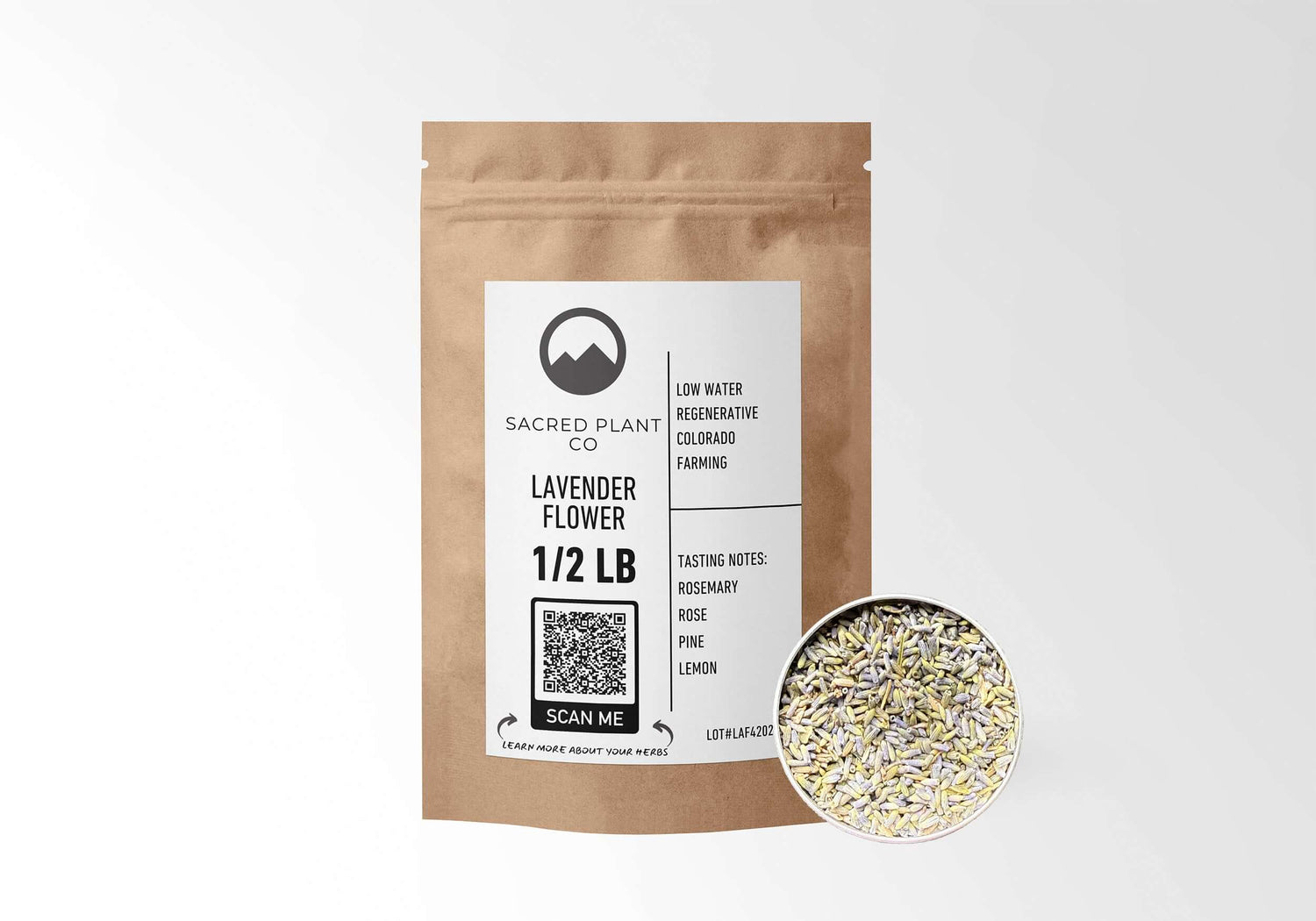
Lavender Flowers
Starting at $9.99
Tasting Notes: intensely floral and penetrating, clean and sweet, with herbaceous, faintly camphoraceous undertones and a whisper of citrus.
Caffeine-Free
Hand-selected lavender flowers, carefully dried to protect the aromatic oils. Ideal for teas, sachets, baths, and herbal preparations.
Explore LavenderQuality Assurance: Lab Test Results for Lavender
Every batch of lavender we sell is laboratory tested before release for microbial safety, heavy metals, and foreign matter, and we publish the result for each lot below with the full lab test results linked. New to reading a lab report? Start with our guide on how to read lab test results.
Lots LAVE-6193 and LAVF-9130, Lavender Flower Extra (tested 02.26.26, retest due 02.26.29)
| Test | Method | Result | Release Limit | Status |
|---|---|---|---|---|
| Microbial | ||||
| Total Plate Count | Petrifilm AOAC 990.12 | 240,000 CFU/g | 500,000 CFU/g | Pass |
| Yeast | Petrifilm AOAC 2014.05 | 20 CFU/g | 1,000 CFU/g | Pass |
| Mold | Petrifilm AOAC 2014.05 | 200 CFU/g | 5,000 CFU/g | Pass |
| Total Coliform | Petrifilm AOAC 991.14 | 1,000 CFU/g | 1,000 CFU/g | Pass |
| E. Coli | Petrifilm AOAC 991.14 | Negative | Negative | Pass |
| Salmonella | BAX PCR AOAC 2013.02 | Negative/25g | Negative/25g | Pass |
| Heavy Metals | ||||
| Arsenic | AOAC 2015.01 | 0.14 ppm | 1 ppm | Pass |
| Cadmium | AOAC 2015.01 | Not Detected | 1 ppm | Pass |
| Lead | AOAC 2015.01 | 0.34 ppm | 3 ppm | Pass |
| Mercury | AOAC 2015.01 | Not Detected | 1 ppm | Pass |
| Foreign Matter | ||||
| Foreign matter | Visual and metal detection | Pass | <2.0% by weight | Pass |
Material: Lavender Flower, Extra grade (Lavandula x intermedia), whole. Sterilization method: Not Treated. No pesticides were used to grow this product, and it is free of additives, preservatives, solvents, and excipients. View the full lab test results for lot LAVE-6193 (PDF). This same tested material also ships under lot number LAVF-9130: view the full lab test results for lot LAVF-9130 (PDF).
Lot LAF4202B, Lavender Flower (manufactured 12.19.24, retest due 12.19.27)
| Test | Method | Result | Release Limit | Status |
|---|---|---|---|---|
| Microbial | ||||
| Total Plate Count | Petrifilm AOAC 990.12 | 26,000 CFU/g | 10,000,000 CFU/g | Pass |
| Yeast | Petrifilm AOAC 2014.05 | 530 CFU/g | 10,000 CFU/g | Pass |
| Mold | Petrifilm AOAC 2014.05 | 110 CFU/g | 10,000 CFU/g | Pass |
| Total Coliform | Petrifilm AOAC 991.14 | 1,800 CFU/g | 1,000 CFU/g | Pass |
| E. Coli | Petrifilm AOAC 991.14 | Negative | Negative | Pass |
| Salmonella | BAX PCR AOAC 2013.02 | Negative/25g | Negative/25g | Pass |
| Heavy Metals | ||||
| Arsenic | AOAC 2015.01 | Conforms | 1 ppm | Pass |
| Cadmium | AOAC 2015.01 | Conforms | 1 ppm | Pass |
| Lead | AOAC 2015.01 | Conforms | 3 ppm | Pass |
| Mercury | AOAC 2015.01 | Conforms | 1 ppm | Pass |
| Foreign Matter | ||||
| Foreign matter | Visual and metal detection | Pass | <2.0% by weight | Pass |
Material: Lavender Flower (Lavandula angustifolia). Sterilization method: Untreated. No pesticides were used to grow this product, and it is free of additives and preservatives. View the full lab test results for lot LAF4202B (PDF). We publish the lab test results for every lot we test on our lab testing page.
New Harvest Alerts
Our herbs are released in small, lab-tested lots as each fresh harvest comes in. Get notified the moment a new batch of lavender is available so you can order at peak potency.
Sign Up for Harvest AlertsCultivating Lavender at Home
Lavender thrives in full sun and lean, well-draining soil, rewarding low-water, low-fuss care with fragrant summer blooms. This Mediterranean native prefers rocky, nutrient-poor ground over rich garden earth, and it wants at least six to eight hours of sun a day.
Plant lavender in spring after the last frost, spacing plants 12 to 18 inches apart for good air circulation, which helps prevent fungal issues. Water new plants regularly until established, then cut back sharply. Mature lavender tolerates drought exceptionally well.
Harvest in the morning after the dew has dried but before peak sun, cutting stems when about half the florets on the spike have opened. Bundle the stems, then hang them upside down in a dark, well-ventilated space for one to two weeks. The same gentle drying you would give any aromatic herb protects the oils you are growing it for.
The Ritual of Working with Lavender
Lavender invites ritual, asking you to slow down and use your senses fully, which is a meaningful part of how it helps you relax. Brewing a cup becomes a short meditation. Smoothing on a balm becomes a moment of presence.
Build your own small rituals. Perhaps a cup each evening as the sun sets, using the five-minute steep to let the day settle. Perhaps a bundle of dried flowers tucked near your pillow so the scent drifts through your sleep. Some in our community craft lavender smoke bundles for clearing a space, while others fold the flowers into bath salts for a weekly soak. There is no single correct way. Let intuition lead.
Lavender FAQs
What are the main benefits of lavender for relaxation?
Lavender is traditionally used to ease tension and support restful sleep, effects linked to aromatic compounds such as linalool that appear to interact gently with the nervous system. Its scent is often the first thing people notice helping them unwind, whether in tea, a sachet, or a warm bath.
How much lavender should I use for tea?
Use about 1 to 2 teaspoons of dried lavender flowers per cup of water, steeped covered for roughly 5 minutes, and start low to judge your tolerance. Lavender is potent, so more is not better. Oversteeping or overloading the pot quickly turns the cup bitter and soapy.
Is lavender safe for children?
Concentrated lavender essential oil products should be kept away from prepubertal boys, based on case reports of reversible breast tissue development with repeated use. Culinary amounts of the dried flower in food are a different matter, but any therapeutic use in children should involve a pediatric provider.
Can I use lavender on my skin?
Diluted lavender preparations such as infused oils and balms are commonly used on skin, provided you patch test first and dilute any essential oil in a carrier. Wait 24 hours after a patch test before wider use, and start with heavily diluted preparations if your skin is sensitive.
Does lavender actually help you sleep?
Research associates lavender aromatherapy with modest improvements in perceived sleep quality, though it supports rather than replaces good sleep habits. Many people find the ritual of an evening cup or a scented pillow as helpful as the compounds themselves.
What is the difference between the two lavender species you list?
Lavandula angustifolia is classic English lavender prized for a sweet, refined aroma, while Lavandula x intermedia, our current Extra grade lot, is a fuller, more camphoraceous lavandin. Both belong to the same fragrant genus and serve calming, aromatic, and culinary uses.
How should I store dried lavender flowers?
Keep dried lavender in an airtight container away from heat, light, and moisture, where properly stored flowers hold their aroma for up to a year. Check the scent every few weeks. A fading aroma is your signal that the calming oils are on their way out.
How does lavender compare to other calming herbs?
Lavender pairs beautifully with chamomile for evening blends, and its aromatic, cooling profile complements rather than replaces herbs like lemon balm, jatamansi, and brahmi. Think of these calming botanicals as a team, each bringing a slightly different quality to the cup.
How do I know your lavender is clean and potent?
Every lot is laboratory tested for microbial safety, heavy metals, and foreign matter, and we publish the full report per lot, such as lot LAVE-6193 with lead at 0.34 ppm against a 3 ppm limit. You can read the numbers yourself in the lab-results table above.
Related Regenerative Reading
Lavender sits at the center of a wider calming and regenerative practice. These guides connect the threads:
- Start at the source with the story behind our lavender in Raising the Bar: Lavender, the Ancient Language of Calm.
- Move from tea to tincture with calming tinctures for stress relief and relaxation.
- Take the same nervines into deep rest with a dream-supporting Calea zacatechichi tea recipe.
- Understand the soil science behind aromatic potency in our report on a Haney Score of 25.4 that surpasses pristine forest soil.
- Fold lavender into a full winter routine with herbal bath and body rituals for winter.
Conclusion
Lavender endures because it delivers on the promise its aroma makes. That sweet, penetrating scent is the plant's chemistry at work, and it is strongest when the flower is grown in living soil, dried with care, and used with intention. Whether you are reaching for better rest, a moment of quiet, or simply a fragrant cup at the end of a long day, lavender meets you where you are.
We invite you to begin gently. Start small, notice how your body responds, and let your relationship with this ancient ally deepen over time. When you are ready, our lab-tested lavender is here, chosen for aroma, verified for purity, and offered with the respect this plant deserves.


