


Last Updated: May 25, 2026
Mugwort (Artemisia vulgaris): The Dream Herb's Journey From Ancient Texts to Living Soil
The ancient herbalists who wrote of mugwort were describing a plant we rarely meet today. In the Anglo-Saxon Lacnunga manuscript of roughly the 10th century, mugwort opens the famous Nine Herbs Charm as the "oldest of herbs," credited with a potency that modern, commodity-grown leaf simply does not carry. That gap between the mugwort of legend and the mugwort on most shelves is not folklore. It is chemistry.
To recreate the potency described in ancient texts, we cannot use sterile commodity soil that has been stripped of its microbial life. The bitter sesquiterpene lactones, the aromatic volatile oils, the compounds that make mugwort actually do something are secondary metabolites, and a plant only manufactures them in abundance when it is grown in biologically alive earth. This is the heart of what we call restoring the lost intelligence of the plant.
At Sacred Plant Co, our approach is rooted in regenerative thinking. We believe soil health translates to medicinal potency, a principle we document openly on our See the Science page. This article walks through mugwort's botany, its traditional roles across continents, a precise tea method, honest safety guidance, and the sensory cues that separate living medicine from faded green dust.
What You'll Learn
- What mugwort (Artemisia vulgaris) is botanically and which compounds drive its effects.
- How to identify premium, high-potency mugwort by color, texture, and aroma.
- A step-by-step tea method that preserves heat-sensitive aromatic oils.
- The traditional uses of mugwort across European, Chinese, Korean, and Japanese medicine.
- How much to use, how often, and how to store it for peak potency.
- Who should avoid mugwort, including clear pregnancy and ragweed-allergy guidance.
- Which calming and dream herbs pair well with mugwort and why.
- How regenerative soil influences the strength of the finished herb.
Key Takeaways
- Mugwort (Artemisia vulgaris) is an aromatic perennial in the Asteraceae family used traditionally for digestion, evening calm, and vivid dream recall.
- Mugwort tea is prepared with 1 to 2 teaspoons of dried leaf per 8 ounces of just-off-boil water, steeped covered for 5 to 7 minutes to trap heat-sensitive volatile oils.
- People allergic to ragweed should avoid mugwort, because Art v 1, the major mugwort pollen allergen, is recognized by IgE antibodies in roughly 95 percent of mugwort-sensitive patients.
- Mugwort is classified traditionally as an emmenagogue and should be avoided during pregnancy and nursing unless directed by a qualified clinician.
- Properly stored in an airtight container away from heat and light, dried mugwort retains aromatic quality for 6 to 12 months.
Mugwort By the Numbers
The table below summarizes mugwort's core botanical and practical data at a glance. Each figure is drawn from botanical references and Sacred Plant Co batch documentation.
| Attribute | Detail |
|---|---|
| Latin Name | Artemisia vulgaris |
| Family | Asteraceae (one of the largest plant families, with more than 23,000 species) |
| Parts Used | Leaf and flowering tops |
| Primary Active Compounds | Volatile oils (including thujone and 1,8-cineole), sesquiterpene lactones, flavonoids, and bitter principles |
| Traditional Energetics | Warming, bitter, aromatic, drying |
| Native Range | Temperate Europe, Asia, and North Africa (naturalized across North America) |
| Plant Type | Hardy herbaceous perennial |
| Typical Dosage Range | 1 to 2 tsp dried leaf per 8 oz water, commonly 1 cup in the evening |
| Caffeine Status | Caffeine-Free |
| Sacred Plant Co Lab Test Results | LOT# MWH5202 (View PDF) |
What Is Mugwort?
 The presence of fine, downy hairs on the leaf's silver underside confirms careful drying methods that preserve volatile therapeutic oils.
Mugwort is an aromatic perennial herb in the Asteraceae family, the same botanical family that includes daisies, sunflowers, and chamomile. This hardy plant has accompanied humans across continents for centuries, earning regional names like "cronewort," "wild wormwood," and "felon herb."
The plant grows with deeply lobed grey-green leaves that are silvery-white underneath. Crushing fresh leaves releases a complex scent combining sage, camphor, and a subtle sweetness. That aromatic quality made mugwort valuable not only as medicine but as a strewing herb scattered on medieval European floors to freshen indoor air and repel insects. Traditional preparations include tea, smoke blends, bath soaks, dream pillows, and topical applications.
Sensory Quality Check: How to Identify Premium Mugwort
Premium dried mugwort announces itself through three senses before you ever brew it: sight, touch, and smell. A lack of aroma equals a lack of medicine, so the nose is your most reliable tool.
- Color: Look for two-toned leaf, grey-green on top with a pale, almost silvery underside. Uniformly dull brown or grey leaf signals age, heat damage, or oxidation.
- Texture: Quality leaf is dry but not powdered to dust. You should see recognizable leaf structure and fine downy hairs, not a uniform crumble.
- Aroma: Crush a pinch between your fingers. Fresh, well-dried mugwort releases a strong, layered scent. Our tasting library describes the cup as Squid Ink, Grass, and Honey, a savory-bitter base lifted by a green, faintly sweet top note. If the scent is weak or musty, potency has faded.
- Drying method tie-in: Aromatic compounds are volatile and heat-sensitive. We dry at low temperatures specifically to preserve them, which is why our leaf still carries that pungent, slightly resinous bite.
You can see the actual leaf and packaging in our short product video below.
Traditional Benefits and Uses of Mugwort
Mugwort's traditional uses cluster around four areas: digestion, evening relaxation, dream support, and the menstrual cycle. Different cultures arrived at strikingly similar applications independently, which suggests genuine activity rather than coincidence. We always recommend approaching these uses with appropriate caution and professional guidance.
Digestive Comfort
Bitter compounds in mugwort stimulate digestive secretions, traditionally easing the heavy feeling that follows rich meals. European herbalism classified mugwort as a digestive bitter and carminative, used before meals to stimulate appetite or after meals to support breakdown of food. Because this bitterness works on the gut, mugwort sits naturally alongside other herbs in our coverage of remedies for bloating and sluggish digestion.
Evening Unwind
The aromatic compounds in mugwort leaves may help quiet a busy mind before bed. Mugwort is gentler than heavy sedative herbs, offering support for the transition from daily activity to rest without the morning grogginess some sleep herbs produce. Because it works on the nervous system rather than knocking you out, it complements the nutritive nervine oatstraw for deep, sustained restoration.
Dream Support
Mugwort's most famous traditional use involves vivid dreams and dream recall. Cultures from medieval Europe to the Americas connected mugwort to the dream world. Some people experience more vivid, memorable, or lucid dreams when using it, though individual responses vary widely. For those drawn to this thread, our companion piece on the spiritual use of mugwort for intuition and visionary journeys goes deeper, and our overview of Calea zacatechichi, the dream herb contrasts a second classic dream plant.
Cycle Comfort
Historically, herbalists used mugwort around the menstrual cycle, particularly to encourage regular cycles and ease cramping. Traditional Chinese Medicine includes mugwort (known as "ai ye") in moxibustion and in internal formulas for reproductive health. These applications require caution and professional guidance because of mugwort's reputation as an emmenagogue, a substance that stimulates menstrual flow.
Important Safety Note
Information here is for educational purposes only and does not constitute medical advice. Always speak with your healthcare professional before using mugwort, especially if you are pregnant, nursing, taking medications, or managing any health condition. Mugwort is not appropriate for everyone and should be used with proper knowledge and respect for its properties.
What the Research Says About Mugwort
Modern research on mugwort focuses on three areas: its phytochemistry, its role in moxibustion, and its status as a major pollen allergen. The evidence base is still developing, so traditional use remains the primary guide.
A 2020 review in Molecules cataloged the chemistry and historical medicinal significance of Artemisia vulgaris, documenting volatile oils, flavonoids, and sesquiterpene lactones as the leaf's principal active constituents.1 In obstetric research, a Cochrane systematic review evaluated moxibustion, the practice of burning compressed mugwort near acupuncture point BL67, as a method for encouraging cephalic version of breech-presenting babies, a use documented in Chinese medicine for more than 2,000 years.2 Allergy research has characterized Art v 1, the major mugwort pollen allergen, which is recognized by IgE antibodies in roughly 95 percent of mugwort-allergic patients and underlies the cross-reactivity discussed in the safety section below.3
How to Make Mugwort Tea
The goal when brewing mugwort is to extract its bitters while preserving its heat-sensitive aromatic oils, which means covered steeping with water just off the boil. This method honors traditional preparation while protecting the compounds that give mugwort its character.
Ingredients and Equipment
- 1 to 2 teaspoons dried mugwort per 8 oz water
- Filtered water
- Teapot or cup with a lid
- Fine-mesh strainer or tea infuser
- Optional: lemon slice, honey, or complementary herbs
Step-by-Step Preparation
 Steeping mugwort in a covered vessel is essential to prevent the vapor-loss of its defining camphor-and-sage aromatics.
- Measure your herb: Use 1 to 2 teaspoons dried mugwort per 8 oz of hot water. Start with the lower amount for your first cup to gauge your sensitivity and taste.
- Heat water properly: Bring water just off a boil, around 200 to 205 degrees Fahrenheit. Avoid pouring actively boiling water over the herb, because excessive heat flashes off delicate aromatic compounds.
- Steep covered: Pour the hot water over the mugwort and immediately cover the vessel. Steep 5 to 7 minutes for a balanced cup, or up to 10 minutes for stronger bitter extraction.
- Strain thoroughly: Pour the tea through a fine-mesh strainer to remove all plant material, since small particles keep steeping and turn the cup harshly bitter.
- Taste before adjusting: Try a small sip plain first. If desired, add a squeeze of lemon or a little honey to round the edges without masking the herb.
Preparation as Ritual
Beyond the mechanics, many people treat the evening cup as a small Sacred ritual, a deliberate pause that signals the body to shift from doing into resting. Set the journal beside the bed, dim the lights, and let the brewing itself become part of the wind-down. This intention is part of why mugwort has lived in ceremonial as well as kitchen traditions for so long.
Mugwort Safety and Sensitivities
Mugwort requires respectful, cautious use, and two groups should avoid it outright: pregnant or nursing individuals, and people with ragweed allergy. We separate firm medical contraindications from gentler traditional considerations below.
Contraindications
Pregnancy and nursing. Avoid mugwort completely during pregnancy unless working under the direct guidance of a qualified healthcare professional. Traditional herbalism classified mugwort as an emmenagogue with the potential to stimulate uterine contractions, so no amount should be considered safe in pregnancy without professional supervision. Nursing parents should also exercise caution, as little research exists on mugwort in breast milk.
Ragweed and Asteraceae allergy. Individuals allergic to ragweed and related Asteraceae plants may cross-react with mugwort, with symptoms including oral itching, skin reactions, or respiratory complaints. Anyone with known ragweed allergy should avoid mugwort or trial it only under medical supervision. A related pollen-food syndrome, sometimes called "mugwort-celery-spice syndrome," can trigger reactions to celery, carrots, and certain spices.
Medication interactions. If you take prescription medications or manage any medical condition, consult your practitioner first. Potential interactions include anticoagulant medications (mugwort may have mild blood-thinning properties), diabetes medications (possible effect on blood sugar), and sedative medications (possible additive effect).
Traditional and Energetic Considerations
In traditional frameworks, mugwort is considered warming, bitter, and drying. Practitioners often suggest it is best suited to people who run cold or sluggish rather than hot and dry, and it is typically used in short, intentional courses rather than continuously. Many traditions also pair its dream-opening reputation with a grounding practice, such as journaling on waking, to integrate vivid dreams rather than be unsettled by them. These are cultural and energetic notes, not medical claims.
Starting Safely
Start with the lowest effective dose and observe how your body responds. Begin with just 1 teaspoon per cup, steeped only 5 minutes, and drink half a cup. Wait 24 hours to notice any delayed reactions before increasing.
How Much Mugwort and How Often
Traditional dosing centers on one cup in the evening, taken 30 to 60 minutes before bed for dream or relaxation support. Many users find 3 to 4 nights per week provides benefit without building tolerance.
For digestive support, a smaller cup of 4 to 6 oz can be taken after meals as needed. Some herbalists suggest starting with just a few sips to gauge response before working up to a full cup.
Storage for Peak Potency
Store dried mugwort in an airtight container away from heat, light, and moisture, such as a sealed glass jar in a cool, dark cupboard. Properly stored, mugwort holds its aromatic quality for 6 to 12 months. For a deeper system, see our complete guide to storing bulk herbs. Check periodically by crushing a small amount: a strong aroma means good potency, while a weak or musty scent means it is time for fresh herb.
Synergistic Pairings
Mugwort blends beautifully with complementary herbs that balance its bitterness or extend its effects. Because mugwort calms without heavy sedation, it pairs well with skullcap or lavender for deeper evening calm. For a softer, more palatable cup, the bright citrus of lemon balm rounds mugwort's bitter edges without masking it. If you are building a full evening practice, our roundup of the top sleep-inducing herbs expands the toolkit.
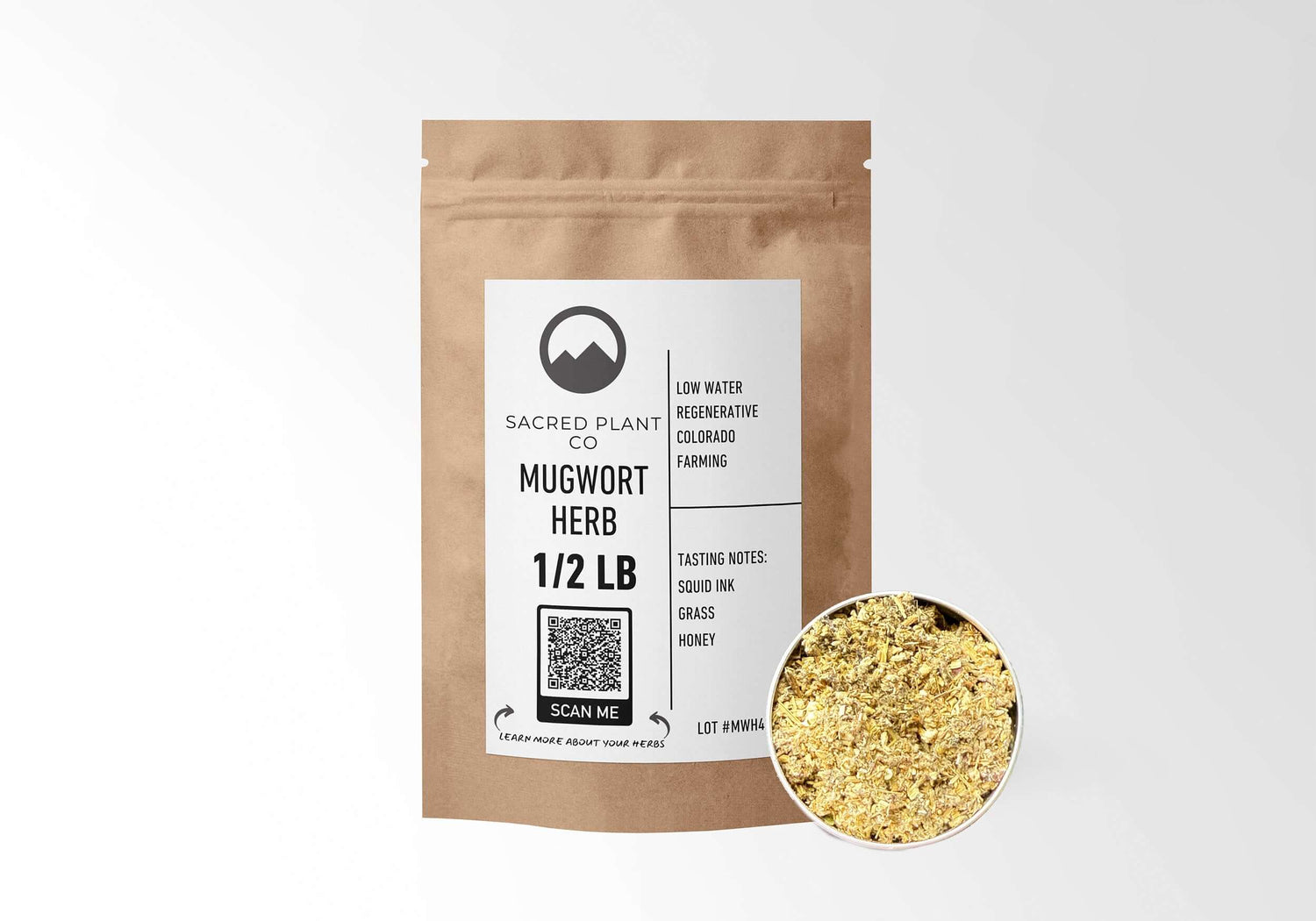
Mugwort, Handpicked & Regeneratively Grown
Tasting Notes: Squid Ink, Grass, Honey
Dried at low temperatures to protect the aromatic oils that give mugwort its character, then third-party lab tested for microbial contaminants, heavy metals, and identity. Ideal for evening teas, dream pillows, baths, and gentle herbal blends.
Shop MugwortMugwort in Cultural Context
Across continents and centuries, unrelated cultures independently adopted mugwort for digestion, sleep, dreams, and women's health, a convergence that points to real activity. Understanding this history enriches how we work with the plant today.
European Traditions
Medieval European herbalists used mugwort for digestive complaints and reproductive support, and its association with the moon and the feminine cycle runs through folk traditions from Britain to Eastern Europe. Midsummer celebrations featured mugwort crowns and bundles, linking the herb to seasonal turning points. Anglo-Saxon texts list it among the "nine herbs" of the Lacnunga charm, crediting it with protective powers. For more on plants that shaped culture, see herbs that changed history.
Asian Medicine Systems
Traditional Chinese Medicine uses mugwort extensively, especially in moxibustion, where compressed mugwort is burned near acupuncture points for warming, tonifying effects. Internal use of mugwort (ai ye) appears in formulas for cold conditions of the lower abdomen and reproductive organs. Korean medicine values it in teas, foods such as mugwort rice cakes, and steam treatments, while Japanese traditions include it in spring foods and medicinal preparations.
Smoke, Ritual, and the Asteraceae Cousins
Mugwort also has a long history as a ritual smoking and smudging herb. Our deep dive into the spiritual power of sage and mugwort in winter rituals explores the ceremonial thread, while the rituals behind smokable herbs covers responsible use. As an Asteraceae plant, mugwort shares family ties with the bitter, ceremonial yarrow flower.
Go deeper into dreamwork: If mugwort is your entry point into intentional dreaming, build on it with our guides to lucid dreaming teas and natural remedies for a vivid dream journey.
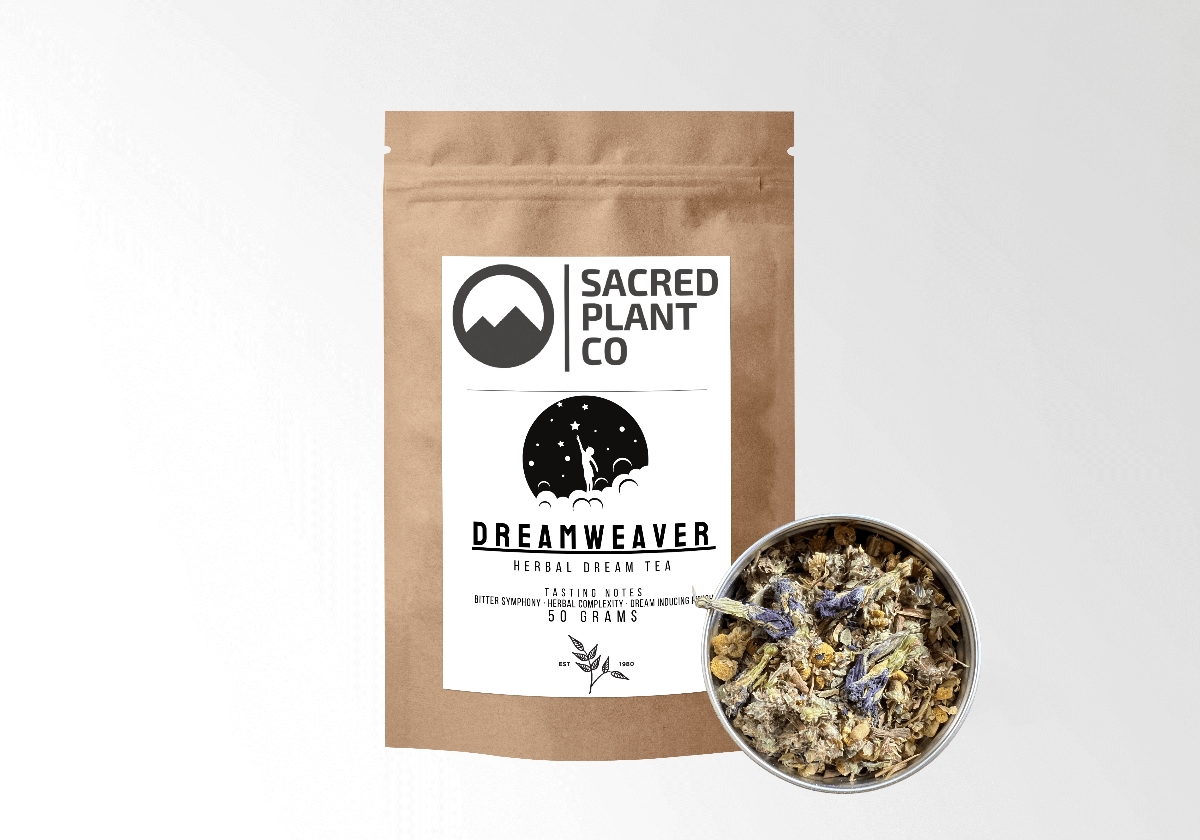
Dreamweaver, Lucid Dreaming Herbal Tea
A bitter-tonic herbal blend combining mugwort with complementary dream herbs, crafted to support vivid, memorable sleep and deep relaxation.
Explore DreamweaverThe Sacred Plant Co Standard
Our mugwort is handpicked in small batches and processed to protect the compounds that ancient herbalists prized. The difference shows up in the cup.
Low-temperature drying preserves the volatile aromatic compounds that give mugwort its scent and much of its effect. Many commercial herbs are heat-processed for speed, which compromises quality. Our patient drying maintains the full spectrum of constituents. Lab testing reports measured results for microbial contaminants, heavy metals, and identity and foreign matter, and every batch is screened before release. This commitment to living soil and transparent testing is the practical face of our Beyond Organic regenerative standard.
Lab Test Results: Quality Documentation
We maintain rigorous third-party testing for every mugwort batch. Each is assigned a unique LOT number with complete lab test results showing results for purity, identity, and quality. New to lab reports? Our guide on how to read lab test results walks through every line.
Find your lab test results by LOT number: Check your product packaging for the LOT number, then click the matching link below.
Can't find your LOT number or need a different batch? Email support@sacredplantco.com with your lot number and we will send the matching report. We publish the lab test results for every lot we test on our lab testing page.
Mugwort FAQ
Is mugwort safe during pregnancy or nursing?
No, avoid mugwort during pregnancy and while nursing unless you are working directly with a qualified clinician. Mugwort has a traditional reputation as an emmenagogue, a substance that can stimulate menstrual flow, and is not considered appropriate without professional guidance.
How much mugwort tea should I drink and how often?
Begin with 1 teaspoon of dried mugwort per 8 oz of hot water, steeped covered for 5 to 7 minutes, and drink half a cup to assess your response. For most adults, one cup in the evening 3 to 4 nights per week is a common rhythm. Adjust based on tolerance and goals.
What time should I drink mugwort for dream support?
Drink your cup 30 to 60 minutes before bed when using mugwort for dream support or relaxation. Keep a dream journal on the nightstand and minimize screens in the final hour to support stronger recall.
Can mugwort interact with medications?
Yes, mugwort may interact with anticoagulants, sedatives, and diabetes medications, so consult your clinician before use if you take any of these. Anyone managing an ongoing medical condition should confirm with a healthcare professional first.
I am allergic to ragweed. Can I use mugwort?
People with ragweed allergy should avoid mugwort or trial it only under professional supervision, because both belong to the Asteraceae family and cross-react. Art v 1, the major mugwort pollen allergen, is recognized in roughly 95 percent of mugwort-allergic patients.
How bitter should mugwort tea taste, and how can I make it smoother?
Mugwort is naturally bitter, so use just-off-boil water, steep covered, and strain well to keep it pleasant rather than harsh. Soften the edges with lemon balm or mint, or a light touch of honey, without fully masking the herb's character.
What herbs pair well with mugwort?
For evening calm, mugwort pairs well with skullcap or lavender, and for a smoother flavor with lemon balm or spearmint. For a ready-made dream blend, our Dreamweaver Tea combines mugwort with complementary dream herbs.
How should I store mugwort to preserve potency?
Store mugwort in an airtight container away from heat, light, and moisture, such as a sealed glass jar in a dark cupboard. Properly stored, aromatic quality is best within 6 to 12 months. Refresh your supply once the aroma fades.
What is the difference between Artemisia vulgaris and other Artemisia species?
Artemisia vulgaris is European and Asian mugwort, distinct from A. argyi, the species favored for moxibustion, and A. absinthium, which is wormwood. Flavor, effects, and traditional uses differ, so always confirm the species on your label.
Where can I buy high-quality, lab-tested mugwort?
You can buy regeneratively grown, lab-tested mugwort directly from Sacred Plant Co, with lab test results available for every batch. Explore our handpicked mugwort here.
Final Thoughts
Mugwort bridges ancient herbal wisdom and modern plant practice, rewarding patience, observation, and respect. Its long history of traditional use, accessible preparation, and gentle effects make it an excellent herb for those exploring medicinal plants.
Approach mugwort with curiosity and appropriate caution. Start slowly, track your body's responses, and consult healthcare professionals when needed. Whether you are drawn to it for digestion, evening calm, or dream exploration, this remarkable plant has much to offer those who work with it mindfully, and even more when it is grown in soil that lets it reach the potency the old texts described.
References
- Ekiert H, Swiatkowska J, Klin P, Rzepiela A, Szopa A. Significance of Artemisia vulgaris L. (Common Mugwort) in the History of Medicine and Its Possible Contemporary Applications. Molecules. 2020;25(19):4415. (Peer-reviewed)
- Coyle ME, Smith CA, Peat B. Cephalic version by moxibustion for breech presentation. Cochrane Database of Systematic Reviews. (Peer-reviewed)
- Himly M, et al. Art v 1, the major allergen of mugwort pollen, is a modular glycoprotein with a defensin-like and a hydroxyproline-rich domain. FASEB Journal. 2003. (Peer-reviewed)
- Grieve M. A Modern Herbal. 1931. (Traditional and historical materia medica)
- Bensky D, Clavey S, Stoger E. Chinese Herbal Medicine: Materia Medica. 3rd ed. Eastland Press. (Traditional materia medica, ai ye)
- Sacred Plant Co. The Science Behind Sacred Plant Co's Soil Regeneration: Haney Score 25.4 Surpasses Pristine Forest. View article. (Sacred Plant Co original research)


