


Mugwort The Dreamweaver for Intuition and Visionary Journeys

Mugwort (Artemisia vulgaris) grows at the intersection of earth wisdom and mystical practice, a silvery-green ally that ancient herbalists, medieval healers, and modern dreamworkers have all turned to when seeking clearer visions, deeper intuition, and protection through life's threshold moments. At Sacred Plant Co, we approach every herb through a regenerative lens, understanding that the vitality of the soil directly shapes the aromatic compounds and energetic presence of plants like Mugwort. When you work with regeneratively grown Mugwort, you're not just accessing traditional plant wisdom, you're connecting with herbs cultivated in ways that honor ecological relationships, support biodiversity, and maintain the delicate chemical profiles that make Mugwort such a powerful spiritual tool.
In our experience farming Mugwort at I·M·POSSIBLE Farm using Korean Natural Farming methods, we've witnessed how soil health translates directly to plant medicine. Mugwort grown in living, biologically rich soil develops more complex volatile oil profiles, stronger aromatic presence, and what traditional herbalists might describe as enhanced "spiritual resonance." This connection between regenerative cultivation and plant potency isn't mysticism, it's biochemistry meeting ecology. The same soil microbiomes that help Mugwort produce its characteristic compounds of camphor, 1,8-cineole, and thujone are the ones we nurture through composting, fermentation, and minimal disturbance. Whether you're new to spiritual herbalism or have practiced dreamwork for years, understanding where your Mugwort comes from and how it was grown matters for both practical results and ethical alignment with plant traditions.
What You'll Learn
- How Mugwort's volatile oil compounds including thujone and cineole support dream vividness and recall through gentle nervous system modulation
- The historical relationship between Mugwort and lunar cycles across Celtic, Chinese, and Greek traditions
- Practical preparation methods for dream teas, smoke cleansing bundles, infused oils, and sacred baths
- The difference between Mugwort's oneirogenic (dream-enhancing) properties and sedative herbs like Valerian
- Safety protocols for working with Mugwort, including who should avoid it and proper dosing guidelines
- How to create your own dream pillow, moon water ritual, and protective smoke blend using Mugwort
- The connection between third eye activation and Mugwort's traditional use for intuitive development
- Combining Mugwort with complementary herbs like Lavender, Chamomile, and Blue Lotus for enhanced dreamwork
Understanding Mugwort: Botanical Profile and Active Constituents

Mugwort belongs to the Artemisia genus of the Asteraceae family, making it a botanical relative of plants ranging from chamomile to chrysanthemums. This perennial herb displays distinctive silvery-green leaves—deeply lobed on the upper surface and downy white underneath—that release a complex aromatic signature when crushed. Native to temperate regions of Europe, Asia, and North America, Mugwort has naturalized across multiple continents, demonstrating remarkable adaptability to different growing conditions while maintaining its characteristic chemical profile.1
The plant's therapeutic and spiritual potency stems from a sophisticated array of bioactive compounds concentrated in its aerial parts. Mugwort's essential oil content ranges from 0.1% to 1.4% depending on harvest timing, geographical origin, and cultivation practices, with major constituents including β-pinene, α-pinene, camphor, 1,8-cineole, and thujone.2 These volatile oils work synergistically with flavonoids (particularly quercetin and rutin), coumarins, phenolic acids, and sesquiterpene lactones to create Mugwort's distinctive effects on consciousness, dreaming, and spiritual awareness.
Thujone, perhaps Mugwort's most discussed compound, deserves particular attention for anyone working with this herb spiritually. Present in modest amounts in Artemisia vulgaris (far lower than in its cousin A. absinthium), thujone acts as a GABA receptor modulator, potentially influencing dream vividness and mental activity during REM sleep cycles.3 Traditional dosing practices—using small amounts of herb in teas or smoke—keep thujone exposure well within safe limits while still accessing Mugwort's consciousness-altering properties. The nervine effects attributed to Mugwort in traditional herbalism correlate with these compounds' ability to gently modulate neurotransmitter activity without causing sedation, making Mugwort fundamentally different from sleep-inducing herbs like Valerian or Passionflower.4
The Historical Thread: Mugwort Across Cultures and Centuries
European Folk Traditions
In Celtic Europe, Druids recognized Mugwort as one of their nine sacred herbs, employing it in divination rituals and as protection for travelers journeying between the physical and spirit worlds. Medieval herbalists called it "Mater Herbarum"—Mother of Herbs—acknowledging both its medicinal versatility and its special role in accessing non-ordinary states of consciousness. Travelers would place Mugwort in their shoes before long journeys, not merely for physical stamina but for spiritual protection, believing the herb created an invisible boundary against malevolent forces and ensured safe return home.
The association between Mugwort and the goddess Artemis (Diana in Roman tradition) established the plant's connection to lunar cycles, women's mysteries, and the hunt—both literal pursuit of game and the spiritual hunt for wisdom through dreamtime. Medieval grimoires prescribed Mugwort for "seeing clearly in darkness," a phrase that likely referred to both physical night vision and the metaphorical darkness of the unconscious mind. Dream pillows stuffed with Mugwort became common in folk practice, particularly on midsummer eve when the veil between worlds was considered thinnest.
Asian Medicine and Moxibustion
Traditional Chinese Medicine incorporated Mugwort (known as Ai Ye) into its sophisticated energetic framework, understanding the plant as warm in nature and capable of moving stagnant Qi while driving out cold and dampness. The practice of moxibustion—burning dried Mugwort near acupuncture points—demonstrates ancient Chinese recognition of the herb's ability to influence energy flow and consciousness. While Western spiritual practitioners focus primarily on Mugwort's dream-enhancing properties, Chinese medicine emphasizes how the herb warms the meridians and strengthens the Wei Qi (protective energy), creating a holistic approach to both physical and spiritual protection.5
Japanese spiritual traditions similarly revered Mugwort (yomogi), incorporating it into purification rituals, hanging bundles above doorways to ward off negative influences, and using it in ritual baths before important spiritual undertakings. The plant's role in these traditions wasn't as a psychoactive substance but as an ally that clarified perception, strengthened boundaries, and supported the practitioner in maintaining energetic integrity during spiritual work.
Indigenous North American Practices
Various Native American tribes incorporated native Mugwort species into ceremonial contexts, often using the smoke for purification and the plant material in medicine bundles. It's crucial to distinguish between universal smoke cleansing traditions (found across continents and cultures) and specific ceremonial practices that remain sacred and closed to non-Indigenous practitioners. Mugwort's smoke has been used broadly for clearing stagnant energy, preparing ritual spaces, and supporting dream journeys—practices anyone can respectfully adopt. However, these applications differ significantly from White Sage smudging ceremonies, which carry specific cultural and spiritual protocols within Indigenous traditions.
The Dreamweaver: Mugwort's Relationship with Sleep and Consciousness

Mugwort's reputation as a dream herb rests on millennia of consistent experiential reports across disparate cultures, now beginning to find support in our understanding of how its chemical constituents interact with sleep physiology. Unlike sedative herbs that simply deepen sleep, Mugwort appears to influence the quality and memorability of dreams without significantly altering sleep architecture. Users commonly report increased dream vividness, enhanced recall upon waking, and occasionally the ability to maintain awareness within dreams (lucid dreaming), though responses vary considerably between individuals.
The mechanism likely involves Mugwort's volatile compounds crossing the blood-brain barrier and subtly influencing neurotransmitter systems active during REM sleep. Thujone's interaction with GABA receptors may heighten mental activity during dream states without causing the restlessness that would fragment sleep cycles.3 The aromatic compounds themselves—when inhaled from a dream pillow or lingering from evening tea—may trigger olfactory pathways connected to memory formation, potentially explaining why dreams experienced under Mugwort's influence often feel more vivid and remain accessible to conscious recall longer than typical dreams.
Traditional practice emphasizes starting Mugwort dreamwork gradually, allowing your system to acclimate to the herb's influence. Begin with a simple practice: brew a light tea (1 teaspoon dried herb per 8 ounces water, steeped 5-7 minutes) about an hour before bed, focusing your intention on remembering your dreams. Keep a journal at your bedside and record whatever you recall immediately upon waking, before the images fade. After several nights with tea, you might add a dream pillow—a small muslin sachet filled with Mugwort, perhaps blended with Lavender for a gentler effect. Place it inside your pillowcase so the subtle aroma accompanies you through the night.
The practice of setting intention before sleep matters significantly when working with Mugwort. The herb doesn't create visions from nothing—it amplifies and clarifies the dreamwork your unconscious mind is already doing. Before sleep, spend a few minutes in meditation, asking a question you'd like insight on, or simply stating your intention to remember and learn from your dreams. This conscious engagement with the dream process, combined with Mugwort's physiological effects, creates optimal conditions for meaningful dreamwork.
Mugwort and the Moon: Lunar Alignment in Spiritual Practice

The etymological connection between Mugwort and Artemis—Greek goddess of the moon, wilderness, and liminal spaces—hints at an ancient recognition of the plant's lunar correspondence. Modern practitioners working with Mugwort often find their practice naturally aligning with moon phases, particularly the full and new moons when lunar influence on earth energies reaches its peak. This isn't mere romantic association; traditional herbalism across cultures has long observed connections between certain plants and celestial cycles, with the lunar month offering a practical framework for cyclical spiritual work.
Full moon work with Mugwort tends toward amplification—using the moon's illuminating energy to bring unconscious material into awareness, heighten intuition, and charge ritual tools or preparations. A simple full moon practice involves creating Mugwort moon water: fill a clear glass jar with spring water, add a tablespoon of dried Mugwort, seal it, and leave it in direct moonlight overnight. In the morning, strain out the plant material. This lunar-charged water can be used to cleanse ritual objects, added to baths for ceremonial purification, or sprinkled around your sacred space to invoke Mugwort's protective and vision-enhancing properties.
New moon Mugwort work emphasizes intention-setting, clearing, and preparing for new cycles. This is an ideal time to create fresh dream pillows, craft new smoke bundles, or begin a dedicated dreamwork practice. The dark moon phase supports introspection and inner journey work—exactly what Mugwort facilitates. A new moon ritual might involve smudging your space with Mugwort smoke while consciously releasing what no longer serves you, then drinking Mugwort tea while journaling about intentions for the coming lunar cycle.
Regular monthly practice with Mugwort following moon phases helps develop sensitivity to both the herb's effects and your own cyclical patterns of intuition, energy, and receptivity. Keep notes in your dream journal about how your experiences with Mugwort shift across the lunar month—many practitioners find their dream recall strongest around the full moon, while new moon work tends to yield more symbolic or archetypal dream content requiring interpretation.
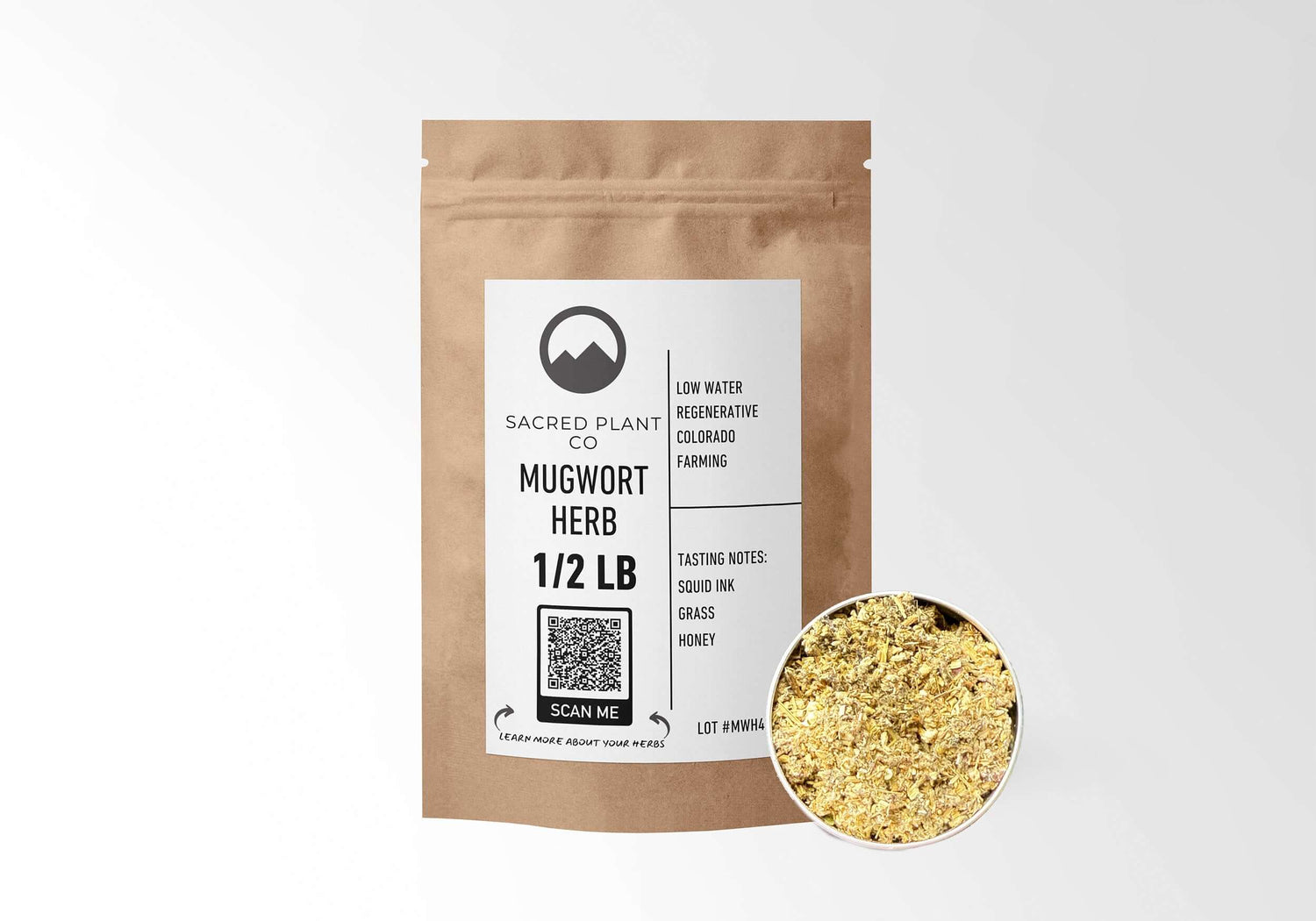
Practical Applications: Working with Mugwort in Spiritual Practice
Dream Enhancement Tea

Lucid Dreaming Mugwort Tea
Ingredients:
- 1 teaspoon dried Mugwort
- 8 ounces boiling water
- Optional: honey, lemon, or Lavender to soften bitterness
Preparation:
- Place Mugwort in a cup or teapot and pour boiling water over the herb
- Cover immediately to trap volatile oils—this step is crucial for maximum potency
- Steep 5-7 minutes for a lighter, introductory brew; up to 10 minutes for stronger effects
- Strain thoroughly and add honey or lemon if desired
- Drink 30-60 minutes before bed while setting your dream intention
Practice Notes: Start with shorter steep times and work up gradually. Mugwort's bitter principle actually supports its effectiveness, but you can blend it with more pleasant-tasting herbs initially. Many practitioners find Mugwort works best when used 3-4 nights per week rather than continuously—this prevents tolerance and maintains the herb's novelty effect on your dream state.
Smoke Cleansing and Energy Clearing
Burning Mugwort for spiritual cleansing represents one of its oldest applications, predating modern "smudging" terminology. When you light Mugwort, the aromatic compounds released in the smoke carry both physical antimicrobial properties and the plant's traditional energetic qualities of protection and purification. Unlike White Sage, which has specific Indigenous ceremonial contexts, Mugwort smoke cleansing belongs to European folk traditions and can be practiced respectfully by anyone drawn to this work.
To create a Mugwort smoke bundle, gather fresh Mugwort stems (about 8-10 inches long) during late spring or summer when the plant's aromatic oils are most concentrated. Remove the lower leaves to create a handle, then tightly wind cotton thread up the bundle, crisscrossing to secure it. Hang the bundle upside down in a dark, well-ventilated space for 2-3 weeks until completely dry. The finished bundle should feel light and crispy, with leaves that crumble easily when touched.
For cleansing practice, light the end of your bundle and allow it to flame briefly before blowing out the fire, leaving the herbs smoldering. Move through your space in a clockwise direction (or counterclockwise if consciously banishing), paying particular attention to corners, doorways, and windows where energy tends to stagnate. Visualize the smoke carrying away heaviness, confusion, or unwanted influences. Always use a heat-safe dish underneath to catch falling embers, and never leave burning herbs unattended.
You can create custom smoke blends by combining dried Mugwort with other herbs before burning them loose on charcoal discs. A winter solstice blend might include Mugwort, Rosemary (for mental clarity), Cedar (for grounding), and dried Orange peel (for joy and light). Place a lit charcoal disc in a heat-safe censer or bowl of sand, wait until it stops sparking, then sprinkle a small pinch of your herbal blend on top. The smoke from loose herbs tends to be more subtle than bundle smoke, making it ideal for extended meditation or ritual work.
Dream Pillows and Sachets

Traditional Dream Pillow
Materials Needed:
- Small muslin or cotton drawstring bag (4x6 inches)
- 2 tablespoons dried Mugwort
- 1 tablespoon dried Lavender
- 1 teaspoon dried Chamomile
- Optional: small piece of Amethyst or Moonstone
Instructions:
- Gently crush the dried herbs between your palms to release their aromatic oils without powdering them
- Mix the herbs in a bowl while focusing on your intention for clearer dreams and enhanced recall
- Fill your sachet, adding the crystal if using, and tie it securely
- Slip the sachet inside your pillowcase or tuck it under your pillow
- Refresh the herbs monthly or when the scent fades
Variations: For lucid dreaming emphasis, increase the Mugwort ratio and add a small amount of dried Blue Lotus. For gentler, more restful sleep alongside dream enhancement, increase Lavender and Chamomile proportions. For protection during dreamwork, add Rosemary or Vervain.
Mugwort-Infused Ritual Oil
Creating an infused oil allows you to extract Mugwort's properties into a carrier that can be used for anointing, massage, or adding to ritual baths. This preparation works particularly well for third eye activation practices and pre-meditation anointing.

Mugwort Vision Oil
Ingredients:
- 1 cup organic olive oil or jojoba oil
- 1/3 cup dried Mugwort
- Clean, dry glass jar with lid
Method (Solar Infusion):
- Place dried Mugwort in your jar and pour oil over it, covering the herb completely with at least an inch of oil above the plant material
- Seal the jar and label it with the date and contents
- Place in a sunny windowsill where it will receive several hours of light daily
- Shake the jar gently once daily to circulate the oil and prevent settling
- After 2-4 weeks, strain through cheesecloth, squeezing to extract all the oil
- Store in a dark glass bottle away from heat and light
Uses: Anoint your third eye (center of forehead) before meditation or dreamwork. Add a few drops to ritual baths. Use as a massage oil for the temples, back of neck, or feet before sleep. Dress candles for lunar rituals.
Mugwort Spiritual Bath
Bathing with Mugwort before important spiritual work, divination, or moon rituals helps cleanse your energy field, quiet mental chatter, and heighten receptivity to subtle perceptions. The skin absorbs trace amounts of the herb's volatile compounds while the aromatic steam clears the sinuses and mind.

Intuition-Opening Mugwort Bath
Ingredients:
- 1/4 cup dried Mugwort
- 1/4 cup dried Lavender
- 1/4 cup Epsom salts
- Muslin bag or large tea infuser
- Optional: 5 drops Lavender essential oil
Preparation:
- Combine herbs and Epsom salts in a large muslin bag and tie securely
- Fill bathtub with warm (not hot) water, placing the herb bag directly under the running water so it "brews" as the tub fills
- Add essential oil if using, swirling to distribute
- Before entering the bath, take three deep breaths and set your intention for the practice
- Soak for 20-30 minutes, periodically squeezing the herb bag to release more essence
- Use this time for meditation, visualization, or simply quiet receptivity
Best Timing: Full moon evenings for amplification and clarity; new moon for introspection and shadow work; or any evening before important divination, ritual, or dreamwork practice.
Moon Water Preparation
Mugwort moon water combines the herb's properties with lunar energy, creating a versatile tool for ritual work throughout the month. Unlike tea, this preparation isn't meant for drinking—it serves as a spiritual tool for blessing, cleansing, and consecrating.

Mugwort Lunar Blessing Water
What You Need:
- Clear glass jar or bottle
- Spring water or filtered water
- 1 tablespoon dried Mugwort
- Full moon night with clear skies
Process:
- On the evening of the full moon, fill your jar with water and add the Mugwort
- Seal the jar and hold it between your hands, infusing it with your intention
- Place the jar where it will receive direct moonlight for at least 3 hours (overnight is ideal)
- In the morning, strain out the plant material and transfer the water to a clean bottle
- Store in the refrigerator and use within one lunar cycle (28 days)
Applications:
- Sprinkle around your ritual space before practice
- Anoint candles, crystals, or tools to charge them with lunar-Mugwort energy
- Add a small amount to your bath (1/4 cup) before divination or important dreamwork
- Wash your hands with it before tarot readings or other intuitive practices
- Mist your pillow lightly before sleep to invoke gentle dream guidance
Mugwort for Third Eye Activation and Intuitive Development
In chakra-based energy work, Mugwort has long been associated with the sixth chakra or "third eye"—the energetic center located at the brow point between and slightly above the physical eyes. This chakra governs intuition, inner vision, psychic perception, and the ability to see beyond surface appearances into deeper truth. Mugwort's traditional use for "seeing in darkness" correlates precisely with this chakra's function of illuminating what remains hidden from ordinary perception.
Working with Mugwort to activate or balance the third eye involves more than simply consuming the herb—it requires conscious practice and intention. A simple meditation technique involves applying a small amount of Mugwort-infused oil to your brow point, then sitting in meditation while visualizing indigo light (the color associated with this chakra) glowing at that location. As you breathe, imagine the Mugwort's essence activating this energetic center, clearing away blockages or cloudiness that prevents clear inner vision.
This practice works particularly well when combined with dreamwork. Over time, practitioners often notice correlations between regular Mugwort third eye meditation and increased dream vividness, stronger gut instincts in waking life, and enhanced ability to sense energy or read situations intuitively. The key is consistency—working with Mugwort once monthly won't produce the same results as a dedicated practice over weeks or months.
For those interested in divination practices like tarot, runes, or scrying, Mugwort serves as an excellent preparatory ally. Create a pre-reading ritual: brew Mugwort tea and drink it slowly while shuffling your cards or contemplating your question. Anoint your third eye with Mugwort oil. Burn a small amount of Mugwort as incense during your reading. These practices signal to your unconscious mind that you're entering sacred, receptive space, while Mugwort's influence on perception may enhance your ability to interpret symbols and access intuitive knowing.
Safety Considerations and Contraindications
Important Safety Information
Who Should Avoid Mugwort:
- Pregnancy and Nursing: Mugwort has traditional use as an emmenagogue (promoting menstruation) and has been employed historically to bring on delayed periods. This property makes it absolutely contraindicated during pregnancy and while nursing. Even external use or aromatherapy with Mugwort should be avoided during these times.6
- Trying to Conceive: If you're actively trying to become pregnant, avoid Mugwort during the second half of your cycle (post-ovulation) to eliminate any theoretical risk to early conception.
- Asteraceae Allergies: If you have known allergies to ragweed, chrysanthemums, marigolds, daisies, or other plants in the Asteraceae family, you may react to Mugwort. Start with minimal external exposure (touching a leaf to your wrist) before progressing to teas or smoke.
- Seizure Disorders: Due to thujone's potential interaction with GABA receptors, people with epilepsy or other seizure disorders should avoid Mugwort unless specifically approved by their neurologist.
- Medication Interactions: Mugwort may interact with anticoagulants (blood thinners), sedatives, and medications metabolized by the liver. Consult with a qualified healthcare provider who understands herb-drug interactions if you take any prescription medications.
Safe Use Guidelines:
- Start with small amounts (1 teaspoon for tea) and observe your response before increasing
- Use cyclically rather than continuously—3-4 nights per week, then take a break
- Never use Mugwort essential oil internally; the concentrated thujone content can be neurotoxic
- Always dilute Mugwort essential oil for topical use (maximum 2% dilution in carrier oil)
- If you experience headaches, nausea, or unusual reactions, discontinue use
- Burn Mugwort smoke bundles only in well-ventilated spaces; prolonged smoke exposure of any kind presents respiratory risks
- Store dried Mugwort in airtight containers away from light and moisture; properly stored herb maintains potency for 12-18 months
Combining Mugwort with Other Spiritual Herbs
While Mugwort works powerfully alone, many practitioners enhance their practice by thoughtfully combining it with complementary herbs. These blends allow you to tailor the experience to specific intentions—whether you're seeking gentler dreams, more profound visions, or enhanced protection during spiritual work.
For Enhanced Dream Recall: Combine Mugwort with Calea Zacatechichi (the "Dream Herb" of Mexican tradition) and Gotu Kola for cognitive sharpness upon waking. Blend equal parts of each dried herb for tea, using 1 teaspoon of the mixture per cup. This combination tends to produce highly memorable, often symbolic dreams that remain vivid well into the following day.
For Gentler Sleep with Dreams: If Mugwort alone feels too stimulating or produces overly intense dreams, balance it with Chamomile, Lavender, and Lemon Balm. Try 1 part Mugwort to 2 parts calming herbs. This blend maintains Mugwort's dream-enhancing effects while the other herbs ensure restful, restorative sleep.
For Lunar Work and Intuition: Combine Mugwort with Rose petals (for heart-centered intuition), Jasmine (for lunar attunement), and Damiana (for confidence in vision). This blend works particularly well for full moon ceremonies and works where you're seeking guidance on matters of love, relationship, or creative inspiration.
For Protection During Dreamwork: Blend Mugwort with Rosemary (for mental clarity and protection), Vervain (for spiritual boundaries), and Cedar (for grounding). This combination suits practitioners working with shadow material, past life exploration, or any dreamwork that involves confronting challenging psychological content. The additional herbs create a energetic "container" that allows deep work while maintaining safety.
For Smoke Cleansing Blends: Combine dried Mugwort with Rosemary, Lavender, and White Pine needles for a traditional European cleansing blend. For winter rituals, add dried Orange peel and Cinnamon pieces. For summer solstice work, blend Mugwort with Yarrow, St. John's Wort, and Calendula petals.
Quality Assurance: Certificate of Analysis
At Sacred Plant Co, every batch of Mugwort undergoes comprehensive third-party laboratory testing to verify identity, purity, and quality. Our Certificates of Analysis confirm that your Mugwort is free from contaminants including pesticides, heavy metals, and microbial contamination.
Each product package includes a LOT number corresponding to specific testing documentation. To access the complete Certificate of Analysis for your Mugwort batch, locate the LOT number on your package and visit: Sacred Plant Co COA Database
This transparency ensures you can confidently use Mugwort for spiritual practice, knowing exactly what you're working with and how it was verified for quality.
Frequently Asked Questions
What is Mugwort and why is it called the "Dreamweaver"?
How do I use Mugwort for dreamwork or lucid dreaming?
What does Mugwort taste like, and how can I make the tea more pleasant?
Is Mugwort safe for everyone?
Can I use Mugwort every night?
What's the difference between Artemisia vulgaris (Mugwort) and Artemisia absinthium (Wormwood)?
How do I use Mugwort for cleansing and protection?
Can I bathe with Mugwort?
What serving size is typical for Mugwort tea?
How should I store dried Mugwort and how long does it last?
Can I combine Mugwort with other calming herbs?
Where can I find high-quality Mugwort?
Explore More on Mugwort, Dreams & Herbal Practice
Deepen your journey with thoughtfully selected reads from the Sacred Plant Co blog:
- Mugwort: The Mystical Dream Herb's Odyssey — A comprehensive guide through Mugwort's folklore, botanical chemistry, and modern dreamwork applications
- Unlock Lucid Nights: Powerful Herbs for Vivid Dreams — Compare Mugwort with complementary botanicals including Calea Zacatechichi, Blue Lotus, and Valerian for enhanced dreamwork
- The Ultimate Guide to the Best Herbs for Smoking — Explore thoughtful herbal smoke blends and learn proper preparation techniques for ceremonial use
- The Ultimate Guide to Storing Bulk Herbs — Keep your Mugwort and other botanicals fresh, potent, and well-organized with proper storage techniques
Conclusion: Weaving Dreams and Deepening Practice
Mugwort stands as one of herbalism's most reliable allies for those seeking to bridge waking consciousness and the dream realm, to develop intuition, and to work with lunar energies in grounded, practical ways. Unlike herbs that simply sedate or stimulate, Mugwort offers something more subtle—a gentle shift in perception that makes the boundary between conscious and unconscious more permeable, allowing wisdom to flow more freely between these dimensions of self.
The practices shared here represent starting points rather than rigid protocols. As you develop your own relationship with Mugwort, you'll likely find your practice evolving—perhaps you'll discover that Mugwort tea works better for you during certain moon phases, or that combining it with particular herbs creates effects perfectly aligned with your intentions. This personal experimentation, grounded in safety guidelines and traditional wisdom, forms the heart of authentic herbal spiritual practice.
Remember that Mugwort, like all plant allies, works best within the context of a broader practice. Keeping a consistent dream journal, maintaining regular sleep schedules, creating ritual space in your life, and approaching your practice with genuine curiosity and respect all enhance Mugwort's effectiveness. The herb amplifies and clarifies—it doesn't create something from nothing. Your intention, attention, and consistent practice provide the foundation upon which Mugwort's gifts can manifest.
At Sacred Plant Co, our commitment to regenerative agriculture means every herb we offer—including Mugwort—comes from cultivation practices that honor both plant wisdom and ecological integrity. When you work with regeneratively grown Mugwort, you're not only accessing a powerful spiritual ally; you're participating in an agricultural approach that rebuilds soil health, supports biodiversity, and maintains the quality of medicinal herbs for future generations. This reciprocal relationship—tending the earth that tends the plants that tend our spirits—forms the deepest expression of herbalism as spiritual practice.
References
- Anwar, F., & Gilani, A. H. (2016). Mugwort (Artemisia vulgaris L.). In Essential Oils in Food Preservation, Flavor and Safety. ScienceDirect Topics. Retrieved from https://www.sciencedirect.com/topics/agricultural-and-biological-sciences/mugwort
- Judzentiene, A., & Buzelyte, J. (2006). Chemical composition of essential oils from Artemisia vulgaris L. growing wild in Vilnius district (Lithuania). Chemija, 17(4), 12-15.
- Höld, K. M., Sirisoma, N. S., Ikeda, T., Narahashi, T., & Casida, J. E. (2000). Alpha-thujone (the active component of absinthe): gamma-aminobutyric acid type A receptor modulation and metabolic detoxification. Proceedings of the National Academy of Sciences, 97(8), 3826-3831.
- Hoffelt, S. (2023). Artemisia vulgaris (Mugwort) Monograph. Domestic Medicine. Retrieved from https://domestic-medicine.com/wp-content/uploads/2023/03/hoffelt_mugwort_monograph.pdf
- Khan, A. U., & Gilani, A. H. (2009). Pharmacodynamic evaluation of Artemisia vulgaris for multiple gastrointestinal disorders. Journal of Ethnopharmacology, 123(3), 480-487.
- European Medicines Agency Committee on Herbal Medicinal Products (HMPC). (2010). Public statement on the use of herbal medicinal products containing thujone. EMA/HMPC/732886/2010. Retrieved from https://www.ema.europa.eu/en/documents/public-statement/public-statement-use-herbal-medicinal-products-containing-thujone_en.pdf
Disclaimer: This article is intended for educational purposes only and does not constitute medical advice. Sacred Plant Co content is not intended to diagnose, treat, cure, or prevent any disease. Always consult a qualified healthcare professional before using herbs, especially if you are pregnant, nursing, have a medical condition, or take prescription medications. The spiritual practices described here represent traditional and contemporary uses of Mugwort and should be approached with discernment and respect for your own boundaries and needs.


